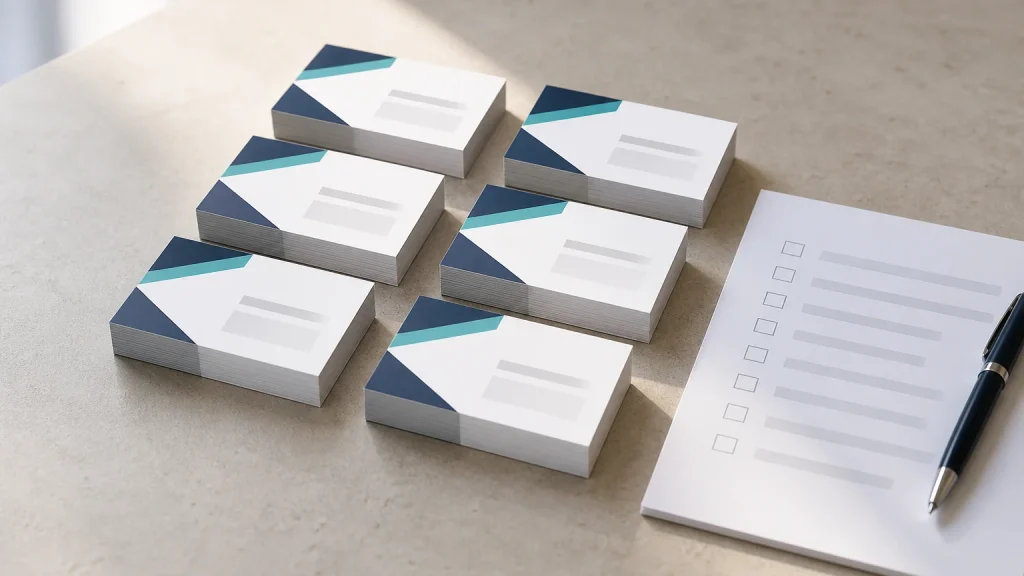
Business cards can help a growing team present one recognisable brand, provided they are managed as a shared system rather than a series of one-off orders. Agree what stays fixed, define which personal details may change, and give one person clear approval responsibility. That approach keeps cards useful for individual conversations while reducing mismatched logos, outdated contact details and last-minute reprints.
⏱️ Estimated reading time: 5 minutes
Table of Contents
Set a shared standard for business cards
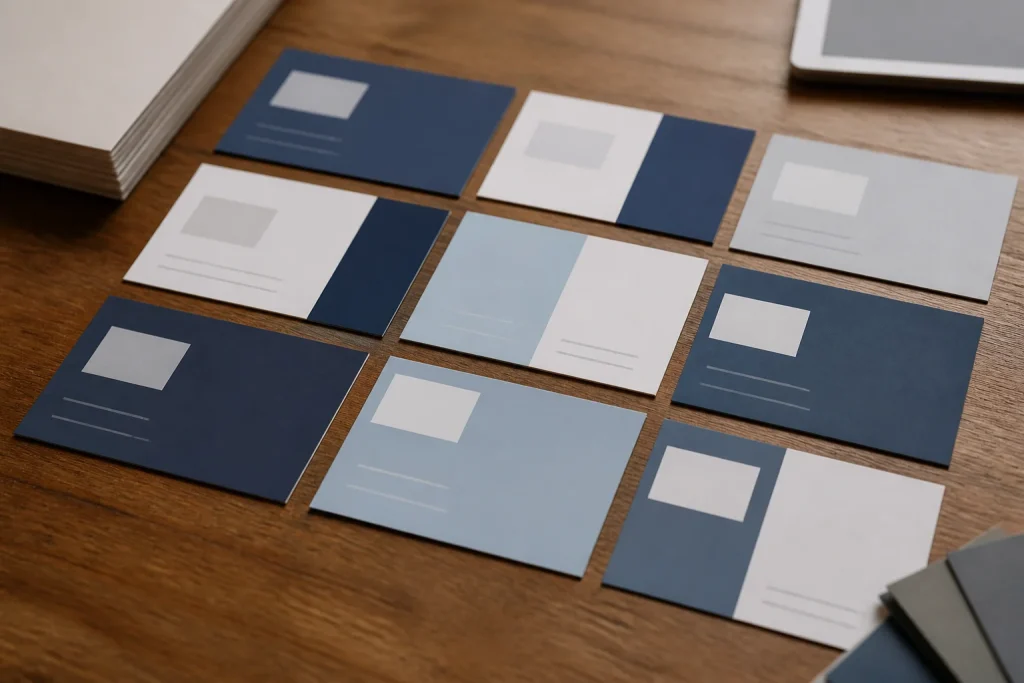
Start with a master design that represents the organisation as a whole. This should contain the approved logo, brand colours, typefaces, website address and the core layout. Keep the master artwork in one clearly named location.
A simple card specification is often more valuable than a complicated brand document. It can state the card orientation, the current approved logo version, the wording for the company description and whether the reverse should carry a strapline, service list or simply remain uncluttered. It should also identify who can request changes to the design.
The aim is not to make every card look identical at a glance. Names, job titles and direct contact routes naturally differ. The fixed elements should do the heavier brand work, so a card handed out by a director, account manager or new starter still looks like it belongs to the same business.
Decide which details can change
Before collecting names, separate card content into fixed, controlled and personal information. This prevents a useful request for a mobile number or role title becoming an unplanned redesign.
- Fixed information: logo, main website, brand colours, legally required wording where applicable, and established company contact details.
- Controlled information: job-title styles, department names, service descriptions and approved social media handles.
- Personal information: staff name, individual email address, direct dial number and, where suitable, a work mobile number.
Job titles deserve particular care. They need to be accurate, but a long internal title may mean little to a prospective customer. A clear client-facing alternative can be sensible if it has been agreed internally. For example, a hypothetical employee whose internal role covers operations and sales support might use a shorter outward-facing title that explains the contact’s main purpose.
Do not assume every team member needs every possible contact channel. Too much detail can make a small card harder to scan. Choose the route you genuinely want recipients to use, then make it easy to spot. If calls are handled centrally, a main number may be more appropriate than several personal numbers.
Create a reliable approval and ordering process
A workable process is usually modest: one current template, one approved data source and one named person who signs off changes. The person ordering print should not have to guess whether a revised logo, altered role title or new email format is approved.
Ask each colleague to submit their details in the same format. A short form or shared spreadsheet can include name spelling, preferred title, email address, telephone number and quantity required. The approver can check the data against internal records before artwork is amended. This is far less awkward than discovering a typo after a box of cards has arrived.
For regular orders, consider a small review point before sending artwork to print: confirm the logo version, check each contact detail character by character, review the reverse side, and make sure the requested quantity suits the immediate need. Newstyle Print can provide business cards alongside wider branded stationery, and its design support may be useful when a template needs bringing back into line before an order.
Use business cards as part of a joined-up stationery set
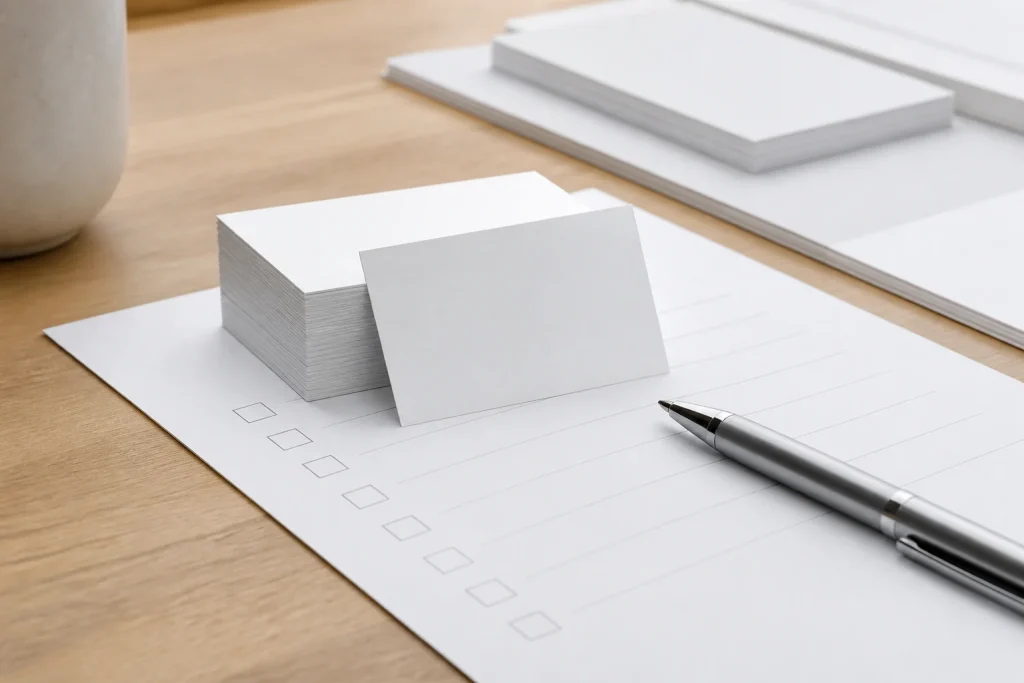
Business cards work best when they echo the materials people receive next. A prospect may be handed a card, later receive an email, then see a letterhead, compliment slip, flyer or brochure. The logo, colours and tone do not need to be repeated in exactly the same way on every item, but they should feel related.
That is why it helps to review cards when you review other business stationery. A new website address, changed company description or refreshed identity can affect several printed items at once. Updating only cards may leave teams distributing mixed messages, while replacing every item immediately may create unnecessary waste. Use existing stock where it remains accurate, but set a clear point at which the previous version will no longer be ordered.
If different departments need slightly different cards, maintain the same framework and alter only the approved variable areas. For instance, a sales team might need direct telephone numbers, while a reception or support team may need a central contact route.
When business cards are not the right answer
Business cards are not automatically necessary for every employee or occasion. A team that rarely meets people in person may get more value from a consistent email signature, a digital contact method or a shared information sheet. Equally, a very temporary role may not justify a separate print run if details are likely to change quickly.
The common mistake is ordering a large quantity because the unit cost appears attractive, without considering how stable the details are. Cards with obsolete phone numbers, job titles or web addresses are difficult to use confidently. Smaller, more considered orders can make sense when a brand is changing, a team is expanding or staff roles are still settling.
Another mistake is allowing personal preference to override the approved design. A different font, an extra logo treatment or a new colour may seem minor, yet repeated exceptions gradually weaken the shared look. Save experimentation for a properly reviewed redesign, not an individual card order.
Conclusion
A consistent business card process gives teams practical freedom within sensible boundaries. Keep the brand framework fixed, make personal details easy to verify, and appoint a clear owner for artwork approval. Review cards alongside your wider stationery so changes are planned rather than patched together. When you are ready to order, provide the approved artwork, staff details, required quantity and any questions about the finished specification, so the print brief is clear from the outset.