Halloween leaflets printing works best when a leaflet has one practical job: helping visitors understand what is happening, where they need to be and what they should know before arriving. A folded leaflet offers more room than a poster or single-sided flyer, but that space still needs structure. Use panels to take readers from the headline event details to the information that may help them plan their visit. The aim is not to include every possible message; it is to make the useful details easy to find.
⏱️ Estimated reading time: 6 minutes
Table of Contents
Why Halloween leaflets printing suits detailed events

A Halloween event can involve more than a date and a spooky headline. Depending on the event, visitors may need opening times, booking information, arrival guidance, activity schedules, food options, age guidance, accessibility information or a contact route for questions. A folded leaflet can hold these details without making the front cover resemble a noticeboard. Keep the cover focused on the event name, date, venue and a short reason to attend, supported by branded Halloween artwork. The inside can then present practical information in an order that makes sense.
For example, a hypothetical family trail could use its front panel for the event name and date, an inside panel for booking details, centre panels for activity times, and a final panel for travel or contact information. Readers should not have to hunt for a crucial fact among decorative cobwebs and pumpkins. Leaflets can also be useful where people may refer back to information later, perhaps alongside a ticket confirmation or after taking one home. That is a different role from a large display, which needs to communicate quickly at the venue.
Build the leaflet around a visitor journey
Before design begins, list the questions a first-time visitor is likely to ask and place them in the order they become useful. This usually creates a clearer leaflet than starting with every detail the organiser wants to include. Think about the visitor’s stages: before booking, before leaving, on arrival and during the visit. A shop promotion may need an offer period, participating location details and a short product message. A ticketed attraction may need a timetable, arrival notes and a way to ask questions. Include information only where it helps someone decide, prepare or avoid confusion.
- Before booking: What is the event, when is it on and who is it for?
- Before leaving: Where is it, how should visitors arrive and what should they bring?
- On arrival: Where is the entrance and where can people ask for help?
- During the visit: What are the main activities, timings, facilities and relevant guidance?
Keep one approved source for dates, opening times, prices and contact details while preparing the leaflet. Seasonal campaigns often involve several printed items, and copying details between files can introduce inconsistencies. Check final wording against that source before printing.
Give every panel a clear job with Halloween leaflets printing
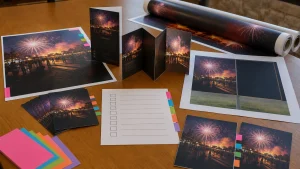
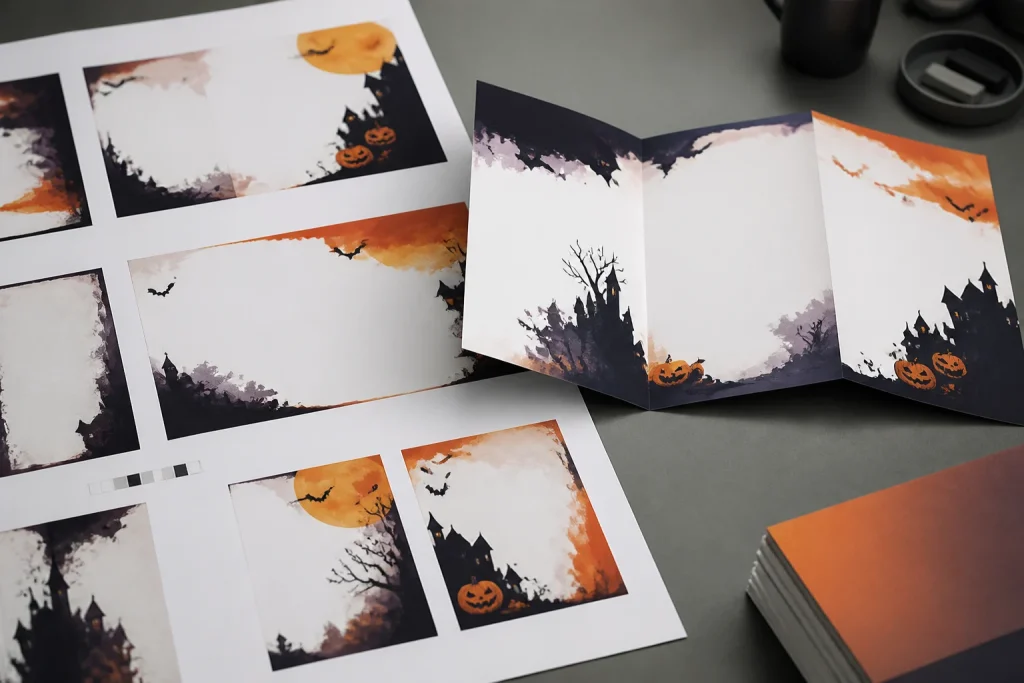
A fold creates natural sections, but it does not automatically produce a readable layout. Decide what each panel is for before artwork is finished; otherwise, information tends to be squeezed into whichever space remains. The front panel needs a direct message explaining the event. The back can carry contact details, relevant social information or a carefully checked small map. Inside panels are usually better for fuller visitor guidance. Use scan-friendly headings such as “Getting here”, “What’s on”, “Booking” and “Before you visit”.
Readability matters when someone needs to find a gate, session or collection point quickly. White space separates topics, gives imagery room and makes a folded leaflet less demanding to read. A busy Halloween style can still work, but decoration should frame important information rather than sit behind it. Strong contrast and simple text blocks are generally easier to use than pale wording over a detailed dark image. A themed typeface may suit a short title, although it is less suitable for paragraphs, timings or directions.
Halloween leaflets printing: choose content before format
The amount and type of information should influence the fold and finished size, rather than the other way round. A simple promotion with one offer and a location may work better as a flat flyer. A leaflet becomes more useful when readers benefit from distinct sections, such as a programme, route, activity list or visitor checklist. Consider distribution too. Counter handouts, direct mail, ticket packs and event welcome points create different handling needs. A compact format may be easier to carry, while a larger folded item may give maps, schedules or menus more room.
Ask the printer which format fits the content and how the chosen fold affects artwork setup. Fold lines, margins and panel order need allowing for in the design, particularly where maps, photographs or blocks of text run across panels. Digital printing may suit a modest quantity, a short seasonal run or artwork that is still being refined. Litho printing may be worth discussing for a larger order with settled artwork.
Avoid common leaflet design mistakes
Do not treat every panel as equal advertising space. Readers need a visual route, not six competing messages. Put the most important practical detail where it is likely to be found first, then let supporting information follow. If timings, booking wording or access instructions change after design starts, reducing text size is rarely the best answer; review the content and layout instead.
Before approving artwork, check that event names, dates, times, venue details and booking instructions are consistent across the leaflet. Review the folded version as well as the flat artwork, because panel order can be less obvious on screen. If the leaflet includes an illustrative map, make sure it is simple enough to support the written arrival information. Newstyle Print offers folded leaflets, digital and lithographic printing, and design support where artwork needs creating or amending.
Conclusion
Well-planned Halloween leaflets printing gives visitors useful information rather than another piece of promotion. Begin with the questions people are likely to have, arrange the answers across clear panels, and select a fold, format and print approach that suits the content and distribution plan. Checking the final details carefully helps ensure the finished leaflet remains useful on the day.