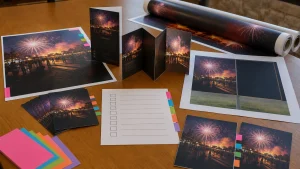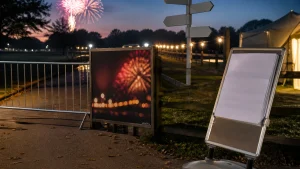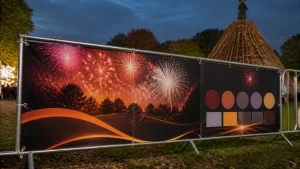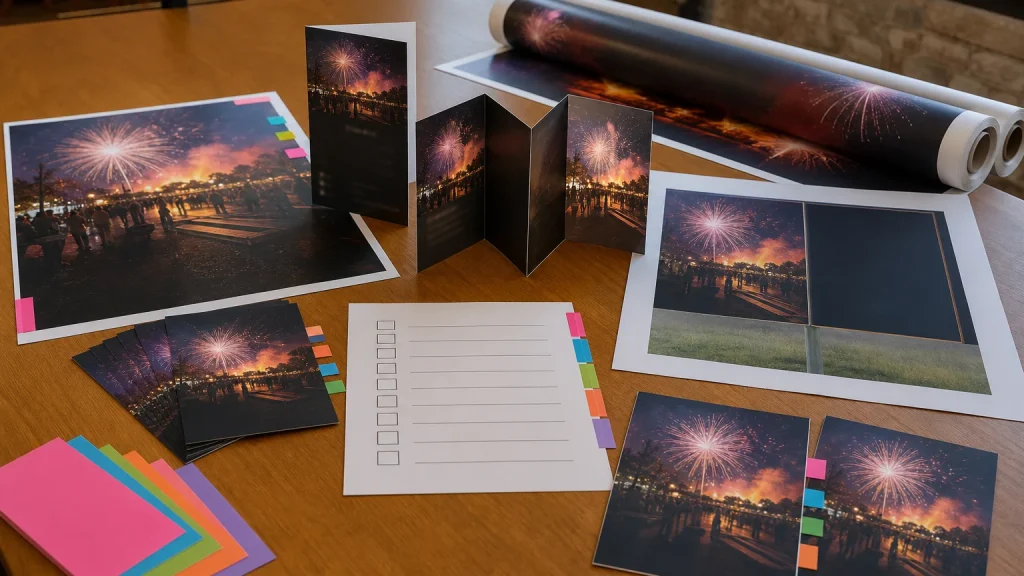
Fireworks print can stay aligned when event details change late, but only if you treat each amendment as a controlled job rather than a quick text swap. Start with one approved source for current information, identify every printed item carrying that detail, then decide what genuinely needs replacing. This protects the event message without automatically reprinting material that remains accurate and useful.
⏱️ Estimated reading time: 6 minutes
Table of Contents
A venue adjustment, revised entry route or changed food offer may sound minor. Across a printed event pack, however, the same wording can appear on posters, flyers, menus, directional signs and display graphics. The aim is not to make every item identical at all costs. It is to ensure visitors receive the right information at the point where they need it. That may mean replacing a sign at the venue while retaining an earlier promotional flyer that remains accurate.
Fireworks print starts with a change register
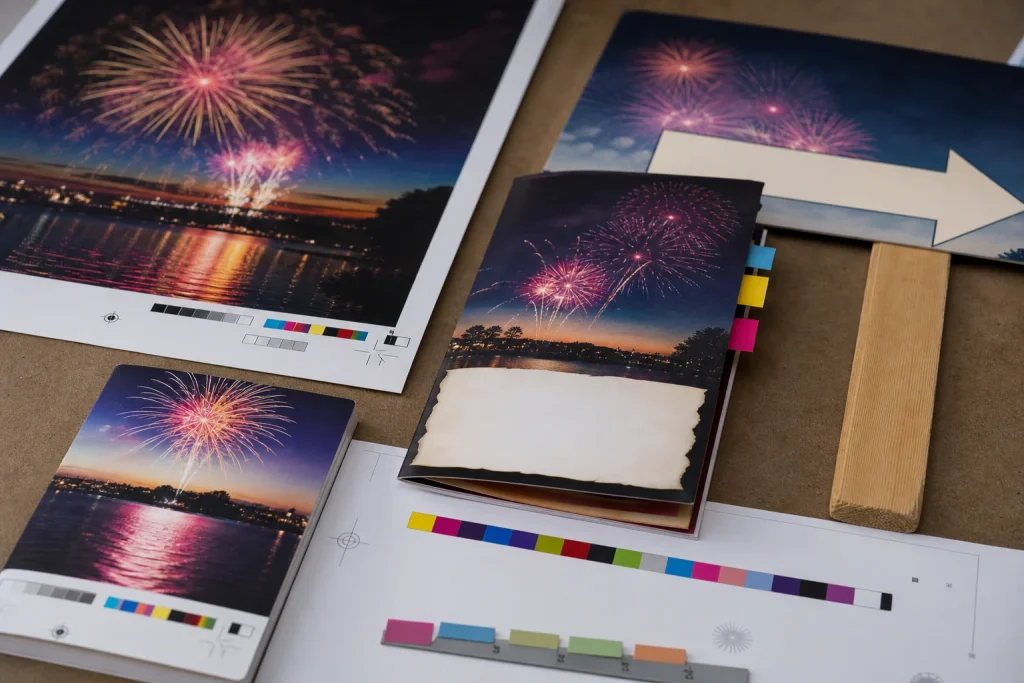
Before opening artwork files, write down the change in plain language. Record the old detail, replacement detail, person who confirmed it and point at which it applies. A short change register prevents a vague instruction, such as “update the time”, becoming several slightly different edits across the pack.
It also separates a factual change from a design preference. A corrected postcode affects where visitors go and should be checked wherever it appears.
Give every artwork file a clear version name, rather than relying on labels such as “final”, “final final” or “new”. A useful pattern includes the item, event and version number. Store the current approved file in one agreed location and make clear that older files are for reference only. That discipline can prevent an outdated PDF reaching print by mistake.
Sort details by replacement risk
Not every change needs the same response. Sort affected details before deciding what to amend or reprint:
- Essential visitor information: date, opening time, location, entry point, ticket arrangements, contact route and clearly stated event guidance. If an item asks a visitor to make a decision, an old version may cause confusion.
- Operational information: staff instructions, collection-point labels, directional signage and internal schedules. These can sometimes be replaced locally rather than requiring changes throughout promotional material.
- Supporting information: branding, decorative graphics, general event wording and sponsor treatment. These may matter to presentation, but a change does not always make existing stock unusable.
A hypothetical example makes the distinction clearer. If a fireworks event keeps its date and venue but changes the entrance gate, a previously distributed flyer may still promote attendance accurately. The entrance message, however, should be corrected on the website and on displays visitors see as they arrive. A new directional sign or poster near the approach may be more useful than discarding every flyer. Consider where each item is encountered. A poster in a shop window, a flyer handed out before the event and an A-frame near the venue have different jobs. The closer an item is to the moment a person acts on its information, the stronger the case for updating it.
Build a Fireworks print change map before approval
A change map is simply a list of every format and location carrying the affected detail. Include printed products, artwork approved but not yet printed, and stock already delivered or displayed. For each item, note whether it contains the old detail, has been produced, is still needed, and what should happen next. The outcome might be “update before production”, “replace at venue”, “keep in use” or “remove”. This gives the organiser and printer a shared, practical brief.
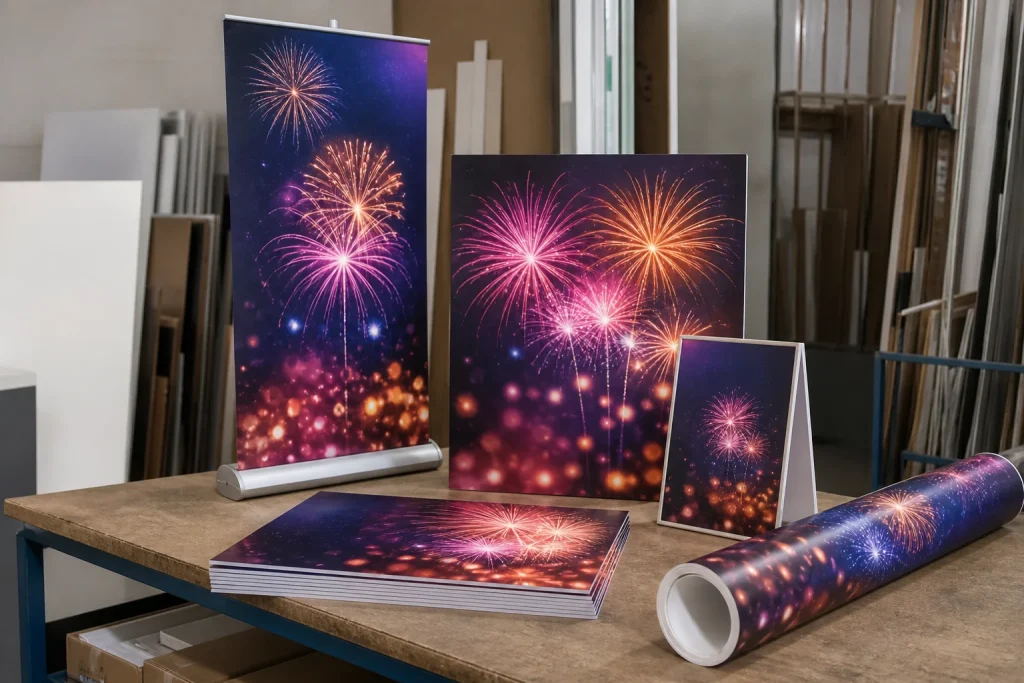
For a pack containing posters, flyers, menus, PVC banners, roller banners and Foamex boards, the map may show that only posters and a board need a new version. If promotional flyers carry no affected detail, their existing design may still have a role. A menu showing an unavailable offer needs closer attention, because it sets an expectation at the point of purchase.
Send the printer the current approved copy in one message where possible, with the list of items to change. Mark the exact wording that must be replaced and supply replacement logos, images or contact details if they are part of the amendment. If artwork support is needed, state which version is the approved starting point. Newstyle Print offers graphic design alongside digital, litho and wide-format printing, so a bespoke event pack can be discussed as one coordinated requirement.
Common mistake: updating only the most visible item
It is tempting to correct the largest banner or newest poster and assume the job is done. Yet visitors may first see a flyer, follow a directional board, then encounter a menu or entry sign. One accurate headline cannot compensate for a conflicting detail later in the journey.
Treat a proof as the final version of a specific item, not as a general check. Check the changed detail character by character, then check its context: the right date beside the right time, the correct entrance beside the correct venue name, and the current contact route beside the right instruction. Ask a second person to review critical visitor information where possible. Fresh eyes can catch a version mismatch that the editor has stopped noticing.
Keep a simple record of which old items have been removed from display, especially when volunteers, retail partners or venue staff hold materials.
When fireworks print should not be updated
Sometimes full update does not make sense. Reprinting every item for a minor wording change can create unnecessary cost and delay, particularly when original message remains accurate. If information is unsettled, avoid committing it to a large run. Use a targeted printed item once the detail is confirmed, and keep main visuals focused on messages unlikely to change. Digital printing may suit smaller replacement quantities; litho may suit a larger quantity of stable artwork. The choice depends on quantity, deadline, artwork and specification, so ask for advice early, before choosing.
Conclusion
Late changes do not have to unravel a Fireworks Night event pack. Keep one confirmed source, map all affected items, prioritise information visitors act on and approve replacement artwork carefully. For unusual jobs, provide clear quantities, sizes and amended wording when requesting a quote.