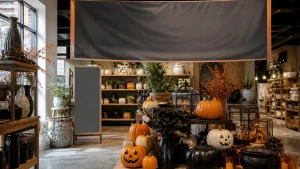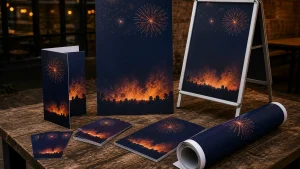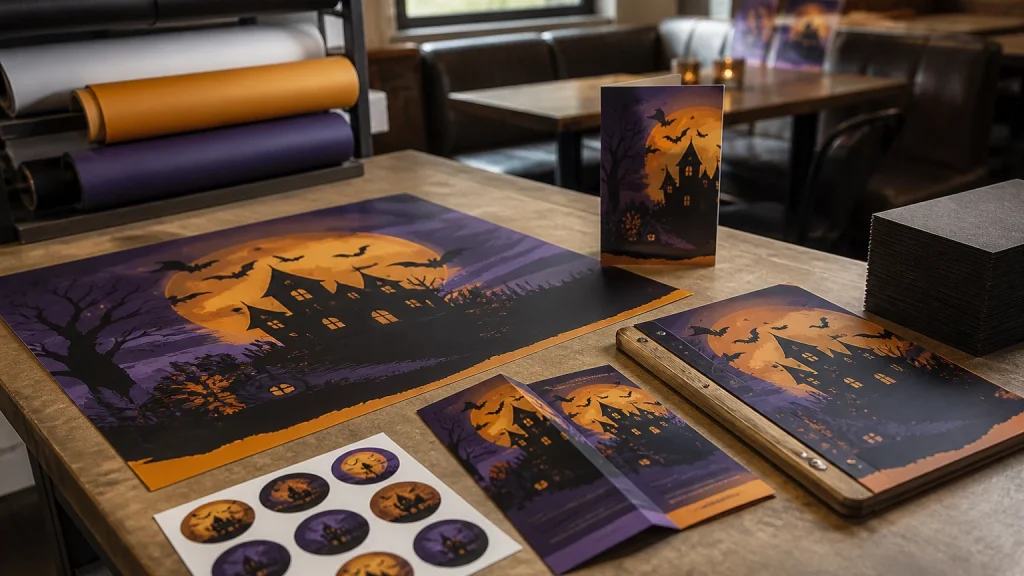
Halloween printing works best when every printed item comes from one agreed campaign record. Before choosing posters, menus, leaflets or display graphics, settle the offer, dates, locations, booking route, terms and contact details. That simple discipline helps a seasonal promotion feel joined up rather than like a collection of separate designs.
⏱️ Estimated reading time: 6 minutes
Table of Contents
Halloween printing starts with one approved campaign record
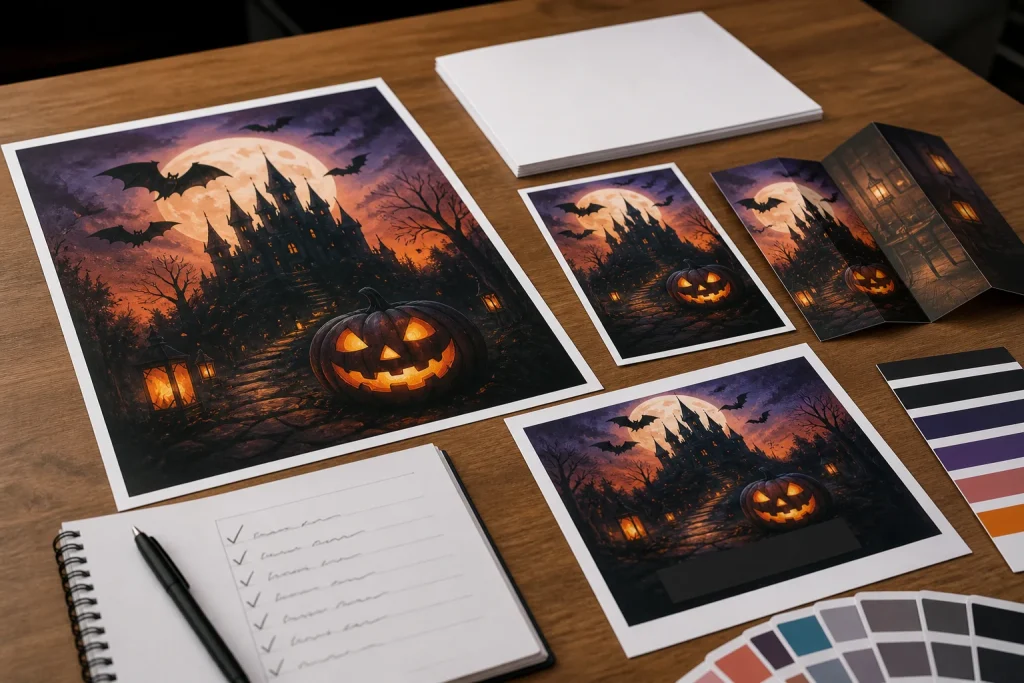
Create a short master document before artwork begins. It does not need to be elaborate, but it should be the source everyone checks. Include the campaign name, final wording, logo version, colours, offer conditions, call to action and the date on which the information was approved. If the campaign has more than one venue or audience, note what changes between versions.
Keep this record focused on facts that must not drift. A restaurant may need the same event name, booking contact and date on a window poster, table menu and social media graphic. A retailer might need a consistent discount code and end date across shelf signage, flyers and a counter display. Seasonal artwork can be playful; essential details should still be controlled.
It is often useful to separate fixed content from variable content. Fixed content includes the brand mark, campaign theme and core offer. Variable content may include branch details, stock-dependent wording, individual session times or a local contact number. That distinction makes it easier to approve the campaign without accidentally treating every item as a completely new design.
Map Halloween printing to customer touchpoints
Each printed format has a different job. Trying to put every campaign detail on every item usually makes the message harder to absorb. Start with where a person will see the piece, what they need to know at that moment and what action you want them to take.
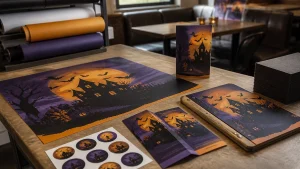
- Posters can establish the event or offer quickly at entrances, windows and notice areas.
- Flyers or folded leaflets give people something to take away, so they can hold more detail such as dates, activities or booking instructions.
- Menus can present a limited seasonal food or drink selection without making the main menu feel muddled.
- Stickers may help carry a short promotion across packaging, takeaway items or selected products.
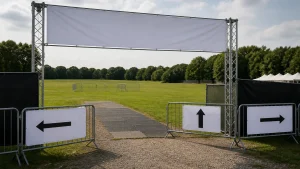
- Wide-format signage and display can carry the campaign into a shop floor, venue entrance or event space.
A hypothetical family activity venue could use a large entrance display for the event name and date, posters for session times, and a leaflet for booking and arrival information. The wording remains aligned, but the amount of detail changes with the reader’s situation. That is more useful than shrinking one busy design to fit every format.
Make a simple touchpoint list alongside the campaign record. For each item, write its location, intended reader, key message, required details and version owner. It may sound administrative, but it reduces the familiar problem of a flyer promoting one date while a counter card shows another.
Keep Halloween printing flexible where details may change
Seasonal campaigns are often planned before every detail is final. If a price, timetable, product list or availability is still uncertain, avoid committing it to a large batch of print too early. Instead, use a core piece for stable information and reserve changeable details for a smaller supporting item or a version that can be updated separately.
For example, a venue could keep its main Halloween display centred on the event identity and booking route, then use posters or inserts for confirmed activities. A shop could use a broader seasonal window graphic while keeping product-specific offers on replaceable point-of-sale material. The best split depends on the campaign, but the principle is sound: print permanence should match information certainty.
Digital printing may suit a modest quantity or several versions, while litho printing may be worth discussing for larger, settled repeat requirements. Neither method is automatically better. Quantity, artwork stability, budget and the number of versions all matter, so provide those details when asking for a quote.
Check artwork as a campaign, not as isolated files
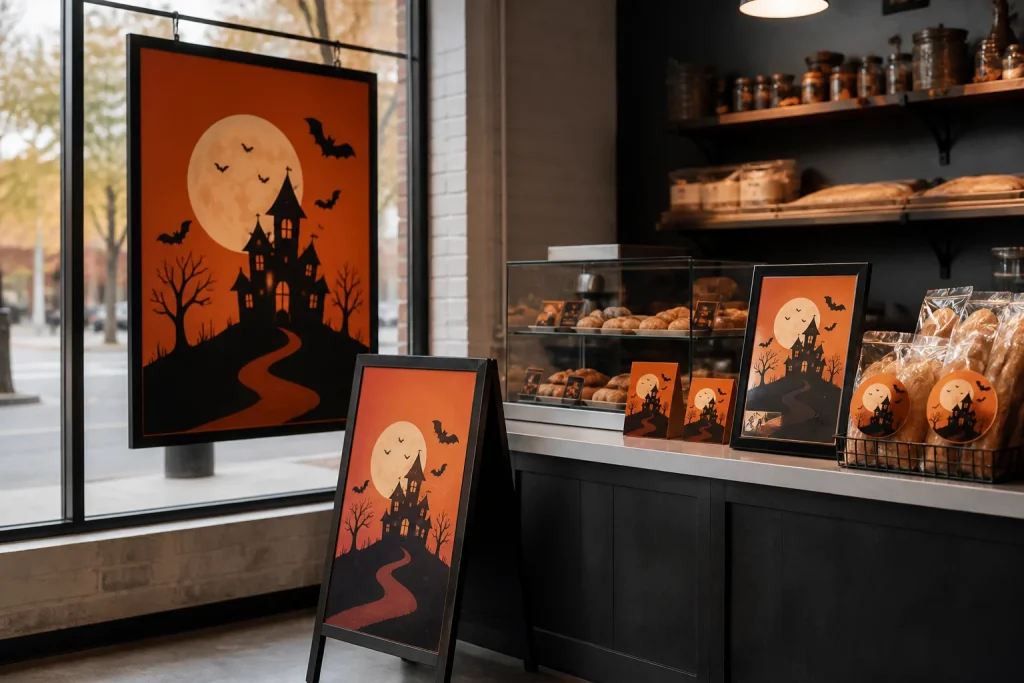
Individual artwork proofs can look correct and still create an inconsistent campaign. Review the full set together, ideally as thumbnails first and then at the intended reading size. Check that the campaign name is written the same way, the offer is identical where it should be, and the call to action leads to the right place.
Pay particular attention to details that are easy to copy incorrectly: dates, days of the week, prices, booking instructions, web addresses, contact numbers and expiry wording. If legal or age-related guidance is needed for your activity or product, agree that wording internally before it reaches design. A printer can reproduce supplied content, but the business remains responsible for confirming its own information.
Also consider hierarchy. On a poster, the key message should be understandable without reading every line. On a menu or leaflet, headings and sections should help readers find the information they need. Decorative Halloween elements are useful only if they leave enough clear space for the practical details.
When this approach does not make sense
A full campaign record can be excessive for one short-lived counter sign with a single, confirmed message. Equally, a small independent business may not need a separate version owner for each item. Use a process that matches the scale of the job.
The common mistake is taking that as a reason to skip approval altogether. Even a simple Halloween poster benefits from one final check against the current offer and contact details. Another mistake is treating a previous year’s artwork as ready to reuse. It may be a useful starting point, but dates, prices, brand elements and booking arrangements need reviewing before reprint.
Conclusion
Consistent Halloween printing begins with one approved set of campaign details, then gives each printed format a clear purpose. Keep stable messages on the pieces likely to stay in use, separate information that may change, and review the finished set as one customer journey. When the campaign involves several formats, locations or versions, a clear print brief will make the design, quote and approval process far easier to manage.