Halloween flyer printing works best when it answers one practical question before a visitor arrives: how do I book this activity? Seasonal artwork can attract attention, but clear information helps people decide whether an activity suits them and what they need to do next. Put the activity, date, time, venue and booking route in a logical order, then choose a format and quantity that fit the planned distribution.
⏱️ Estimated reading time: 6 minutes
Table of Contents
This approach can suit organisers promoting workshops, trails, parties, ticketed sessions or other seasonal activities. A flyer is not the booking system itself. Its job is to make the next step obvious, while directing readers to information that can be checked or updated by the organiser.
Start with the booking decision
Before choosing Halloween graphics or writing a headline, decide precisely what the reader should do. They may need to reserve online, phone the venue, visit a counter, send an enquiry or attend at a stated time. One main action is usually clearer than presenting several competing routes with equal prominence.
Name the activity in plain language first. “Pumpkin carving session” says more than a decorative headline that relies on the rest of the design for meaning. Follow it with the date, start time, venue and booking instruction.
A hypothetical children’s craft event might lead with the activity name and date, followed by a single online booking instruction. Age guidance, whether an adult needs to attend, and the venue address could sit below. The reader should not have to search through themed copy to establish the basic plan.
Halloween flyer printing needs a clear information order
Give details the order in which a prospective visitor is likely to need them, rather than treating every line as equally important:
- First: the activity and Halloween theme.
- Next: the date, time and venue.
- Then: the booking action and one main contact route.
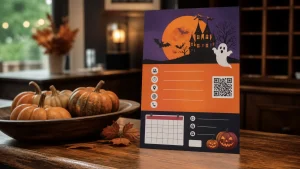
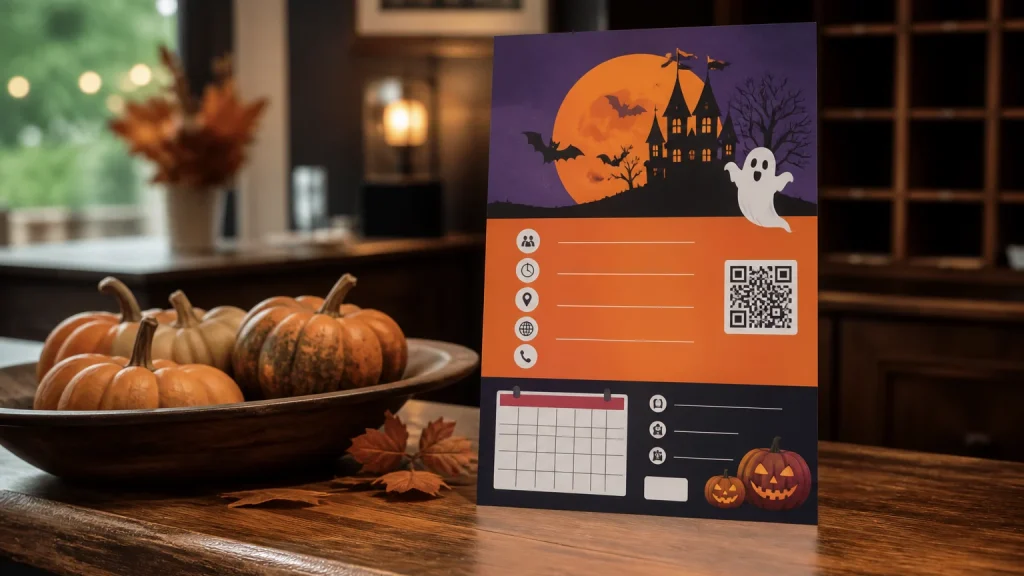
Short labels such as “When”, “Where” and “Book” make essentials easier to scan. A web address or QR code can be useful when it leads to the relevant booking page rather than a general homepage that creates another search. Test any code at its intended printed size before approving artwork, and include a written alternative for readers who prefer not to scan it.
Contrast matters more than spooky effects. Pale type over a detailed dark image may look atmospheric on screen yet be difficult to read when printed. Keep the booking instruction in a clear area with a noticeable difference between text and background. If event details are still moving or the existing artwork feels crowded, design support may help bring the hierarchy under control.
Choose Halloween flyer printing for the booking journey
A single-sided flyer may suit a straightforward activity with one booking action. It can be practical for counter handouts or inclusion with a purchase. A double-sided format gives more room where the front needs to catch attention and the reverse needs to explain session options, directions or terms provided by the organiser.
Do not choose a larger format simply to accommodate more copy. When essential information cannot be understood quickly, the problem is often message hierarchy rather than page size. Equally, a small flyer may be awkward if it must carry a code, timetable and several contact details. Confirm the available product specifications with the printer before finalising the layout.
Quantities should follow the distribution plan, not only the expected attendance. Consider where flyers will be displayed or handed out, how long the booking period will run, and whether dates or activities could change. A smaller digital print run may be appropriate while wording is being tested or details await approval. For a settled campaign with wider distribution, litho printing may be worth discussing. The suitable method depends on the quantity, artwork and requirements of the order.
Halloween flyer printing and changing event details
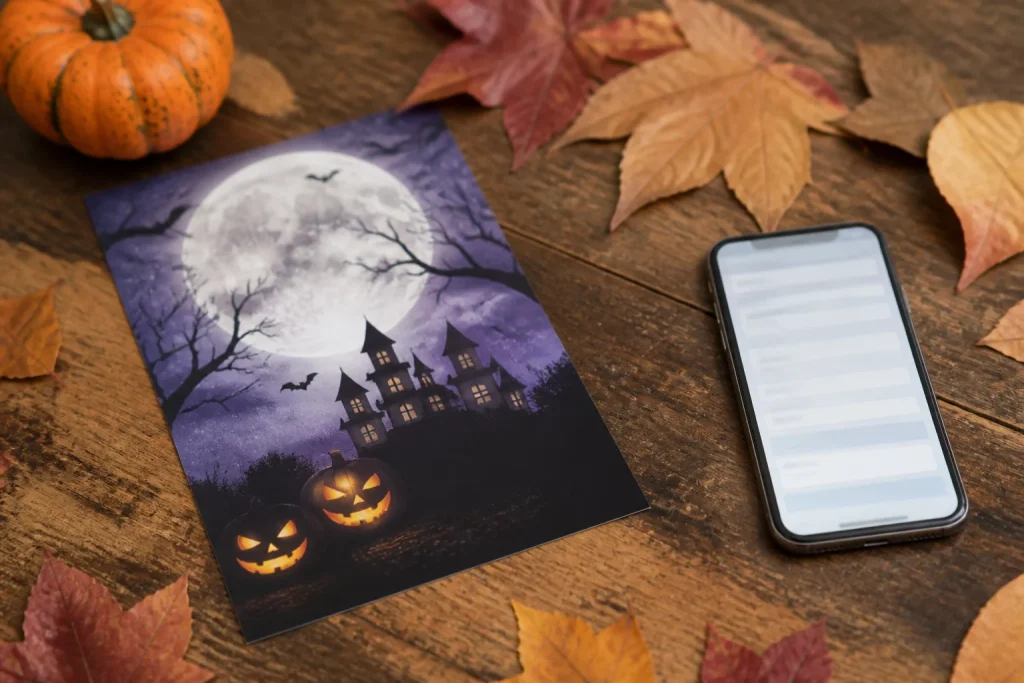
Seasonal activities can have moving parts. A session may fill, an outdoor element may be affected by conditions, or a programme may be confirmed later than expected. Separate fixed information from details that are likely to change, rather than printing provisional content as if it were final.
Keep confirmed elements on the flyer: the event name, organiser, broad date range, venue and a booking route that can be updated online. Avoid a dense timetable until it has been approved. Wording such as “Check the booking page for current session availability” is more useful than presenting unconfirmed times as settled.
That does not mean the flyer should be vague. Visitors still need enough information to decide whether they are interested. Print what is confirmed and make the route to current details unmistakable. Where several activities share one booking page, name the specific activity clearly so a parent or visitor knows what to find.
Avoid common booking-flyer problems
A frequent mistake is treating the flyer as a miniature poster. Filling it with every activity, sponsor logo, social handle and decorative illustration can push the booking instruction into the background. Seasonal styling should support the message, not conceal it.
Other avoidable issues include a QR code with no explanation, an unlabelled phone number, a date without the year, or contact details that have not been checked. Before print approval, review spelling, dates, times, prices where included, booking routes and the position of content close to the trim edge. Ask the organiser responsible for bookings to check the final wording as well as the person approving the design.
A flyer may not be the right place for detailed attendance instructions that change daily. In that situation, use a concise handout to direct people to an up-to-date booking page, and consider separate venue signage for information needed on arrival. This keeps the printed message useful without requiring constant revisions.
Conclusion
A useful activity flyer makes the event, timing and next step easy to find at a glance. Keep one action prominent, include confirmed practical details, and leave changing information to a live booking route. Once the copy, quantity, finished format and artwork requirements are agreed, printed flyers can support a clearer seasonal booking journey. Newstyle Print offers digital, litho and design support for printed flyer projects, with bespoke requirements considered on request.