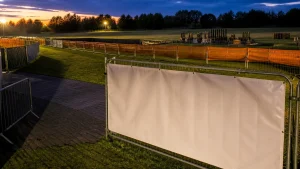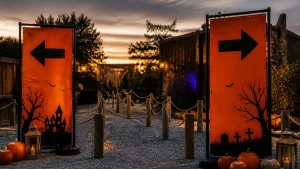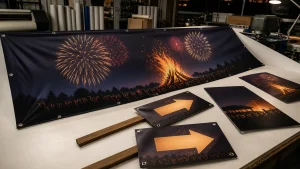
Fireworks Night PVC banners can make safety zones easier to spot when they give visitors one clear instruction at a time. Rather than putting every rule on the main event banner, use separate displays to identify boundaries, entrances, spectator areas and restricted spaces. They should support a planned event layout, not replace the organiser’s safety planning, staff or advice from relevant authorities. Clear, well-positioned messages help people understand where they should go before a crowd or queue makes the route less obvious.
⏱️ Estimated reading time: 6 minutes
Table of Contents
Why Fireworks Night PVC banners suit safety zones
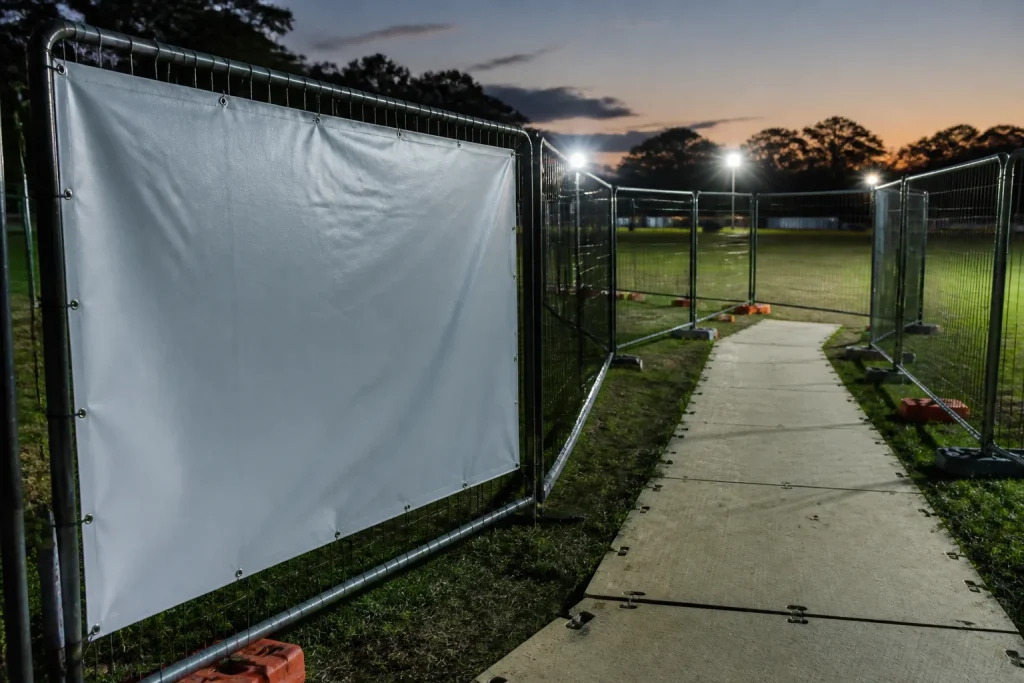
A bonfire or fireworks event can feel busy before the display starts. Families arrive at different times, queues form, volunteers answer questions and people look for toilets, refreshments or the viewing area. A printed banner cannot manage an event alone, but it can reduce uncertainty where visitors need to make a decision.
PVC banners are a practical wide-format option for a boundary, fence line or entrance. Their print area can accommodate a short instruction, directional arrow and recognisable visual cue without making every element too small to read. Discuss the intended display position, material, finishing and fixing method with the printer before ordering.
For safety-zone messaging, clarity matters more than decoration. A banner reading “Spectator Area” with an arrow is usually more useful than a dramatic fireworks graphic surrounded by several paragraphs of small text. Event branding still has a place, but it should sit behind the instruction in the visual hierarchy.
Give each zone one job
List the places where a visitor could hesitate or accidentally go the wrong way. These may include the entrance, ticket check, pedestrian route, viewing area, exit, first-aid point or a boundary that must not be crossed. Give each sign one purpose before writing the artwork. That discipline stops a banner becoming an overloaded noticeboard.
Useful zone messages are brief and specific:
- “Event entrance” for the arrival point.
- “Spectator viewing area” for the intended place to watch.
- “Keep clear” for a route that needs to remain open.
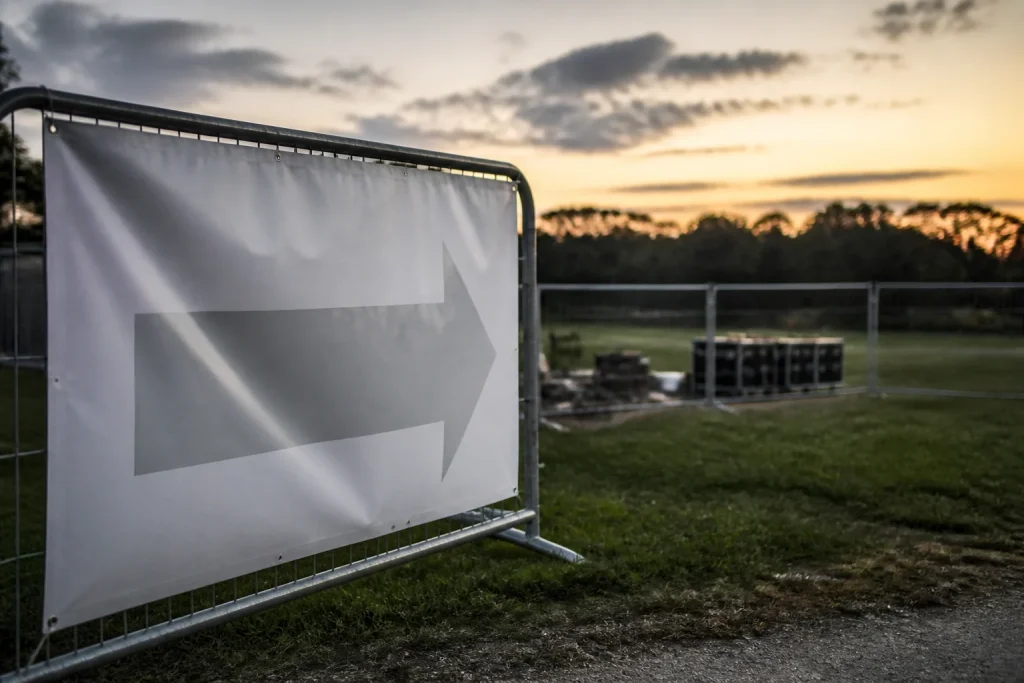
- “Exit” with a directional arrow for departure routes.
- “Authorised staff only” where public access is not intended.
Use approved event wording and the layout plan rather than assuming a familiar phrase suits every location. Some areas may need formal signage, barriers, stewards or other controls; a PVC banner is not a substitute. If a restriction matters, the organiser’s planning should identify how it will be communicated and managed.
Design Fireworks Night PVC banners for fast reading
Visitors should understand a zone banner while walking, queuing or looking across a crowd. Keep the primary message short, choose a typeface that remains straightforward at larger scale and leave clear space around the words. Strong contrast between text and background can help, although the best colour combination depends on the artwork and available lighting.
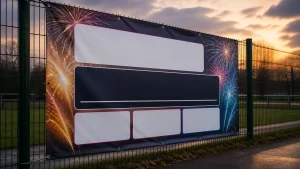
A sensible layout has three layers: the zone name or instruction first, an arrow or simple symbol second where it adds meaning, and the event name or sponsor detail last. Put information people must act on at the largest scale, not the logo.
A hypothetical viewing-area banner could say “WATCH FIREWORKS HERE” rather than lead with a long welcome message and several rules. Event branding could sit in a smaller strip along the bottom, leaving the main panel calm and obvious.
Newstyle Print provides graphic design alongside wide-format printing. This can be useful when an organiser has confirmed messages but needs a matching set of banners rather than one isolated display.
Place Fireworks Night PVC banners where decisions happen
Placement should follow the visitor journey. Put an arrival message before the point where people choose a route, not afterwards. Mark a spectator boundary where it can be seen from the approach, rather than relying on a sign hidden behind a queue.
Walk the site, where possible, as a first-time visitor would. Check whether fencing, parked vehicles, stalls, people or darkness obstruct sightlines. Consider whether the banner faces the people who need to read it and whether its position could interfere with access or agreed event controls. The organiser should confirm display locations and fixing arrangements with relevant site contacts.
Putting every banner in the busiest area may seem sensible, but distributing messages can work better. An entrance banner explains where to start, a directional banner points towards the viewing area and a boundary banner confirms where to stop. Each display then has a clear role.
Common mistakes with Fireworks Night PVC banners
Treating safety messaging as an afterthought once promotional artwork is complete often produces cramped layouts, inconsistent wording and last-minute amendments. Plan zone banners alongside the event map, staffing plan and visitor communications so the printed information agrees with the wider arrangement.
Do not combine instructions requiring different actions. “Entrance, toilets, viewing area, food, exit and no access” cannot all compete on one banner. Break them into separate signs at relevant points. The result is usually a calmer design and a less confusing visitor experience.
Also avoid tiny terms and conditions, long sponsor lists or decorative backgrounds that make the central instruction harder to see. A banner should state what matters at that exact location, not try to answer every event question.
When Fireworks Night PVC banners do not make sense
PVC banners are not automatically right for every piece of event information. A temporary close-range notice may suit a poster, while a fixed directional point may call for a rigid sign material. If details are likely to change shortly before the event, permanently printed information may create confusion or unnecessary waste.
They are also not the right tool for instructions needing staff explanation, physical barriers or formal safety controls. Where a message is complex, visitors may need a steward, clear route layout or separate information point as well as printed signage.
Conclusion
Fireworks Night PVC banners work best when they support one clear zone, one short message and one point in the visitor journey. Plan them from the event layout, keep wording direct and separate promotional material from essential instructions. Before requesting a quote from Newstyle Print, prepare confirmed messages, required sizes, proposed display locations and artwork requirements for the bespoke wide-format banner set.