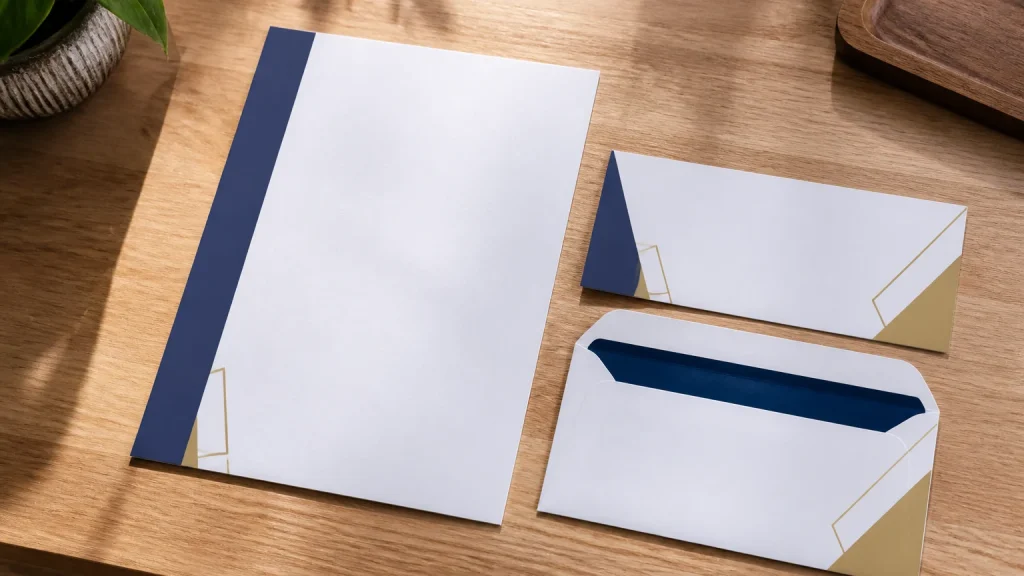
Business stationery printing keeps routine communications recognisably yours when every item is built from one approved specification. Rather than designing letterheads, compliment slips and envelopes as separate jobs, decide what must remain fixed, what may change by department, and how future reorders will be controlled. The result is less about making every sheet look identical than making every printed item feel like it belongs to the same business.
⏱️ Estimated reading time: 5 minutes
Table of Contents
That matters when several people place orders, new starters need supplies, or your details change. A short, clear specification gives staff and your printer a shared reference point. It can also make a modest stationery refresh far easier to manage than a full rebrand.
Build one business stationery printing specification
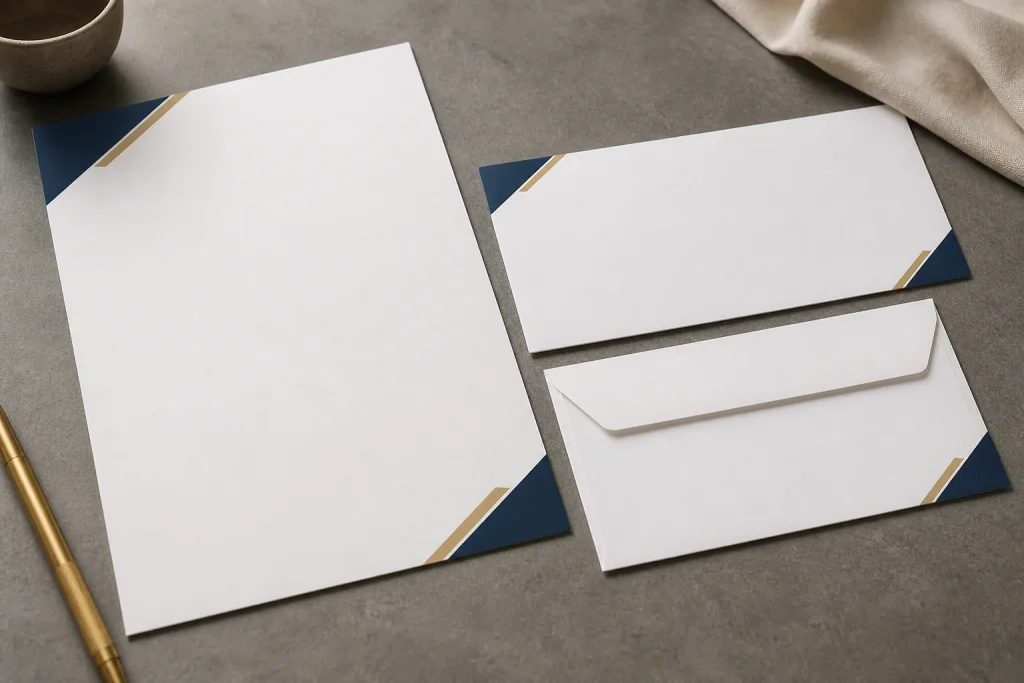
Start with a master document, not individual artwork files. It should record the approved logo version, brand colours, typefaces, contact details, legal wording where applicable, and the rules for spacing and alignment. Include the date and a version number.
Keep the specification practical. A logo may sit in the same corner across all items, while the amount of supporting information changes to suit the format. Letterheads often need room for a formal message; compliment slips need a lighter layout; envelopes need a clear address area. Consistency comes from repeated visual cues, not from squeezing the same content onto every item.
Choose one person to own approval of changes. In a smaller business that may be the director or office manager. In a larger organisation, it could be marketing. The important part is that staff know which version is current before they request more print.
Decide what each stationery item needs to do
Each item has a job, so treat the set as a coordinated toolkit. Letterheads are usually for formal correspondence, proposals or printed documents. Compliment slips are useful for brief notes, parcels and hand-delivered paperwork. Envelopes carry the brand into the post, but their design must leave enough uncluttered space for addressing and any mailing information you need to add.
- Letterheads: prioritise a calm header or footer, reliable contact details and enough clear writing space.
- Compliment slips: use a shorter message area and avoid reducing the logo until it loses presence.
- Envelopes: agree the logo position, return details and a protected address zone before artwork is finalised.
A hypothetical professional-services firm may use the same logo, dark blue and contact line across all three items, but only place its full office details on the letterhead. If teams need named contact details, decide whether these belong on the stationery itself or on accompanying business cards. Variable details create more versions to maintain.
Set artwork rules before business stationery printing
Ask for the printer’s current artwork requirements before finalising a design. File setup, bleed, safe areas, colour handling and accepted formats can vary by product and supplier. Building to the supplied template is safer than adapting an old PDF that happens to look about right on screen.
Use the correct logo artwork rather than a copied image from a website or Word document. Check small type at its intended printed size, particularly on compliment slips and envelope return details. Fine rules, pale text and crowded contact lines may appear tidy on a large monitor but become difficult to read once reduced.
A proof review should be shared with the person responsible for brand accuracy and someone who uses the item day to day. They tend to spot different problems. Marketing may notice an incorrect colour or logo treatment; an administrator may spot that the address line is missing a postcode or that the writing area is too restricted.
Before approval, compare every item against the master specification, then check spelling, phone numbers, email addresses and web addresses character by character.
Choose quantities and print methods around change
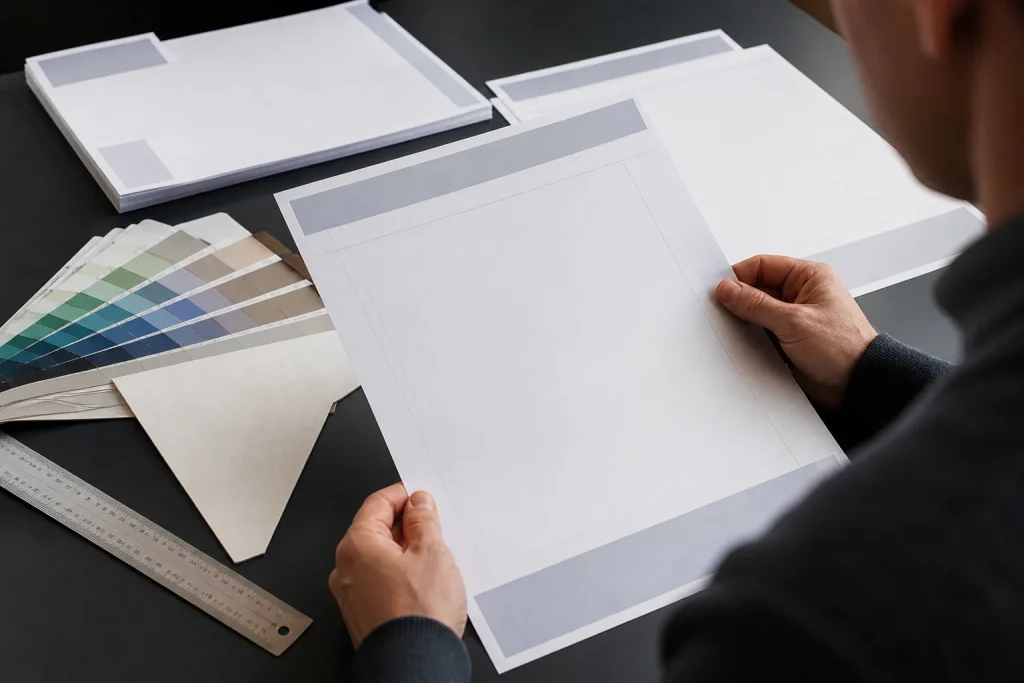
The right quantity depends less on what looks like a bulk bargain and more on how stable your information is. A business with a confirmed address, settled branding and regular post may prefer a larger planned order. A recently launched business, or one expecting new contact details, may sensibly order fewer items first.
Digital printing can suit shorter runs and work that may need updating between orders. Litho printing may be worth discussing for larger, established quantities. Neither method is automatically better: quantity, artwork, stock, budget and the need for future changes all affect the decision. A printer can advise on options once the specification and likely order volume are clear.
Try not to order every item in matching quantities by default. You may send far more letters than parcels, or rely heavily on email and use paper correspondence only occasionally. Track what is actually used over a few months, then set reorder points for each item separately.
When business stationery printing does not need a full set
Not every business needs letterheads, compliment slips and envelopes at the same time. If most communication is digital and the only regular printed need is invoices produced in-house, a branded letterhead template may be more useful than a large stock of pre-printed sheets. Likewise, an organisation that rarely posts items may not need printed envelopes at all.
The common mistake is ordering a complete, high-volume set because it seems like the standard corporate choice. Stationery that sits unused can become outdated before it is needed. Begin with the items your team genuinely uses, then add to the range when there is a clear purpose. You can still maintain a consistent specification without printing every possible format.
Conclusion
A consistent stationery system starts with one approved visual and information standard, then adapts it thoughtfully for each item’s purpose. Keep the core brand elements fixed, protect practical writing and addressing space, and avoid ordering quantities that assume your details will never change. Newstyle Print can help with printed letterheads, compliment slips and bespoke business stationery requirements, alongside design support if your artwork needs attention. Bring a clear brief, current brand files and an estimate of the quantities you use; that gives you the best basis for a useful print quote.