Guy Fawkes event signage works best when it gives each visitor one clear next action: enter here, join this queue, use this route or leave by that exit. Plan signs as a simple hierarchy rather than decoration, and give volunteers the same words to reinforce. That approach can make busy arrival and departure periods feel more orderly without squeezing every event detail onto one display.
⏱️ Estimated reading time: 6 minutes
Table of Contents
Start with the visitor journey

Walk the site in the order a first-time visitor is likely to experience it. Begin before the entrance, then follow the route through ticket checking, queues, facilities, viewing areas and the way out. At each point, ask one practical question: what decision does someone need to make here?
A sign at a road-facing approach may need only the event name and an arrival direction. Closer to the gate, the message can become more specific: ticket holders, collection point, accessible route or entry queue. Once visitors are inside, signs should help them find a destination rather than repeat the welcome message. Give the route out equal attention: people leaving may be distracted or looking for transport, so an exit sign needs a clear job.
Make a site plan before choosing formats. Mark decision points, places where routes meet and locations where queues could form. This step reveals that one large sign is less useful than several smaller, well-placed signs. It also gives volunteers a reference when visitors ask for directions.
Build a Guy Fawkes event signage hierarchy
A hierarchy stops promotional wording, practical directions and operational information competing for attention. Visitors should recognise the message type before reading every word. Repeated visual cues, such as a route colour, arrow style or heading treatment, can help the set feel connected.
- Level one: destination signs. Use these at approaches and key junctions for entrances, parking areas, toilets, food or viewing spaces.
- Level two: route confirmation. Repeat the destination and arrow after a turn, so visitors know they are still heading the right way.
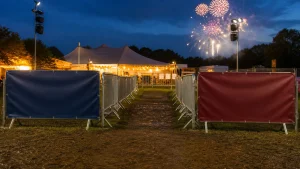
- Level three: queue instructions. Place these at the queue entrance, not far behind it. State who should join, where the line begins and what to have ready if relevant.
- Level four: local notices. These can cover a nearby point such as a collection desk, lost-property location or a temporary route change.
Use the same name for every destination. If the plan says “Main Entrance”, do not call it “Public Entry” on a board and “Gate A” in a volunteer briefing unless terms are explained. Inconsistent labels create questions when people follow spoken instructions and nearby signs.
Choose formats for Guy Fawkes event signage
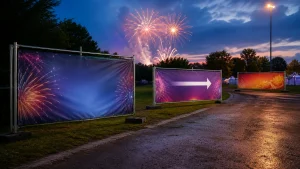
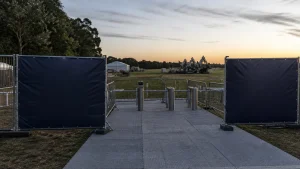
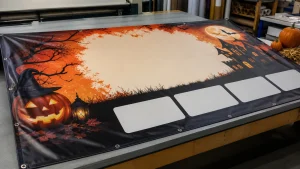
The right printed format depends on where the sign will sit, how long the message is and whether it may need moving during the event. A-frames can suit ground-level route prompts where there is appropriate space and supervision. Foamex, Correx and Dibond boards may suit fixed sign positions, subject to the chosen location and fixing method. PVC banners can carry a larger welcome or directional message where there is a suitable display position.
No universal material suits an outdoor November event. Exposure, fixing, venue rules and display period matter; discuss location with printer and venue team.
Keep the message brief. A destination, an arrow and perhaps one qualifying word will often do more than a full sentence. Avoid placing important directions over a detailed fireworks graphic, sponsor panel or busy background. A sign can still look seasonal and branded, but the route instruction should remain the strongest element.
Make Guy Fawkes event signage match volunteer directions
Printed signs are more useful when helpers use the same language. Give volunteers a location list with exact destination names used on displays. “Main Entrance”, “Ticket Collection”, “Food Area” and “Exit to Car Park” are enough if those labels are visible.
A hypothetical example: an organiser has a queue split at the entrance, with advance ticket holders to one side and ticket collection to the other. Two signs using those precise labels, placed before the split, give volunteers a straightforward instruction to repeat. A separate sign at the front of each queue confirms the choice. Asking visitors to decode a long explanation once they have already reached the barrier is likely to slow the flow.
Brief staff on any signs that may be changed or covered during the event. If a route closes, remove or replace the relevant direction rather than leave an outdated arrow visible. Keep an approved wording list and simple sign location plan to make changes easier to control.
Common mistake: treating every sign as an information board

The most common planning error is combining directions, timings, sponsor logos, ticket terms, social media prompts and general event promotion on one board. The result may look busy but fail when a visitor needs a quick answer. Split those jobs. A welcome display can carry the event identity and programme information; directional signage should concentrate on movement.
Another mistake is putting every sign at the entrance. Visitors may pause there, but the next decision is often further into the site. Repeat directions where visitors choose a path, and avoid locations where stationary crowds obscure the display. A small gathering with one clear entrance and exit may need only a welcome board, queue marker and exit prompt. Ordering formats without a site plan can waste budget and miss critical points.
What to include in a print brief
A clear brief helps a printer recommend signage and quote accurately. Supply finished wording, quantities, intended locations, visible areas, event date and venue restrictions. Include a site sketch with sign positions if available. Send logos, colours and artwork files. Separate confirmed details from temporary messages, and check spelling, arrows and names before approval.
Conclusion
Effective Guy Fawkes event signage gives visitors simple decisions in the order they need them: arrive, choose the right queue, follow a route and find the exit. Build the hierarchy around the site journey, use one name for each destination and keep volunteer wording aligned with printed displays. Then finalise messages and locations.