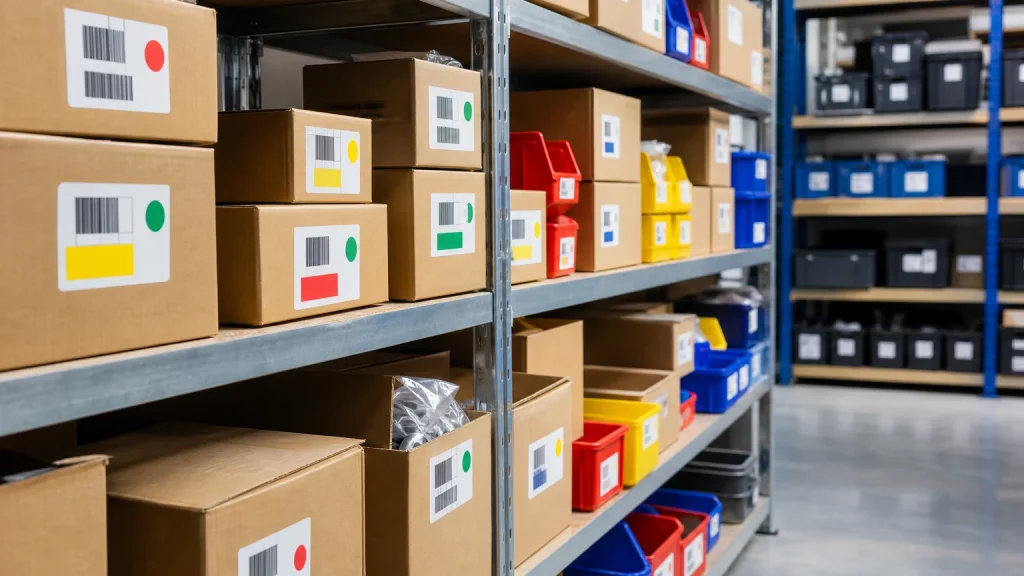
Sticker printing can be a simple, practical way to make internal stock control clearer. Rather than being used for customer-facing packaging, printed stickers can identify items, shelves, bins, equipment, batches or stock status at the point your team needs the information. The most useful system is usually not the most decorative one; it is the one that gives people a clear, consistent instruction without making them stop and interpret it.
⏱️ Estimated reading time: 6 minutes
Table of Contents
Why sticker printing helps internal stock control
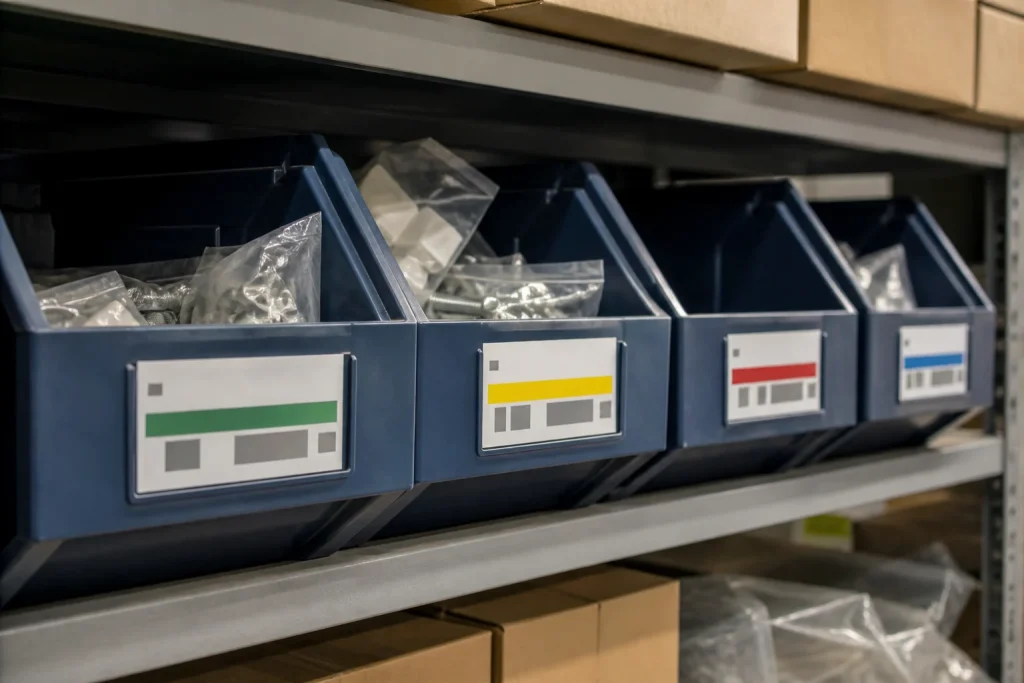
Stock becomes harder to manage when the same item is called different things by different people, or when a shelf label no longer matches what is actually stored there. A well-planned sticker system gives each item or location an agreed identifier, visible where work happens. That might be a stock code, item name, location reference, handling note or a scannable code used by your own system.
For a small storeroom, a handful of clearly labelled shelves and tubs may be enough. A larger operation may need matching labels on racking, picking bins, incoming goods and return areas. In either case, consistency matters more than cramming every possible detail onto one small label.
Printed labels may also make handovers easier. A temporary worker, a new starter or a colleague covering a shift has a better chance of putting stock in the right place when the location is plainly marked. That does not replace a stock process, of course, but it can support one.
Choose the information before the format
Start with the decision a person needs to make when they see the sticker. Is it to identify an item, return it to a location, check its status or scan it? Once that is clear, decide what information earns space on the label.
- Item labels: a plain product name, stock code and, where useful, a variant such as size or colour.
- Location labels: a simple zone, aisle, shelf or bin reference that matches your stock records.
- Status labels: short terms such as received, checked, allocated, hold or returned, provided those terms have one agreed meaning internally.
- Scan labels: a barcode or QR code only when it works with the system your team already uses and has been tested after printing.
A hypothetical example: a maintenance team keeps several similar-looking boxes of fittings. A label reading “Fittings” is not enough to support a quick pick. “M8 bolts | rack B2 | bin 04” gives a much clearer route, assuming those references match the team’s stock list.
Sticker printing needs a clear visual hierarchy
Internal labels are working tools, so make the main information easy to spot first. Usually that means one dominant line, such as an item code or location reference, followed by supporting details in a smaller size. If a sticker will be read from a short distance, test the design at that distance rather than judging it only on screen.
Colour can be useful for separating categories, but it should not carry the whole meaning. Two colours may look similar under different workplace lighting, and colour-only coding can create problems for people who do not distinguish colours in the same way. Pair colour with a word, icon or visible code.
Keep typefaces straightforward and leave enough empty space around vital details. A label packed edge to edge can appear complete in artwork but become difficult to scan at speed. The same applies to barcodes and QR codes: leave them unobstructed, avoid placing them too close to an edge, and test a printed sample with the intended scanner or phone.
Match sticker printing to the working environment
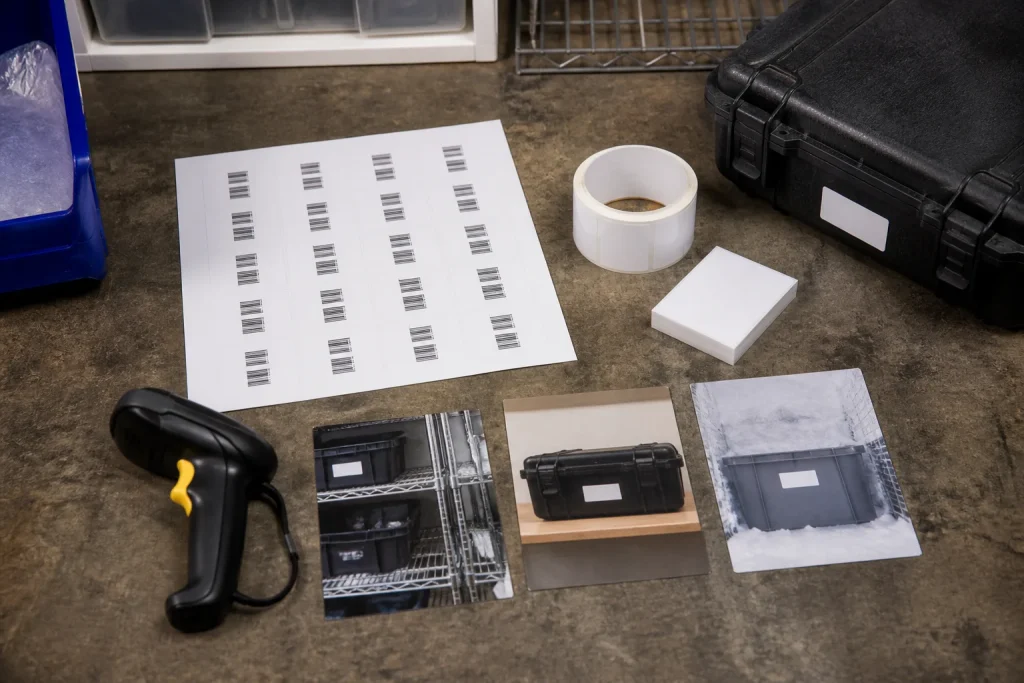
Before ordering, consider where labels will be applied and how they will be handled. A clean indoor cupboard, a frequently touched tool case and a cold storage area may place very different demands on the label. Adhesive, material, finish and size should be selected for the actual surface and conditions, not simply because a particular option looks smart.
Tell your printer whether the labels are going onto cardboard, plastic, metal, painted surfaces or another substrate. Mention if surfaces may be dusty, curved, textured, chilled or regularly cleaned. These details may affect the most suitable specification, and they are especially worth raising for a bespoke order.
It is also sensible to decide whether labels are intended to stay in place for the life of an item or be replaced as stock moves. A removable label may suit reusable storage boxes; a more permanent approach may suit a fixed shelf reference. There is no universal best choice, because the right answer depends on your process and supplier options.
Common mistakes with internal stock labels
The most common mistake is designing labels before agreeing the naming system behind them. If “Bay 3”, “Rack 3” and “Area 3” mean the same place, choose one term and use it everywhere. Printing inconsistent identifiers neatly does not make them less confusing.
Another issue is ordering every label as though it will never change. If stock lines, locations or responsibilities are likely to shift, consider separating permanent location labels from smaller changeable item or status stickers. That may reduce the amount of obsolete print you need to replace after a reorganisation.
Do not assume artwork copied from a spreadsheet is ready to print either. Check for duplicated codes, truncated descriptions, incorrect versions and small text. Ask a colleague who uses the stock area to review a proof; they may spot a practical ambiguity that is invisible to the person who built the file.
Conclusion
Effective internal stock stickers make identification, storage and handling easier without trying to do too much at once. Begin with a consistent naming structure, give the key detail visual priority, and choose a label specification that suits the surface and conditions. For variable stock systems, retain an editable master list so replacement labels use the same references. Newstyle Print offers sticker printing alongside bespoke print support, so you can discuss an unusual size, layout or application before placing an order. A clear brief covering quantities, dimensions, artwork, surface and intended use will help shape a more suitable quote.