A print quote UK request for a repeat order should do more than say “same again”. Give the printer a clear record of the previous job, confirm what has changed and state what must stay exactly the same. That reduces questions and helps protect the look, format and use of printed materials your team knows work well.
⏱️ Estimated reading time: 5 minutes
Table of Contents
What to retain in a print quote UK request
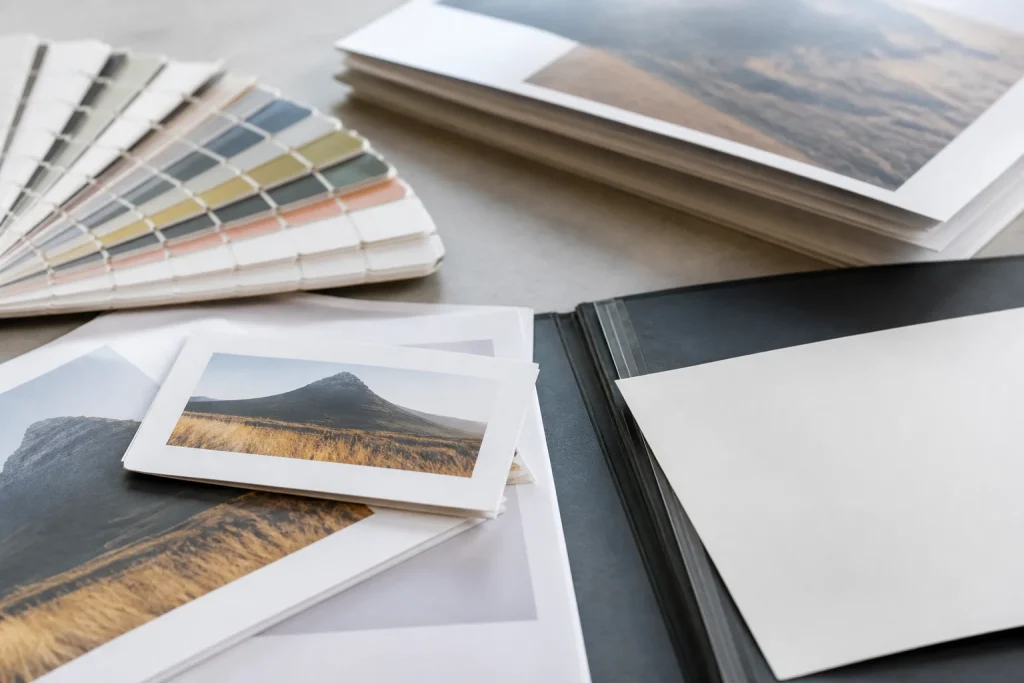
Start with the original order information. An earlier quote, invoice, job reference or approved proof can give the printer a starting point, but it is worth writing out the key requirements. Files and specifications may have changed since the last order, and a brief that relies on memory can lead to a slightly different result.
- Product: Name the item plainly, such as business cards, folded leaflets, menus, posters or PVC banners.
- Finished size: Confirm the final closed or trimmed size.
- Quantity: State the number needed now, not the quantity on the old order unless it is identical.
- Print sides: Say whether the item is printed on one side or both sides.
- Paper, board or display material: Include the previous choice where known, alongside any finish or lamination requirement.
- Finishing: Record folds, trimming, drilling, binding, eyelets, custom cutting or any other part of the completed item.
If you do not know a specification, avoid guessing. Attach a photo of a clean previous copy, explain what you like about it and ask the printer to identify the closest suitable option. A physical sample may be more useful than a vague description such as “thick paper” or “a shiny finish”.
Build a reliable record from the last successful job
The best repeat-order brief separates fixed details from details that may change. Fixed details are the format, stock, finish, colour treatment and production approach. Changeable details include staff names, seasonal prices, event dates, contact numbers, QR codes or campaign copy. This distinction matters because a job can be familiar yet contain an out-of-date detail that is expensive to distribute.
Save the approved artwork, not just any artwork
Keep the final approved print file in a shared, clearly named location. Do not assume the file attached to an old email is the final version; it may be an earlier draft, a version supplied for review or artwork with notes visible. A sensible file name includes the product, version and approval status, for example “spring-menu-approved”, rather than “menu-final-final-new”.
When sending artwork again, identify whether it is unchanged, revised or supplied as a reference. If the printer needs a particular file type, template or print-ready setup, follow the current instructions for that order. Requirements can vary by product, when an item has folds, binding, large-format dimensions or a bespoke shape.
Use a print quote UK specimen for physical comparison
Digital files cannot show every quality of a finished item. Keep one clean copy of regularly reordered stationery, brochures, menus or display graphics, where practical. It gives your team something tangible to check when discussing paper feel, folding, finish or overall appearance. For wide-format work, a small printed proof or material sample may be more manageable than storing an old display.
Check what has changed before requesting a price
A repeat order is a chance to review accuracy, not to redesign everything. Ask the person responsible for the information to check names, phone numbers, web addresses, prices, legal wording and dates before the quote is requested. If several people can update the content, nominate one approver. That may sound formal for a flyer, but it is often where repeat jobs go wrong.
- Has the logo or brand colour guidance changed since the last run?
- Are any staff details, product names, prices or contact routes different?
- Is the item being used in the same place and for the same purpose?
- Do you need the same quantity, or does demand suggest a smaller or larger run?
- Will the order need separate versions for branches, salespeople, events or campaigns?
Consider the purpose as well as the appearance. A menu that was right for a permanent service may not suit a short seasonal offer. Likewise, a leaflet designed for counter handouts may need different content if it is now being posted. Retaining the successful style is sensible; retaining word without review is not always sensible.
When a print quote UK should not be “same again”
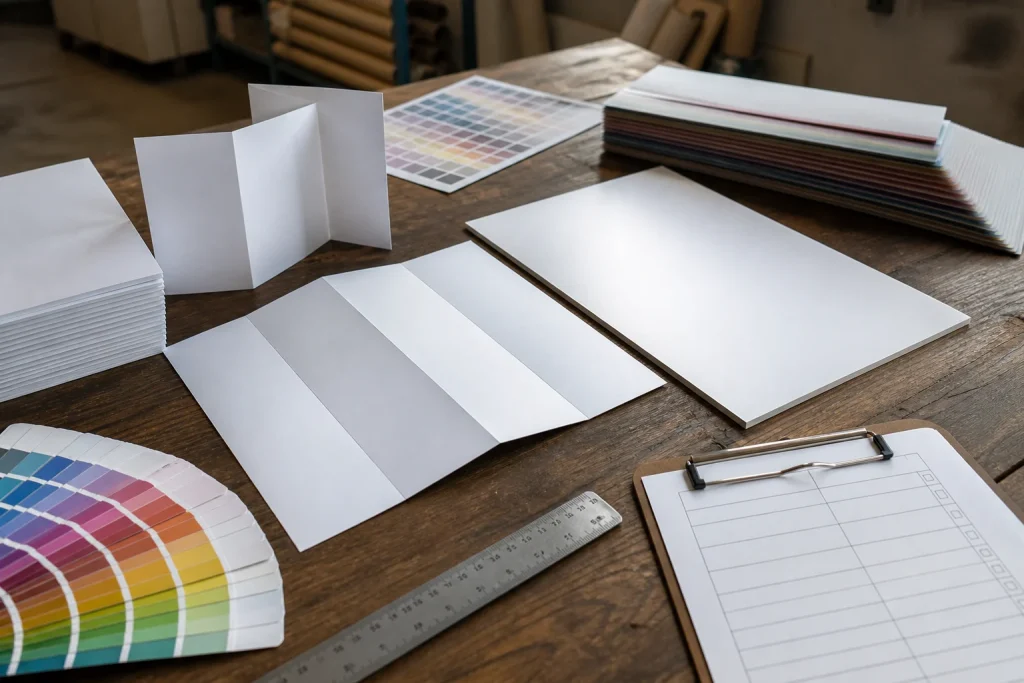
The common mistake is treating a changed job as a straightforward reorder. A new quantity, revised size, different material, altered folding pattern or updated artwork can affect how a printer plans the work and prices it. The same is true when a standard item becomes a bespoke request. Be direct about the change rather than hoping it will be spotted in an attachment.
For example, a hypothetical business may have ordered A5 flyers for a local promotion, then decide to use the next version as a folded information leaflet. The message may be similar, but the finished format, fold position, artwork setup and paper choice all need confirmation. Calling it a repeat order could create confusion. Calling it a revised version of a previous campaign gives the printer a much clearer brief.
Quantity deserves a second look too. Digital and litho printing can suit different types of order, but the appropriate choice depends on the job’s specifications, volume and required versions. Share your expected quantity and whether the content changes between copies, then let the quote reflect the options available for that particular order.
Conclusion
A good print quote UK brief preserves the details that made the original item successful while making every change visible. Keep the approved artwork, old order information and a physical specimen where possible. Then confirm the product, size, quantity, material, finishing, delivery details and final content review in one clear message. For unusual formats, revised display work or any uncertainty over the original specification, provide as much reference material as you can and treat the request as a fresh conversation. Save the completed specification alongside the approved file, and the next repeat order should be far easier to manage.