Printed banners can earn their place beyond a single campaign when the message is built to last. Rather than filling an inch with dates, discounts and details, create a branded display that explains who you are, what you offer and how people can take the next step. Use smaller, changeable print alongside it for changing details.
⏱️ Estimated reading time: 6 minutes
Table of Contents
Start with the message that should not change
A reusable banner needs a clear job. It might introduce a business at a trade show, mark the entrance to a venue, support a market stall or make a service easier to spot. In each case, begin with information to remain accurate: the business name, logo, core service, a short positioning statement and a way to get in touch.
Be selective. A banner is not a brochure, and trying to make it explain every service makes the lasting message less useful. A café, for instance, may keep a banner focused on its name, food style and location, while changing specials on a separate poster.
Before artwork begins, write the banner’s message in one sentence. If that sentence makes sense without a date, offer or seasonal reference, it is a sound starting point. If it does not, ask whether the banner is a short-lived advert rather than a display.
Build printed banners around a stable brand layer
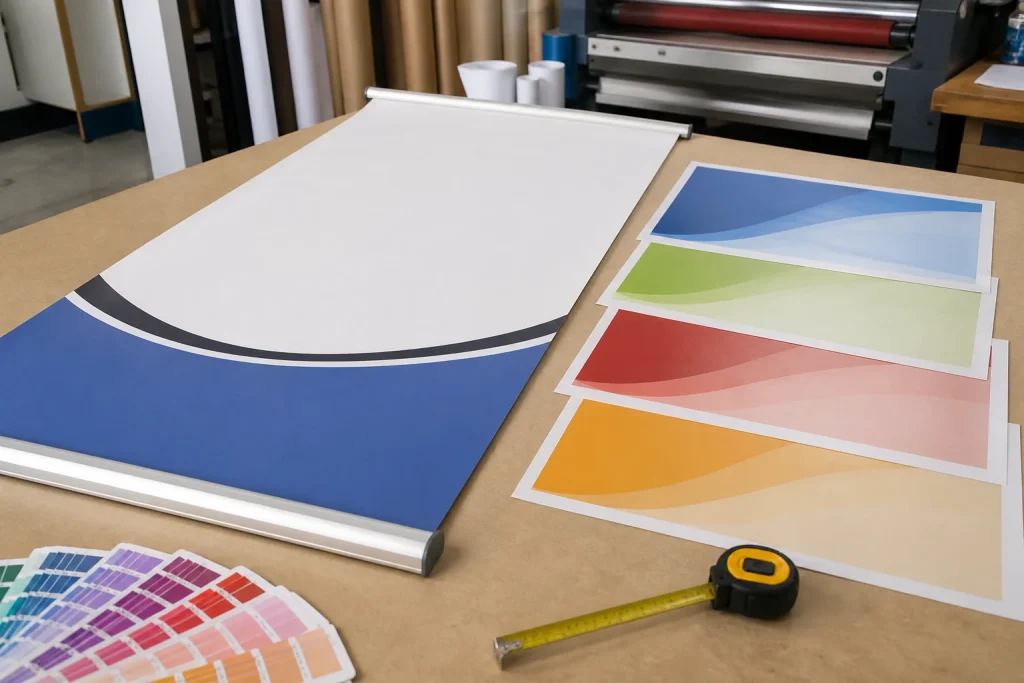
Think of the design as two layers. The stable layer carries the identity: logo, colours, typefaces, service message and any contact detail that is unlikely to change. The campaign layer carries information with a shorter shelf life, such as an event date, deadline, announcement or limited offer.
For printed banners, the stable layer should take the leading position. It needs to work when someone sees the display from a distance or in a setting. Keep the central message short, give it space, and avoid placing essential wording too close to the edges where it could be affected by the format or fixing arrangement.
Campaign material can sit beside the banner rather than on it. On the setting, that may be a poster, flyer, tabletop sign, sticker or a screen used at the same stand. It also lets a business test different offers without redesigning the wide-format display.
Consistency matters. Use the same logo, colour palette and tone of voice across both layers, but do not force them to contain wording. The banner should establish recognition; the supporting piece should explain the reason to act.
Choose printed banners by their repeat use
The banner format depends on where it will be used, how it will be displayed and whether it must travel. Newstyle Print supplies PVC banners, roller banners, feather flags, pop-up displays and printed gazebos, among wide-format display products. Each serves a different practical role, so it is worth deciding on the reuse plan before artwork.
- PVC banners can suit a message intended for repeated display where a fixing method is available.
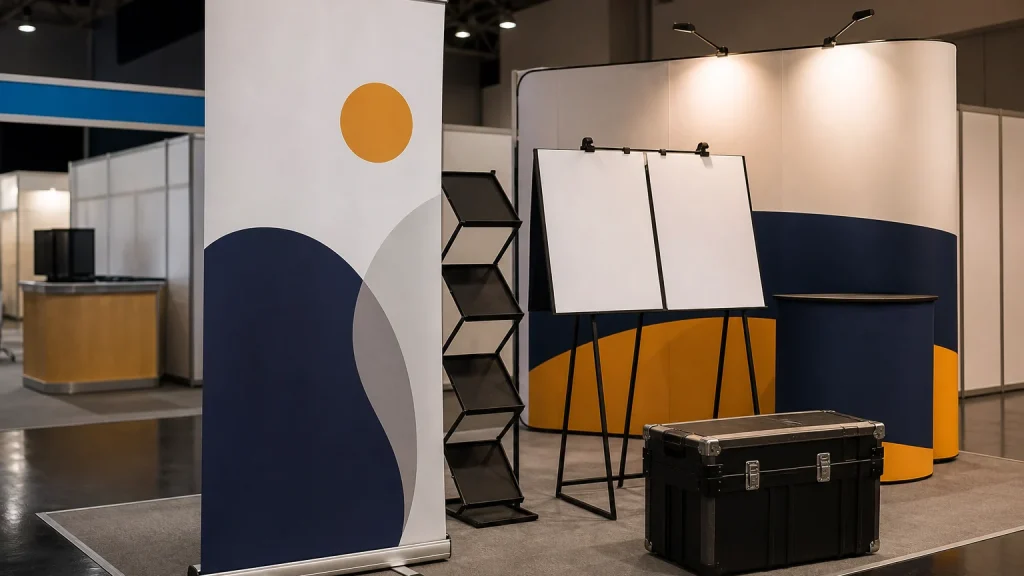
- Roller banners may suit businesses that need a display for meetings, exhibitions or temporary indoor spaces.
- Feather flags are better for a simple, enduring identifier than a detailed campaign message.
- Pop-up displays may make sense when a larger backdrop will be used across several events.
Do not choose on appearance. Consider who will carry it, where it will be stored, whether it needs to fit a display position and what other graphics will sit nearby. A large backdrop may be useful for an exhibition programme but excessive for a business that needs a compact, occasional display.
Avoid printed banners mistakes that shorten useful life
The most mistake is treating a reusable banner as a noticeboard. Several phone numbers, social handles, service lists, badges, dates and promotional claims may be accurate at time of printing, yet make the display difficult to update or absorb.
If a QR code is used, point it to a stable page that can be maintained, rather than a one-off campaign page that may disappear. Check that the code remains large enough and has enough uncluttered space to scan in viewing conditions.
It is worth checking contact details, spelling, web addresses and logo files before approving artwork. Reusing a banner with an outdated telephone number or retired brand mark is rarely a saving.
Reusable messaging does not make sense for every job. A banner for a one-day sale, a dated conference or a time-sensitive public notice should state that purpose plainly. In those cases, designing for reuse can water down the message. The sensible choice is the one that matches the lifespan of the information.
Make each campaign addition easy to replace
A simple campaign kit keeps the main banner useful. Alongside the evergreen display, prepare a template for the temporary item: perhaps an A3 poster, a flyer or a small counter sign. Set aside a defined area for the offer, date, price or event details, while retaining the colours and typography that connect it to the banner.
For example, a hypothetical fitness studio could use a roller banner stating its core classes and location throughout the year. For an open day, it could add posters with the date, timetable and joining offer. Once the event has passed, posters are removed while the main display remains relevant. The same principle works for retailers, schools, hospitality venues and organisations attending recurring events.
When requesting a quote, explain the intended repeat use and mention any supporting pieces you expect to update. Newstyle Print can help with wide-format print, graphic design and bespoke print work, which may be useful where the main display and campaign materials need to look like one considered set.
Conclusion
Reusable printed banners work best when they carry a strong, stable brand message and leave time-sensitive detail to smaller supporting print. Decide what must stay visible, choose a format that suits repeated use, and keep campaign additions separate enough to replace without disrupting the whole display. A clear brief covering location, purpose, artwork and the information likely to change will make it easier to plan a banner that remains useful from one campaign to the next.