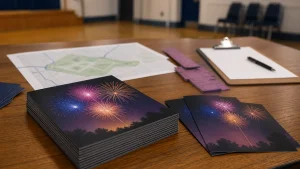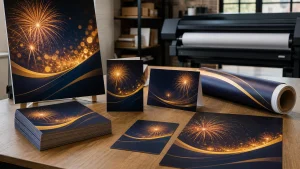
PVC banners UK need a clear display brief when a single design is intended to work in more than one setting. A design file by itself rarely provides enough context. Tell the printer where the banner may appear, who should read it, how it is likely to be fixed, and which details must stay consistent. That information supports artwork checks and a discussion of suitable available formats and finishing options.
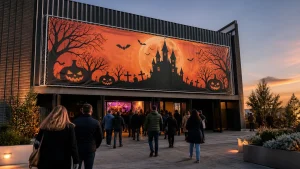
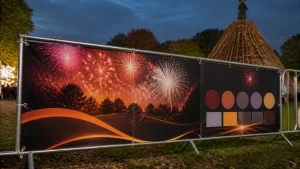
The same banner might be considered for a shop frontage, a school open day, a community fair, or a temporary venue display. Even with identical branding, those settings are not interchangeable.
⏱️ Estimated reading time: 6 minutes
Table of Contents
Why PVC banners UK need a display brief
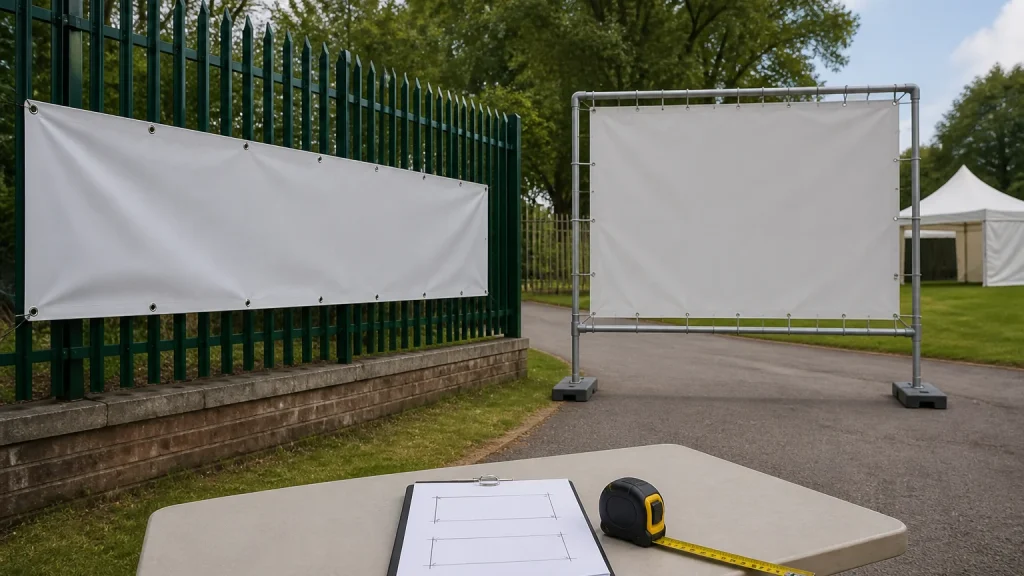
A display brief changes a broad request, such as “we need a banner for different sites”, into details a designer or printer can use. It connects choices to the actual environment rather than to an old flyer, a preferred colour, or an image that merely happens to be available. Note every likely setting and say whether the banner is for one occasion, repeated use, or longer-term site messaging. A supplier can then discuss the product, finishing, and fixing options in an appropriate context.
The brief should also separate confirmed requirements from assumptions. A proposed wall, for instance, may not yet have been measured, while a venue may still be deciding where displays can be attached. Marking those points as uncertain is more useful than treating them as final specifications. It allows practical questions to be resolved before artwork is approved.
Start with locations, viewing conditions and fixing
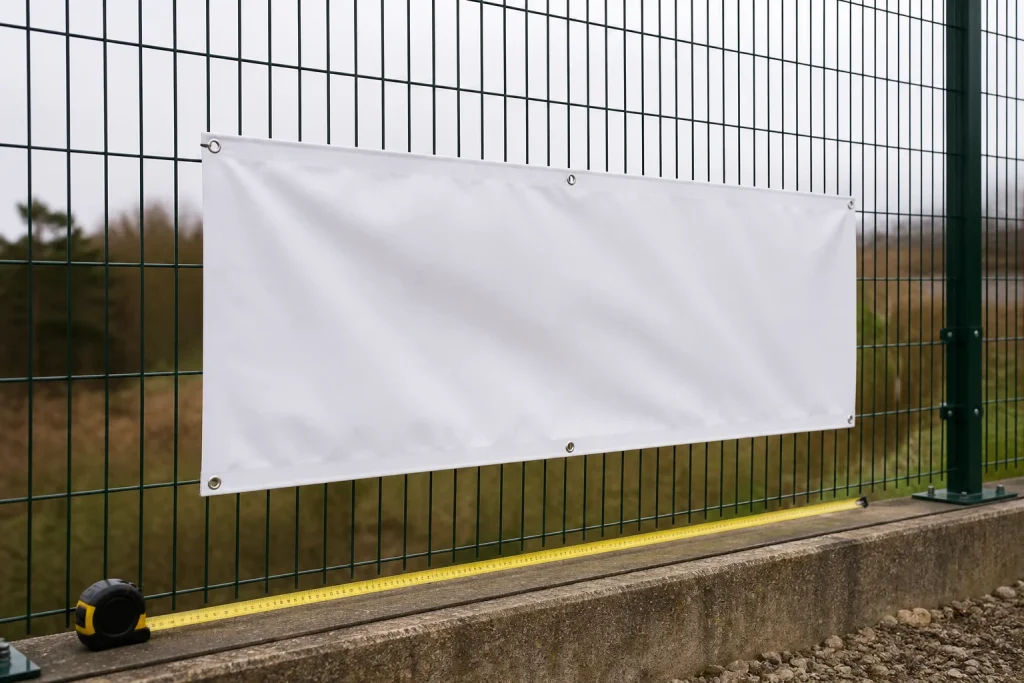
Describe proposed locations in straightforward language. “Fixed to a fence by the entrance”, “hung against a hall wall”, and “attached to a stall frame” each indicate a different situation. Include what is behind the banner, whether people approach it head on or pass alongside it, and whether signs, vehicles, or other displays may compete for attention. Before selecting a finished size, measure the available space and check gates, posts, windows, rails, and other obstructions.
Viewing distance is relevant, although whether people are likely to pause also matters. A banner viewed by people walking past will normally need a short message that can be understood quickly. A display beside a reception point may accommodate more practical detail because readers have time to stop. Lighting, sightlines, and direction of travel may affect what is noticeable as well. These are not technical rules, but useful prompts when deciding how much information belongs on the banner.
Consider fixing before the artwork is finalised. Confirm who will install the banner, what it will attach to, and whether suitable attachment points already exist. Ask the supplier about finishing and fixing options available for the selected banner.
Give the banner one main job
Different locations can require different priorities. At an entrance, a banner’s main job may be to announce an open day. Near a service counter, it might highlight a booking route or a current offer. On a school site, it may identify an activity or welcome visitors. Decide that primary job before settling on the wording. One useful test is to complete the sentence: “After seeing this banner, people should know…”
When the answer includes several unrelated actions, the design is probably being asked to do too much. A banner is not a brochure.
Prepare artwork that can adapt
Supply current logo files, approved brand colours, final wording, and any required images. If several people contribute, appoint one person to confirm the final copy. Conflicting dates, contact details, or campaign wording can lead to corrections. It is sensible to state whether the artwork may later be reproduced at another size or in another orientation.
A wide layout will not automatically translate neatly into a tall format. Preserving every element can result in small type, cramped spacing, or an unclear visual order. Related versions can retain the same identity while responding to the space available at each site. Keep room around important wording and logos, especially near edges where finishing or fixing may affect what is easy to see. An artwork check can identify issues in a supplied file, but it cannot determine which message matters most to the intended audience. That choice belongs in the brief.
Know when separate versions are clearer
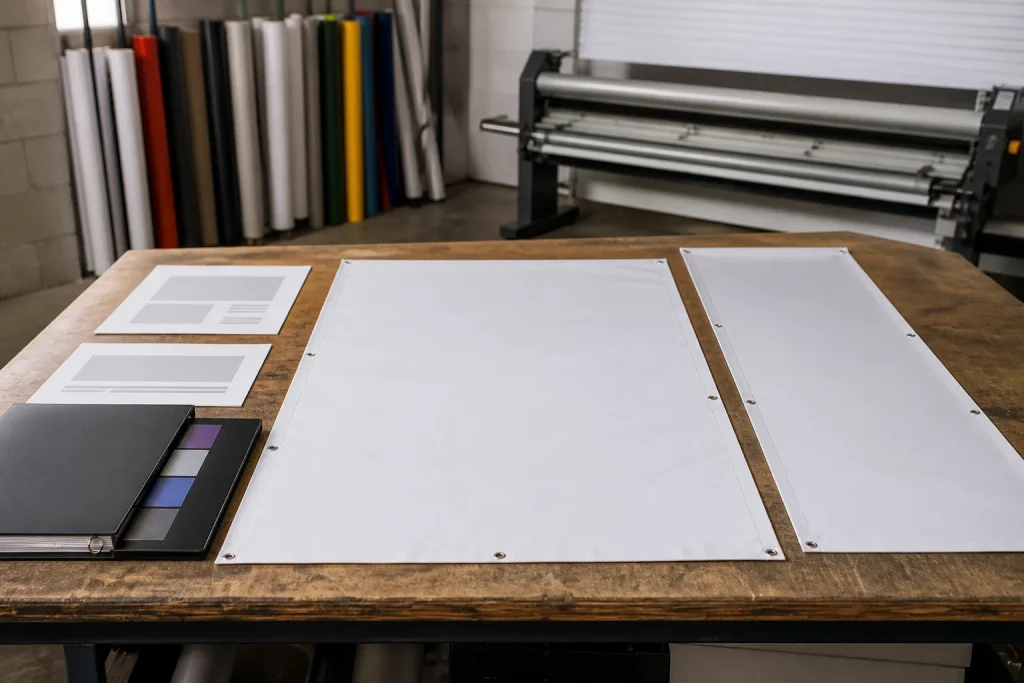
A frequent mistake is to assume every site has the same audience, message, and viewing conditions. The resulting layout may try to combine a large logo, headline, long service list, social prompts, contact details, and a promotion.
Review the hierarchy with the physical setting in mind, not only on a desktop screen. Where people will see the banner while moving, the opening words need to carry more of the message than supporting copy. If readers are likely to stop, there may be room for additional detail. One banner may not be the right choice when audiences, available sizes, or key messages genuinely differ. Separate versions require extra planning and production choices, but may be clearer and more relevant.
What to include in a brief for your printer
A concise brief should distinguish confirmed details from ideas still under discussion. Include:
- the banner’s main purpose and the action or information it must communicate;
- each intended location, including whether it is indoors or outdoors;
- the available display area, measured space, and relevant obstructions;
- the expected fixing method, attachment points, and the person responsible for installation;
- the audience, likely viewing conditions, and whether people will pass or stop;
- final wording, logo files, brand guidance, and approved images; and
- whether other sizes, versions, or future updates are likely.
Flag uncertain details, including an unconfirmed venue or a provisional wall size, so they can be checked before approval.
Conclusion
Custom PVC banners are easier to plan when the brief begins with the display rather than the design alone. Describe locations, fixing arrangements, the audience, and the primary message, then consider whether one layout can serve them all. Newstyle Print offers customised PVC banner printing and free artwork checks. Taking measured space details and final wording to a discussion can reduce assumptions and help shape a more suitable display plan.