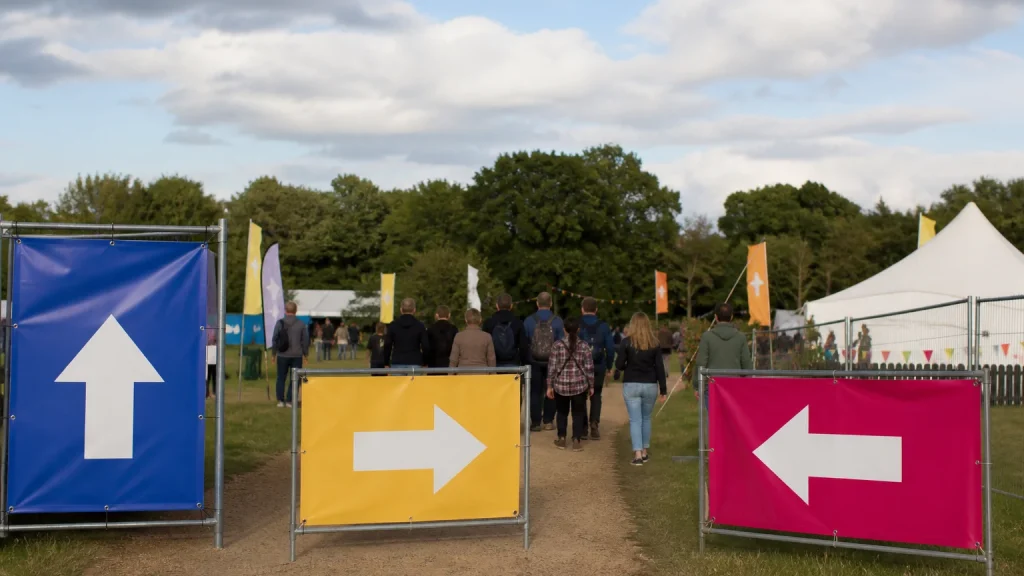
PVC banners can guide visitors around busy events when each banner answers one clear question: where to enter, where to go next or where to leave. Rather than treating banners as decoration, organisers can use them as part of a simple wayfinding system. Clear wording, a consistent visual approach and sensible placement may help people orient themselves without repeatedly asking staff for directions. The useful message appears before the decision it supports, not after it. Banners should complement the site plan, stewarding and any venue signage; they cannot replace those arrangements. This guide focuses on planning messages for arrival, activity areas and departure at temporary events.
⏱️ Estimated reading time: 6 minutes
Table of Contents
Start with the visitor journey, not the artwork
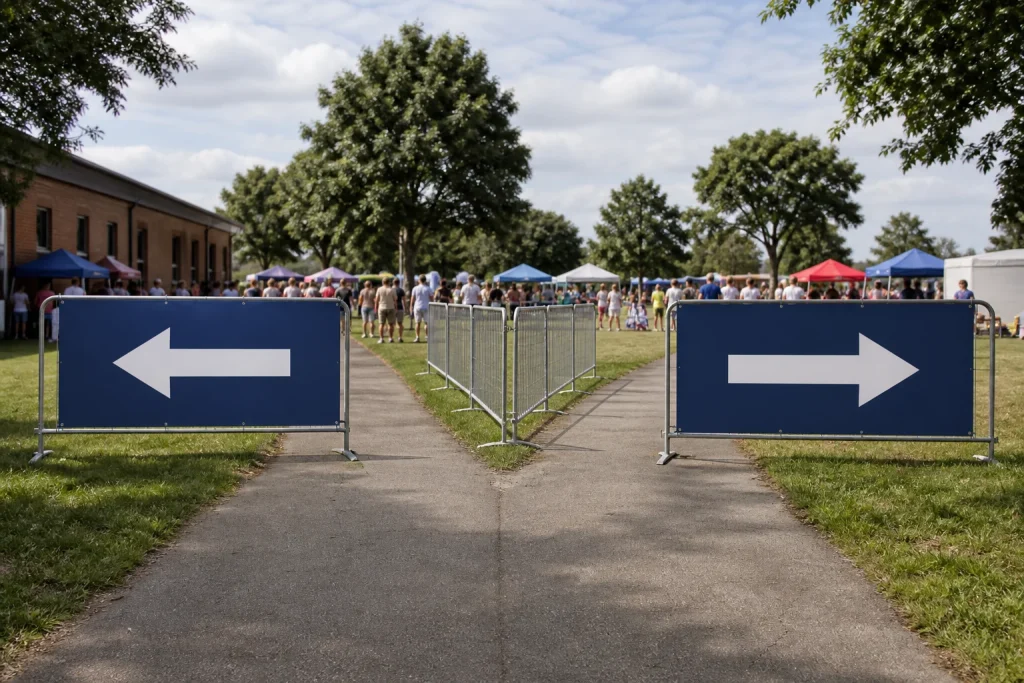
Map the route a first-time visitor is likely to take before writing banner copy. Begin at the approach to the venue, then trace entry, registration or ticket checks, main activity areas, facilities, refreshments and exits. This often exposes gaps that are easy to miss when planning only from a site map. At a school fair, people may need to find parking, the welcome desk, stalls, toilets and a collection point. A community event might also need directions to a stage, first-aid point or quieter activity area. The layout changes, but the task stays the same: reduce hesitation at each decision point.
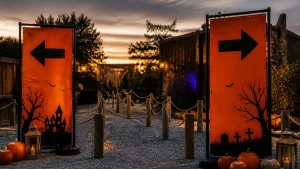
Give every location a purpose. An entrance banner should confirm that visitors have arrived at the right place. A directional banner should point towards one destination, or a closely related pair where that remains easy to understand. A banner near an exit can reinforce the route out, provide a brief thank-you message or identify a final collection area. Walk the route as someone unfamiliar with the venue.
How PVC banners can carry clear route messages
Wayfinding copy needs to work at a glance. Visitors may be moving, talking to companions or watching for other people, so a long explanation is unlikely to help. Put the destination first: “Main Entrance”, “Registration”, “Food” or “Exit”. Add an arrow only when its direction is unambiguous from the banner’s planned position. A practical hierarchy is destination first, arrow second and a short supporting detail last.
Keep that hierarchy consistent throughout the event. Colour can distinguish zones, but it should not carry the entire meaning. Visitors should still understand the banner if lighting is poor, colours reproduce differently than expected or they do not know the event’s colour code. Pair colour with clear words, simple symbols where appropriate and obvious arrows. PVC banners are sometimes described as vinyl banners, but material descriptions and finishing options can vary between suppliers. Confirm the current product specification, intended setting and fixing approach before ordering.
Use PVC banners at entrances activity zones and exits
A single banner can be clear yet still fail as part of a wider system. Wording, colours, arrows and destination names need to match from one location to the next. Calling an area “Information” on one banner and “Help Desk” on another creates a small but avoidable moment of doubt. Prepare a short list of approved place names before artwork begins. Use those names on banners, programmes, staff briefing notes and temporary signs. If there are several entrances, label them consistently and establish which is intended for visitors, deliveries or accessible access where relevant.
Venue-specific arrangements need checking with the site team. A wayfinding plan can identify arrival points, decision points, activity zones, facilities and departure routes. At arrival, confirm the event name and the entrance. At forks, gates, corridors and crossings, show the next route. Name activity zones consistently. Point towards toilets, refreshments, first aid or information when those facilities are available and relevant.
Plan placement and fixing before artwork is approved
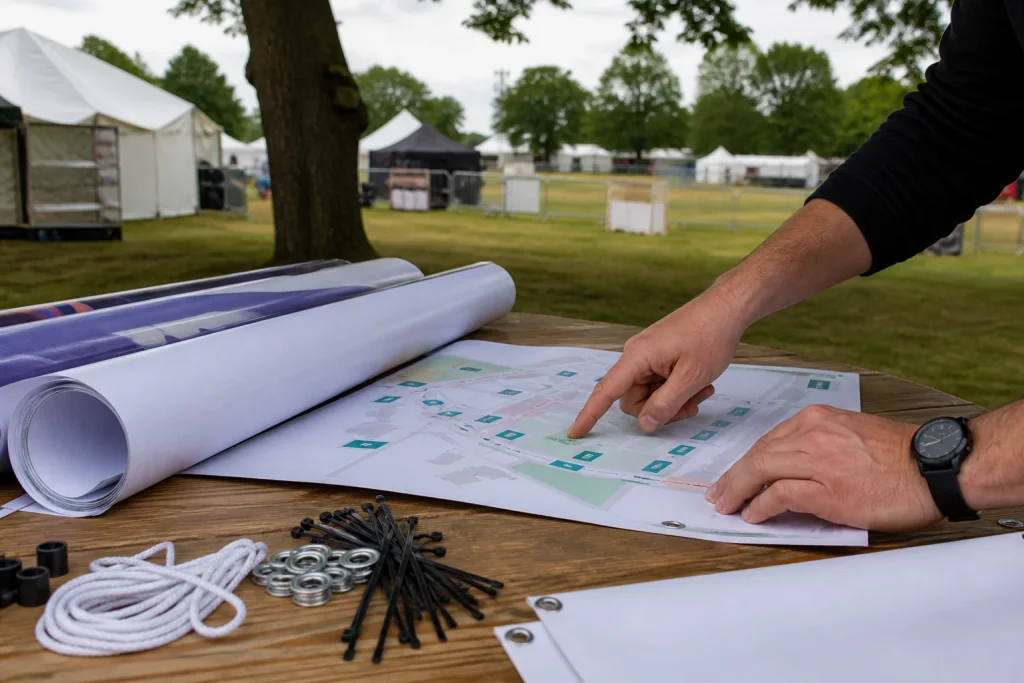
Banner placement is part of the communication plan, not a last-minute installation task. Consider where people will approach from, whether a banner faces the intended flow of foot traffic and whether a wall, vehicle, stall or tree could obscure it. A sign placed after a junction may look tidy but arrives too late to guide anyone. Check the venue’s rules and site conditions before deciding how and where to display banners. Available fixing points, wind exposure, access requirements and temporary structures can all affect what is suitable.
A banner should not obstruct an exit, conceal existing safety information or create an avoidable trip or fixing hazard. These are site-specific considerations rather than properties guaranteed by the printed item itself. Discuss the proposed locations with those responsible for the venue, particularly where public access, shared routes or changing weather are involved. It is also sensible to view a proof of the full set together. Similar colours, arrows pointing in different directions or inconsistent names are easier to spot before production than on the day.
Avoid common wayfinding mistakes with PVC banners
Plan who will install, inspect and remove each banner. A numbered location plan can reduce confusion when volunteers, venue staff or external installers are involved. Keep the final artwork alongside that plan, especially when several banners have similar colours or destination names. Check the wording from the visitor’s viewpoint rather than from the organiser’s knowledge of the site. Terms that seem obvious internally may not mean much to a first-time guest.
The frequent mistake is trying to make every banner do everything. A crowded design may include a logo, timetable, map, sponsor details and several directions. None of those elements is automatically wrong, but together they can bury the message a moving visitor needs. Put detailed programmes and maps at an information point or in a handout instead. Also watch the natural route from pavement or car park to the entrance. If people turn left at a gate, the instruction needs to appear before that turn, not beside the destination.
Conclusion
Effective event wayfinding follows the visitor’s next decision. Plan the route before designing the banners, give each banner one clear purpose and use the same destination names throughout the site. Review proposed positions with the venue, account for site conditions and check the complete banner set before the event opens. Used in this way, PVC banners can provide visible route prompts while staff and venue arrangements handle the wider event operation.