PVC banners cleaning is usually straightforward: remove loose dirt gently, wipe the surface with a soft cloth and clean water, then let it dry fully before rolling or storing it. Regular inspection matters just as much. Dirt, standing water, strained fixing points and poor storage can make an outdoor display look neglected before its message needs replacing. A simple care routine helps businesses, schools and event organisers keep a banner presentable throughout its intended use.
⏱️ Estimated reading time: 5 minutes
Table of Contents
Start with a gentle cleaning routine
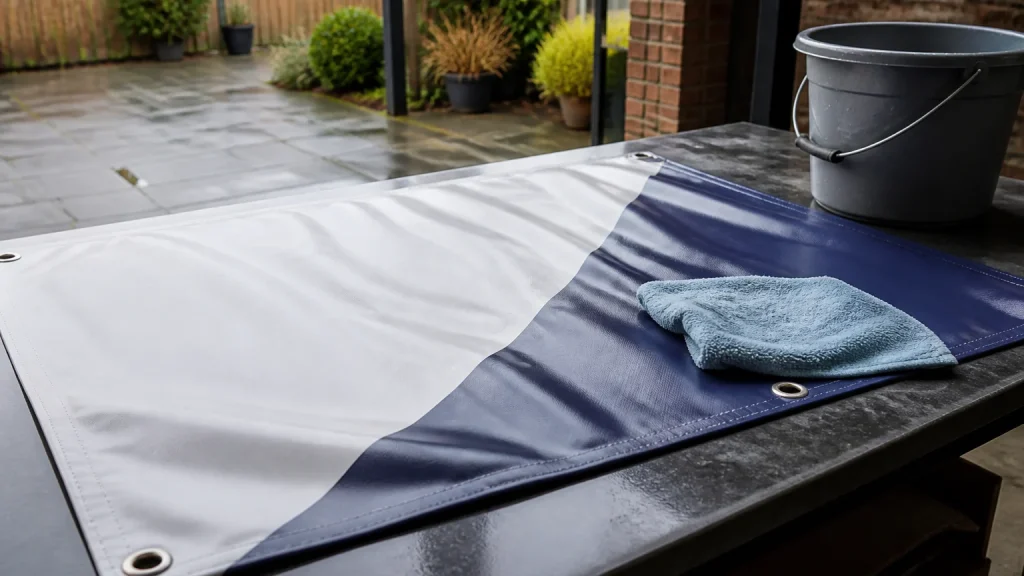
Choose a calm, dry day where possible. Take the banner down only when it is safe, place it on a clean flat surface and remove loose dust, leaves or grit with a soft, dry cloth. Do not drag the printed face across paving, gravel or rough ground. Abrasive particles can mark the surface when pressure is applied during wiping. Work methodically from one edge to the other, especially if the banner has been displayed near traffic, vegetation or a busy entrance.
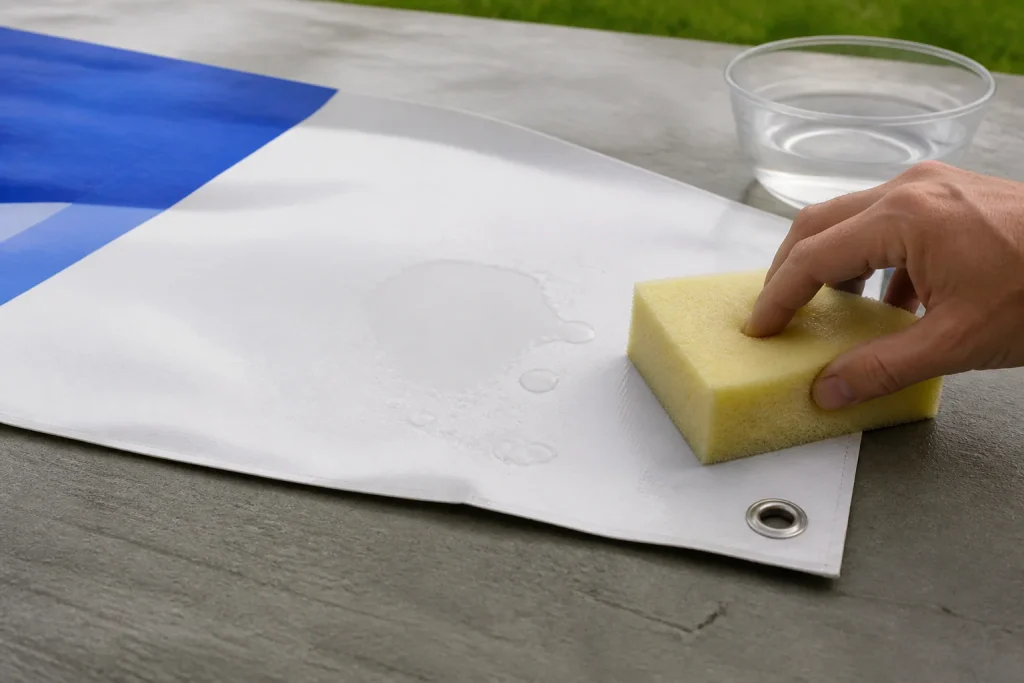
For ordinary surface dirt, use a soft cloth or sponge dampened with clean water. Clean small areas rather than scrubbing one mark repeatedly. If water is not enough, consult the printer’s care guidance before applying any product. A mild cleaning solution may suit some banner materials and inks, but materials, prints and finishes vary. Test an approved solution on an unobtrusive corner, use it lightly, then remove residue with another damp cloth. Allow both sides to dry completely. A damp roll can trap moisture, transfer grime between surfaces and hide marks that still need attention.
PVC banners cleaning: what to avoid
Do not treat a banner like a hard signboard. PVC banners are flexible printed displays, so aggressive cleaning can cause more harm than ordinary outdoor dust. Avoid scourers, stiff brushes, abrasive powders and strong solvents unless the supplier has confirmed compatibility with the material and print. Such products may dull the finish, leave residue or affect the surface. Pressure washers are also a poor fit. A concentrated jet can force water into edges and fixing areas, pull at the material, or worsen an installation that is already strained.
Do not use heat to speed drying. Hairdryers, heaters and hot surfaces add unnecessary risk and may encourage creasing. Let the banner dry naturally over a clean, smooth support rather than folding it across a sharp edge. If a stain remains after gentle cleaning, accepting a faint mark may be safer than escalating to a product that damages a larger printed area.
Inspect PVC banners before and after bad weather
Cleaning is a useful chance to inspect the entire display. Look along the edges for creases, tears or places where the banner has rubbed against a wall, fence or frame. Check that eyelets remain intact and that ties, cords or other fixings are not frayed, stretched or cutting into the material. A banner can appear acceptable from a distance while one fixing point carries too much strain. After wet or windy conditions, remove pooled water, leaves and debris when it is safe, then check whether the banner still sits evenly.
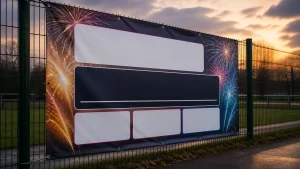
Slack areas can flap, while a tight installation can place unnecessary stress on corners and eyelets. The aim is not to pull the material taut; it is to keep the display supported, readable and free from obvious rubbing. For a hypothetical school fête banner on temporary fencing, a quick check before use may reveal a loose tie or an eyelet beginning to pull. Replacing that fixing and adjusting the tension early is preferable to waiting for a tear during the event.
Keep the installation clean as well as the print
A clean banner can still look untidy if its surroundings are ignored. Muddy ties, rusty fixtures, rough wire or sharp fence ends can stain, snag or abrade the material. Before reinstalling a cleaned banner, wipe the frame or support where practical and remove anything likely to catch the edges. Make sure fixings suit the location and do not create concentrated pressure in one place. Consider sightlines as well. Shrubs, branches and loose signs can rub the printed face in wind. Moving the banner slightly may solve the problem without changing the artwork.
For short promotions, do not assume the banner should remain installed once the date has passed. Taking it down reduces unnecessary exposure and creates an opportunity to clean and store it for a later, relevant use. If repeated rubbing is unavoidable, a different position or a more suitable sign format may make better sense for the site than repeated repairs.
Store clean PVC banners carefully between uses
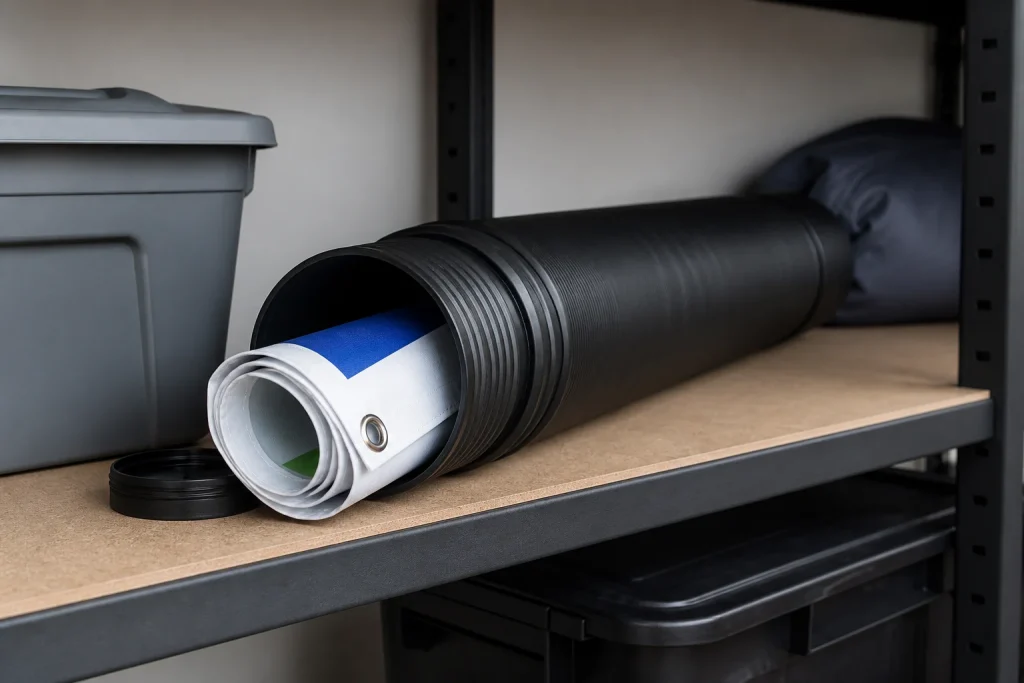
Store the banner only when it is clean and fully dry. Roll it loosely, keeping the printed side protected from dirt and rough surfaces, rather than folding it into tight creases. A clean protective sleeve or tube can reduce scuffs during transport and storage if it is large enough not to crush the material. Choose a dry indoor place away from direct heat, damp floors and sharp corners. Do not stack heavy boxes on a rolled banner. During vehicle transport, keep it clear of tools, metal edges and loose equipment.
When cleaning and maintenance do not make sense
Maintenance cannot restore a banner that is unsafe to install, badly torn or no longer fit for purpose. Nor can it correct outdated dates, a changed logo or text that is difficult to read. Before reusing a stored banner, unroll it and check the print, edges and eyelets. If damage is significant or the message is no longer current, replacement or artwork may be more practical.
Conclusion
Gentle cleaning, complete drying, routine checks and sensible storage are the foundations of outdoor PVC banner care. Avoid harsh products and pressurised cleaning, monitor the fixings, and remove a display when it is no longer needed. If a banner is damaged, outdated or unsuitable for its location, review the display plan rather than repeatedly repairing around the issue. Careful preparation and ongoing maintenance help keep the printed message clear and professional throughout its intended use.