Brochure printing works best when you decide what the reader needs to do next before choosing the format, paper or finish. Begin with one primary reader decision, then let the content, page order and print specification support it.
⏱️ Estimated reading time: 5 minutes
Table of Contents
Brochure printing for sales conversations
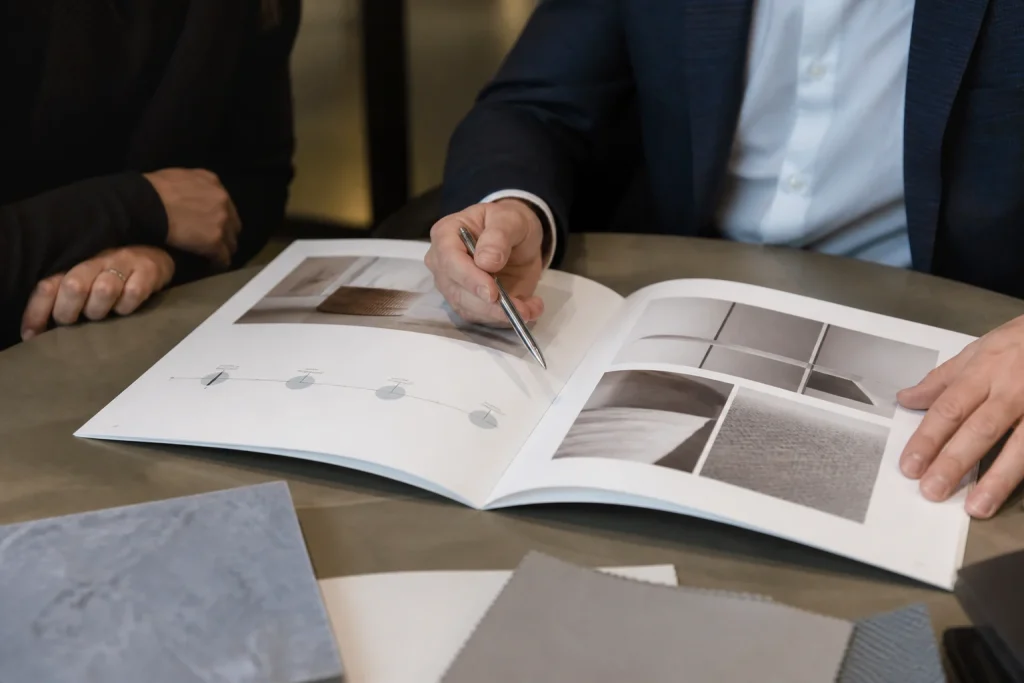
A conversation-led brochure is useful when the reader is unlikely to decide alone. Think of a business development meeting, showroom visit, consultation or trade event.
Lead with the problem you solve and the type of person or organisation you help. Follow that with a concise overview of your offer, a few relevant examples of what you provide, and clear contact details. A sales brochure may include a short list of services, but avoid turning each spread into a dense catalogue. The person presenting it needs space to tailor the discussion.
For example, a hypothetical property maintenance business might use a brochure during site visits. It could outline the types of work available, show how enquiries are handled and leave room for a conversation about the building in front of them. Detailed rates, if they change regularly, may be better handled separately.
A compact format can suit this role because it is easy to carry and pass across a table. However, the right size and fold depend on the amount of approved content and how the brochure will be handed out. Ask your printer for guidance before forcing extensive copy into too few panels.
Use brochure printing to explain services clearly
Service-explainer brochures suit businesses whose offer needs a little context before it makes sense. This can apply to professional services, trades, specialist products or packages with several steps. The reader may have a genuine need but not know the terminology, process or differences between available options.
Arrange the pages in the order a new reader would naturally ask questions. Start with the need or outcome, explain what is included, then cover the process, practical considerations and what happens next. Headings should state something useful rather than simply naming an internal department.
Plain language matters here. Replace vague claims with specific information you can stand behind. Instead of saying that a service is “tailored”, explain what can be chosen or adjusted. If a decision depends on a site, quantity, artwork or other details, say so. That is more helpful than presenting a one-size-fits-all answer.
Images, diagrams and icons can support the explanation, but only when they clarify the copy. A photograph may show the result, while a simple process graphic can show the order of stages. Decorative visuals should not displace essential wording or make a spread harder to scan.
Brochure printing for product comparisons
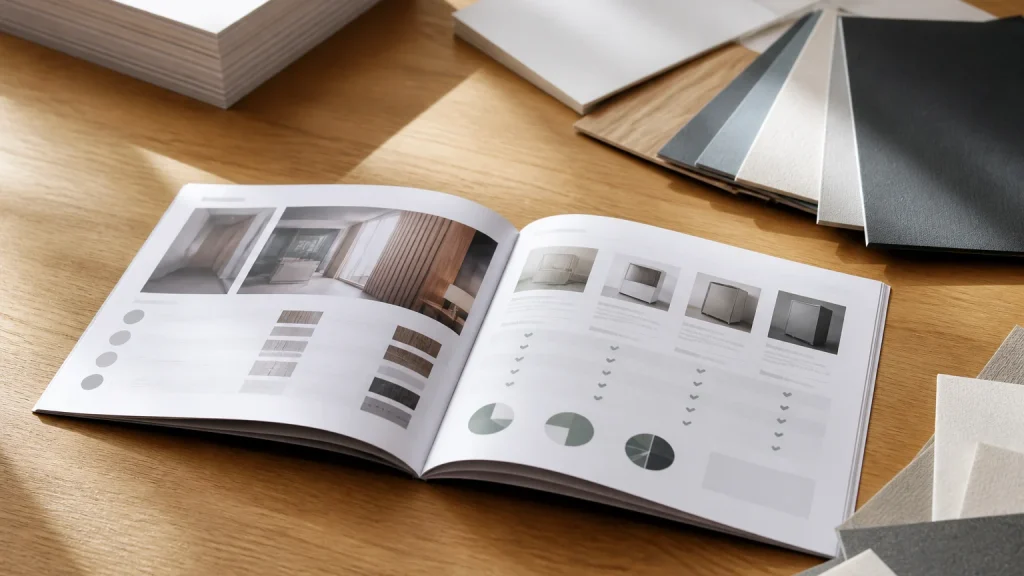
A comparison brochure helps readers narrow a choice without needing to hunt across several pages or websites. It is particularly useful where products, packages or options share a purpose but differ in features, use cases or ordering requirements.
| Reader needs to decide | Useful brochure content | Information to keep separate |
|---|---|---|
| Whether to speak to you | Problem, offer overview and next step | Every technical detail |
| How a service works | Process, inclusions and practical questions | Unrelated service lists |
| Which option fits | Like-for-like features and clear distinctions | Uneven or ambiguous comparisons |
Use the same criteria for every option. If one product lists size, material, available finishes and intended use, the others should be described in the same way where relevant. Readers should not have to infer whether a missing detail means “not available” or simply “not mentioned”.
Comparison copy needs restraint. “Best” only means something when you define the circumstances. A better approach is to state that one option may suit frequent updates, another may suit a larger range, and a third may be the straightforward choice for a particular use. This leaves room for a useful conversation where the brief is more complicated.
Choose the structure before the print specification
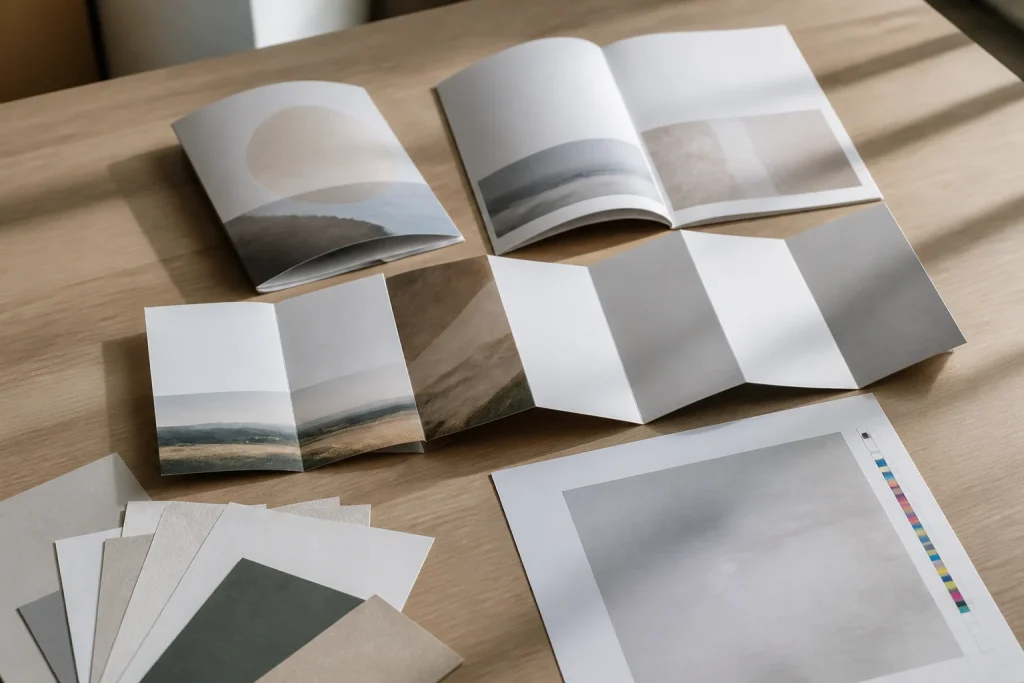
It is tempting to begin with paper weight, folding or a premium finish. Those choices affect the physical feel of a brochure, but they cannot rescue muddled content. First decide the reader journey and the number of pages or panels genuinely needed. Only then should you discuss the format and production route.
A short-run brochure with changing details may call for a different approach from a larger, stable campaign. Newstyle Print offers digital and lithographic printing, so it is sensible to provide the intended quantity, format, page count, artwork status and deadline when requesting a quote. That gives the print team the information needed to discuss suitable options rather than making assumptions.
Keep the cover purposeful. It should identify the subject and give the reader a reason to open it. Inside, give each spread one clear job.
Common brochure printing mistakes to avoid
The most common mistake is treating the brochure as a storage place for every message the business has ever used. If the reader needs to compare options, a long company history and unrelated service descriptions can interrupt the decision. Keep supporting material only when it removes a meaningful doubt.
Another frequent issue is mixing audiences. A brochure aimed at a first-time buyer will usually need more explanation than one handed to an informed trade contact. If both audiences matter, consider separate versions or a core brochure supported by a more detailed sheet. One document can sometimes serve two groups, but only if their questions are genuinely similar.
Finally, do not approve artwork without checking the practical details: current contact information, product names, prices where included, page order, spelling, image quality and any QR code destination. If content is still moving, resolve that before committing to a larger quantity. Design support can be useful where the message or layout needs work before print.
Conclusion
Good brochure printing begins with a simple question: what decision should this reader be able to make after reading it? Build the brochure around sales discussion, service understanding or product comparison, rather than asking one piece of print to do everything. Once the content is settled, share the format, quantity, page count and artwork requirements with Newstyle Print to discuss a suitable printed specification or a bespoke quote.