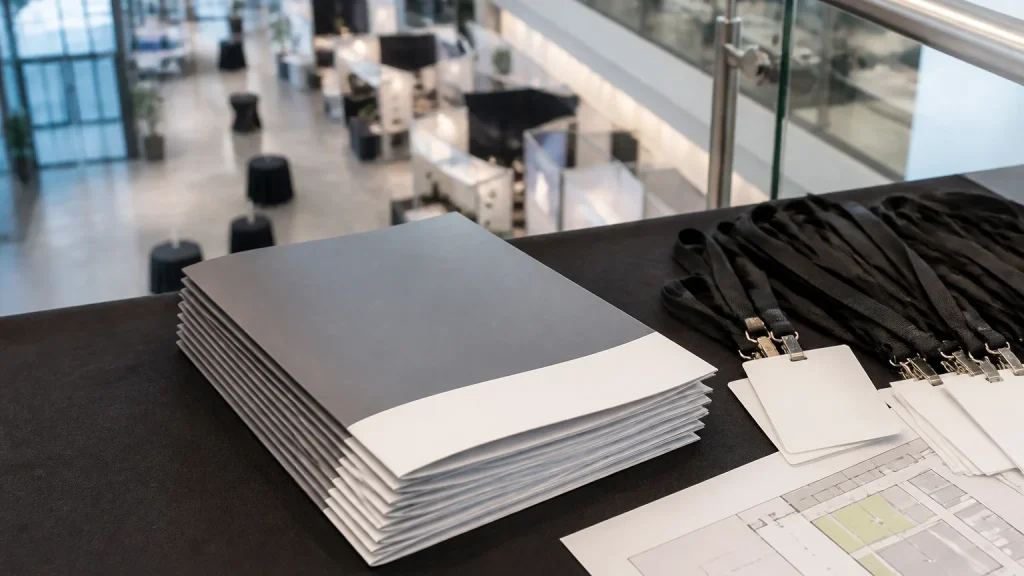
Stapled booklet printing for events works best when it is planned for the moments after attendees register, rather than as a container for everything an organiser wants to say. A useful booklet helps people find their way, choose sessions, meet exhibitors and retain useful information afterwards. Treat it as a practical companion, not a miniature website. Attendees may be standing in a busy foyer, holding coffee or making a quick choice between sessions. Clear hierarchy, logical page order and a manageable format matter more than squeezing in every available detail. Signs, registration material and digital updates can carry other information.
⏱️ Estimated reading time: 6 minutes
Table of Contents
- Stapled booklet printing for events and the attendee journey
- Plan content around real attendee interactions
- Choose a format people will carry
- Paper and finishing choices for stapled booklet printing for events
- Common mistakes in stapled booklet printing for events
- When a stapled booklet may not fit
- Conclusion
Stapled booklet printing for events and the attendee journey
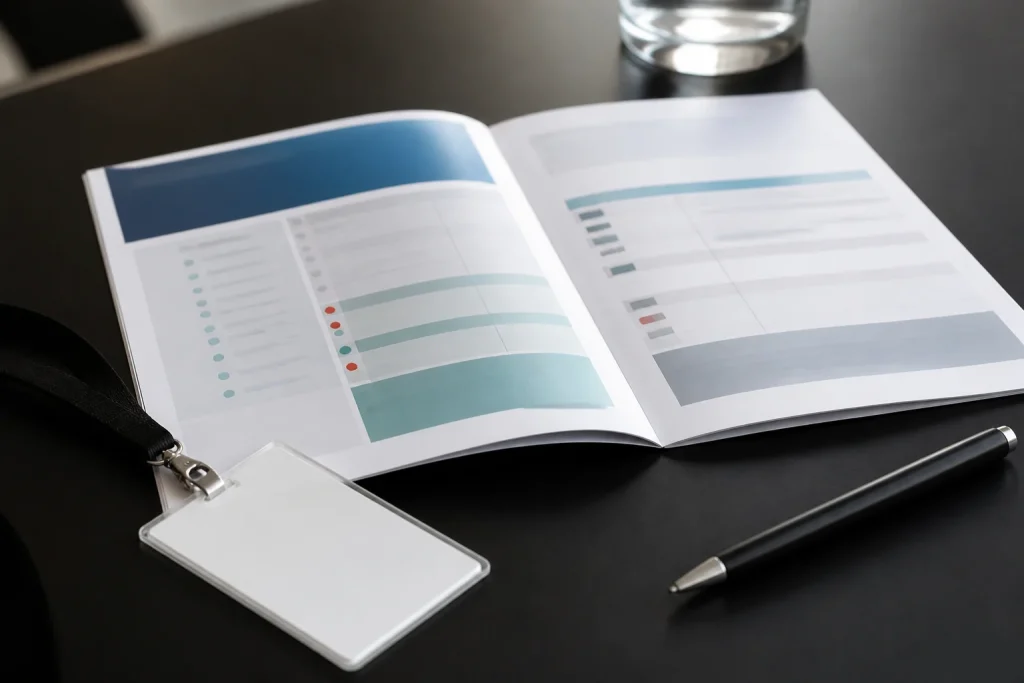
Map the booklet against what people need after receiving a badge. The opening spread should orient them: event name, date, venue details where relevant, a timetable overview and a clear way to identify the current session or area. Put information needed immediately near the front, rather than after welcome messages or sponsor pages. Then consider the main interactions. Conference delegates may need speaker biographies and room locations. Exhibition visitors may need an exhibitor list, stand references and room for notes. Training attendees may need an agenda, exercises and later resources. These are different jobs, so they do not suit one standard structure. A hypothetical trade event could place its schedule and floor plan first, exhibitor entries in the middle, and session notes plus contact prompts at the end. That follows the day.
Plan content around real attendee interactions
Start with a content list, then be fairly ruthless. Ask what an attendee will do with each item. A long welcome letter may suit a formal programme, but it can delay access to the timetable. A dense exhibitor listing without categories, stand references or short descriptions may be complete yet awkward to use. Group content by task. Session pages can include a title, speaker, time, location and brief explanation. Exhibitor entries can use a consistent format: business name, stand reference, short summary and supplied contact details. For seminars or training booklets, put writing space beside the relevant agenda item rather than adding blank pages at the end. Attendees are likely to dip in, search and return later, so page titles, numbering and repeated navigation cues are worth the design effort. Place parallel sessions together clearly.
Choose a format people will carry
Size, orientation, page count, paper choice and binding should follow content and setting. A compact booklet may suit a standing exhibition or networking event because it is easier to carry with a badge, phone and bag. A larger format may make more sense for a seated conference programme with diagrams, detailed schedules or worksheets. There is no universal best size; readability should decide. Stapled binding, often called saddle stitching, is a familiar option for booklets made from folded sheets. It opens across a spread, which may suit programmes, guides and short event publications. Page count must work with folded printed sheets, so confirm it with the printer before finalising layout. A late added or removed page can affect pagination and following page placement. Check the proposed specification against how people will use it.
Paper and finishing choices for stapled booklet printing for events
A lighter inside stock can keep a booklet comfortable to handle, while a heavier cover can separate it from loose handouts. Heavier is not automatically better. With an extensive programme, a weighty specification may be less convenient for people moving between sessions. Paper should support the content, not merely signal importance. Consider whether photographs, diagrams or small type need a particular finish or greater clarity. Ask for guidance when balancing a detailed brief, desired finish and defined quantity. Avoid making a decision from a screen alone; a design that appears spacious at full size can become crowded when reduced. Keep margins clear of trim edges, especially beside maps, tables and page numbers. If a cover and inside pages need different stocks, make that clear in the specification. The goal is a booklet feels manageable.
Common mistakes in stapled booklet printing for events
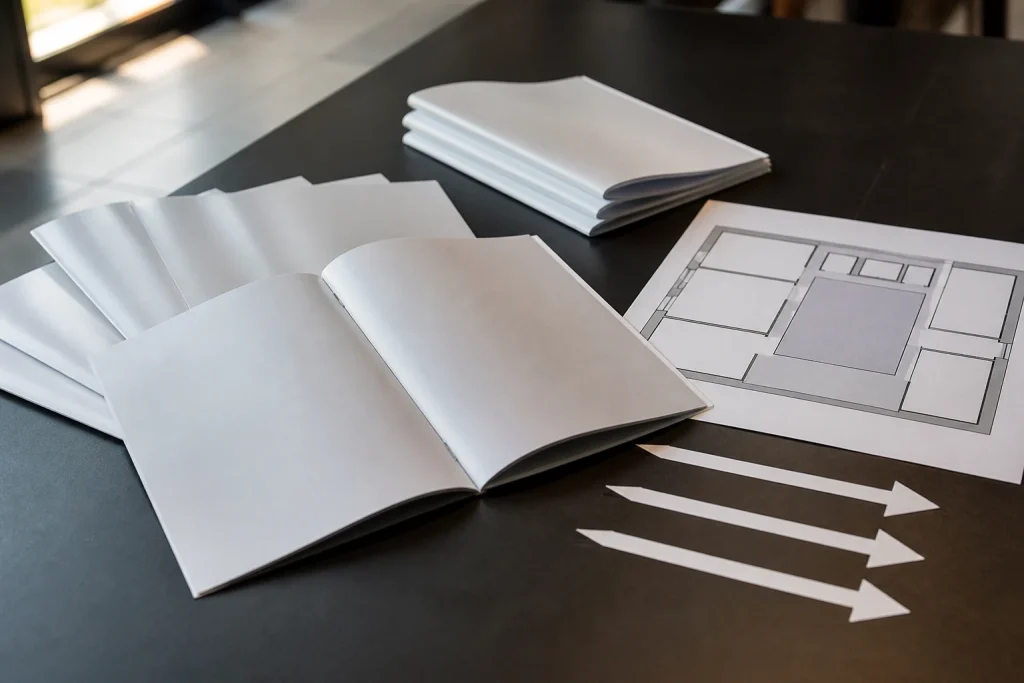
The most common mistake is treating the booklet as the sole source of information. Event details can change, and printed pages cannot be amended once produced. Keep changing information concise and ensure the booklet does not contradict signage or event communications. If the programme may evolve, decide in advance how updates will be shared. Another issue is leaving artwork checks until the last minute. Review the final PDF as a reader would: page order, session times, names, stand references, contact details, image quality and content crossing a spread. Check that maps remain legible at the chosen size and important text stays clear of trim edges. A visual proof may be especially useful where alignment, tables or numbered sections matter. Tiny type rarely solves an overcrowded layout. Shorten copy, move less essential material online instead.
When a stapled booklet may not fit
A stapled booklet may not suit every event. A very short message may work better as a folded leaflet or simple agenda card. If content is likely to change repeatedly, a digital programme supported by clear venue signage may be more practical. For a larger publication with substantial reference material, another binding method may deserve consideration. This is not an argument against print. It is a reminder to match the format to the attendee task. Stapled booklets are strongest when they bring together stable useful information that people can consult during an event and take away afterwards. A bespoke print discussion can help establish whether size, layout, paper and finishing choices support the intended use. It can also reveal when a different format would be clearer or easier to distribute. Choose format early first.
Conclusion
Plan the event booklet from registration onwards: what attendees need to find, compare, record and revisit. Keep immediate information near the front, organise content around tasks and choose a stapled format only when it suits the material. Before requesting a quote, prepare event date, quantity, size, page count, artwork status and delivery needs. Newstyle Print can discuss booklets.