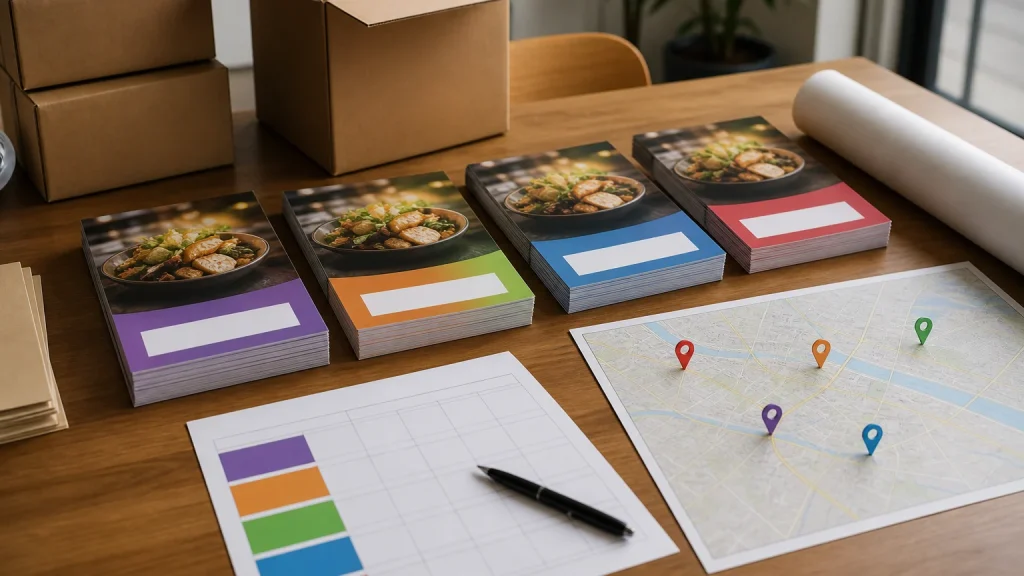
Flyer printing for campaigns with several locations needs a clear central plan before artwork is approved. Each site may need its own date, contact detail or response code, but the campaign should still feel like one recognisable piece of marketing. Start by defining the audience, the offer and the action you want readers to take. From there, plan versions, quantities, distribution and a simple way to record responses.
⏱️ Estimated reading time: 6 minutes
Table of Contents
Set one campaign goal before flyer printing
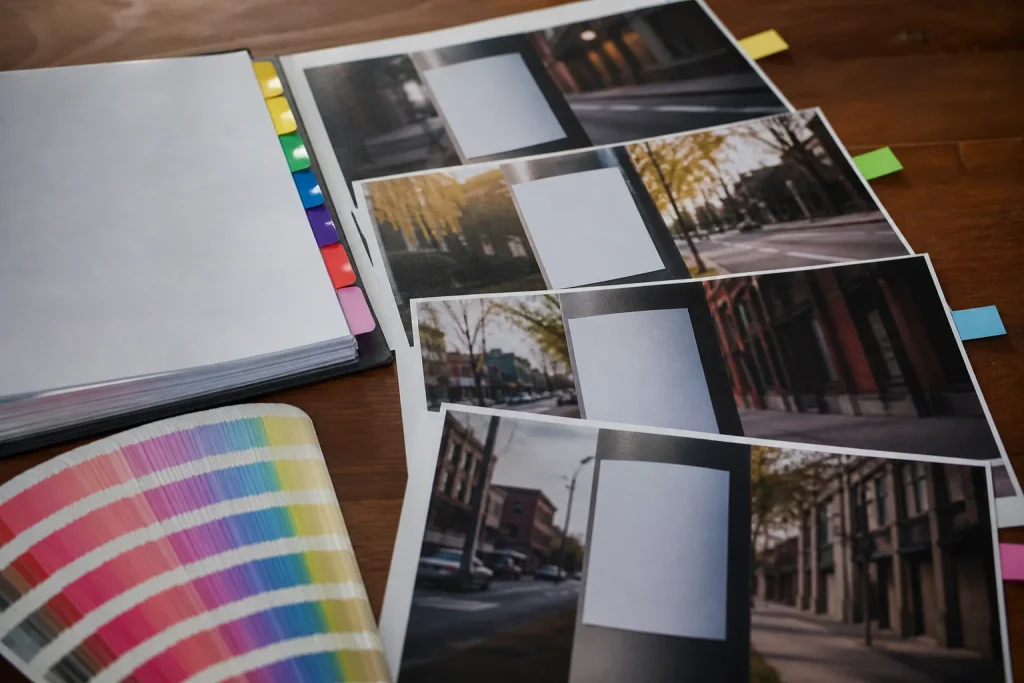
A campaign covering several locations can become muddled quickly. One branch may want to promote an event, another may be focused on enquiries, while a third wants more people through the door.
Choose the primary outcome first. The headline, supporting copy and call to action should all point towards it.
Keep the campaign name, core benefit, visual identity and main action consistent across all versions. Local details can then be adapted without weakening the wider campaign. A branch address, venue date, local contact number or code may change, while the central message stays put.
Plan location versions and approvals
Creating a separate flyer for every postcode is rarely necessary. Group locations that genuinely share the same message, date and response route. This reduces artwork administration and makes it less likely that an outdated detail will slip into a printed version.
Use a master artwork file for elements that should remain fixed: the logo, colours, headline, key image, essential terms and principal call to action. Identify the variable fields separately. These may include a location name, event date, local offer code, QR-code destination or contact details. The person approving the campaign should be able to see exactly what differs between versions.
A version-control sheet is a modest but worthwhile safeguard. Give each file a clear name, such as “SpringOffer_Leicester_A”, and note its intended location, quantity, distribution date and approved copy. Avoid relying on informal file names such as “final final”, particularly where several people are involved.
Where audiences differ substantially, a shared design may not be the strongest choice. A town-centre shop and a business park could need different emphasis even when the offer is broadly the same. Keep the campaign identity, but adapt the wording carefully and check that the local variation still supports the central goal.
Match flyer printing quantities to distribution
Quantity should follow a distribution plan, not a hopeful estimate. List every location, its distribution method, the campaign period and the person responsible for the stock. Flyers displayed at reception, handed out at an event or included with customer orders are likely to be used at different rates. Treating every site alike can leave one location short of copies while another has unopened boxes.
For a hypothetical campaign across six venues, a planner might allocate more copies to busy public-facing sites and fewer to appointment-only locations. Holding back a small amount of stock may also be sensible where attendance, dates or local demand remain uncertain. The appropriate approach depends on the campaign rather than on a fixed formula.
Digital printing may suit smaller quantities with several versions or a campaign that needs flexibility. Litho printing may be worth discussing for larger runs with fewer changes. Neither route is automatically right for every job: quantity, artwork, paper choice, finish and timetable all matter. Share the version list and distribution plan when requesting a quote, rather than assuming one method will suit every location.
Make the message easy to act on
People should understand the purpose of a flyer quickly, especially when it is picked up in a busy venue or handed out on the move. Put the main offer or reason to act where it is easy to find.
Give each version one primary response route. Depending on the campaign, that may be a web page managed by your organisation, a QR code, a phone number or an in-store instruction. Several competing actions can make the flyer feel crowded and may make results harder to interpret. If using a QR code, test it from a sample at the intended printed size before approving the full run.
Small text, densely packed terms and vague wording are common pitfalls. “Find out more” tells readers little. “Book your place for the Oakham session” is more specific because it names both the action and the local relevance. Check every location’s date, address and contact details at the final size, not only on screen.
Track responses from flyer printing
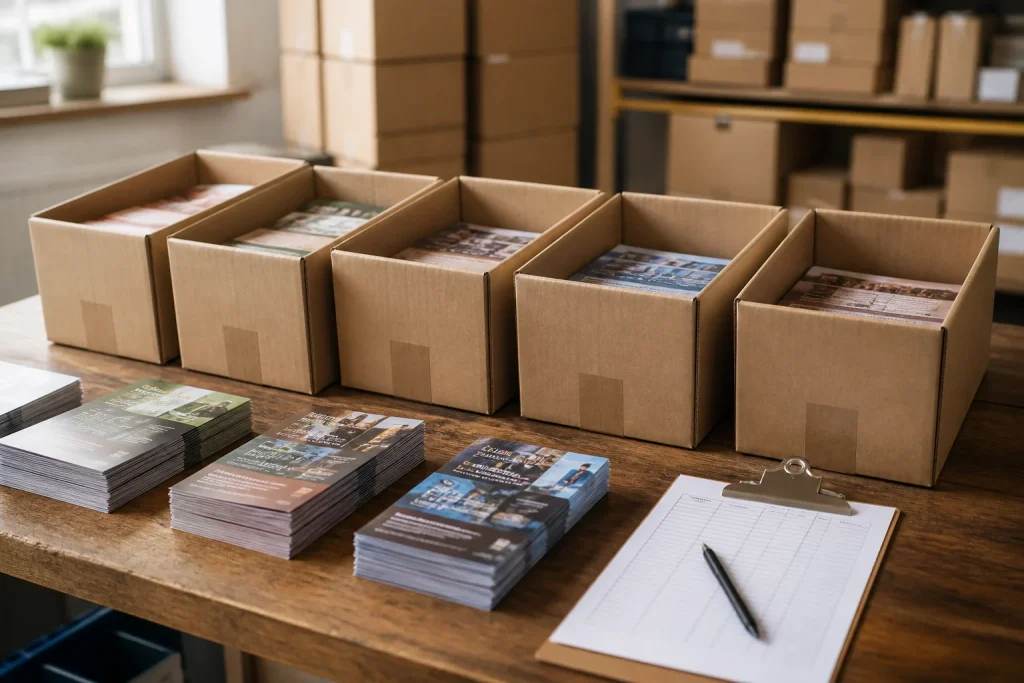
Multi-location flyer printing can provide useful evidence about what is working, provided that tracking remains manageable. Use one identifier for each location or distribution route: a simple code, a distinct web address managed by your team, or a clearly logged question when an enquiry is received.
Do not judge a location solely by redemptions. A flyer may support awareness, prompt an enquiry later or help staff begin conversations.
Ask the same questions at every site. Were flyers displayed or handed out as planned? Did staff have a short explanation ready? Did the local information remain current during the campaign? Consistent reporting is usually more useful than a complicated spreadsheet nobody maintains.
Know when another format may suit the job
One printed piece is not always the answer. If locations have different services, prices, deadlines or required wording, forcing everything onto one template may create confusion.
Consider a folded leaflet or a small set of location-specific flyers when readers need more detail. For a short, focused announcement, however, a well-planned flyer can be easier to distribute and quicker to understand than a more elaborate format. Confirm the current product options, artwork requirements and suitable specification with the chosen print provider before ordering.
Conclusion
Successful multi-location flyer campaigns rely on disciplined planning rather than endless design variations. Set one goal, control local details, base quantities on a genuine distribution plan and give every version a traceable response route. Before placing an order, prepare the approved artwork versions, quantities, delivery destinations and any notes needed to distinguish the packs. For campaigns with several versions or an unusual specification, it is sensible to discuss the details with a print provider and, if needed, ask about design support.