⏱️ Estimated reading time: 6 minutes
Table of Contents
For staple bound book printing in the UK, choose staple binding for a slimmer publication that needs to open comfortably, be carried easily and be read page by page. Choose perfect binding for a longer document where a square spine, continuous cover and more book-like presentation genuinely help the reader or support the purpose of the publication.
How staple and perfect binding differ
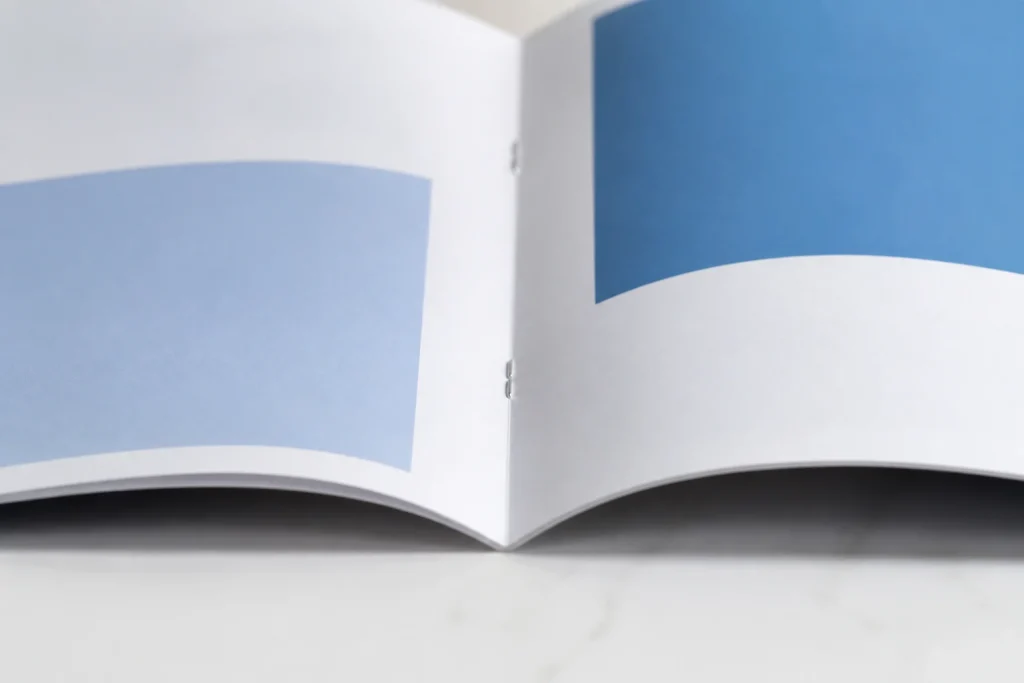
Staple binding, also called saddle stitching, secures folded printed sheets through the centre fold with wire staples. The finished item is a booklet with a visible central crease. Because the pages are formed from folded sheets, the booklet can usually open well at the middle, which is useful for programmes, shorter guides and handouts.
Perfect binding holds individual leaves and the cover together with adhesive along one edge. It produces a flat, square spine rather than a fold, giving the publication the appearance of a paperback book. Catalogues, reports, directories and longer prospectuses may suit this format when the finished thickness supports a usable spine.
The names describe binding methods, not paper quality or the importance of the content. A staple-bound booklet can still look professional, while a perfect-bound publication is not automatically the right choice simply because it has a more substantial appearance.
Binding features to compare before ordering
The most useful comparison is not “basic versus premium”. It is how the binding will affect handling, artwork and the way readers use the document. Paper stock, trim size, cover choice and final page count can alter what is practical, so a printer should confirm the specification before files are approved.
| Consideration | Staple bound | Perfect bound |
|---|---|---|
| Finished form | A folded booklet secured at the centre. | A square-spined publication with glued leaves. |
| Reading experience | Suitable where readers need easy access to centre spreads. | Suitable for longer, book-style reading and reference. |
| Cover artwork | Uses a front and back cover around folded pages. | Uses one cover across the front, spine and back. |
| Page planning | Page totals are commonly arranged in multiples of four. | The cover requires an accurately calculated spine width. |
| Key limitation | May not suit a publication that needs a visible spine. | May not open as flat near the glued edge. |
Neither option is universally better. The right choice depends on the content length, expected use and the impression the publication needs to make after it leaves the reader’s hands.
When staple binding suits the content
Staple binding is often the stronger choice for concise material: event programmes, price lists, menus, school information packs, short brochures and campaign booklets are typical examples. Its light format can make a publication less cumbersome to pick up, browse and store. It also works well where a reader may turn to a specific spread rather than read from cover to cover.
Layout needs planning from the start. Since folded sheets create the booklet, page counts are commonly built in groups of four. Adding a page merely to reach a workable count is not always helpful; a useful notes page, timetable, contact page or contents page may be a better solution if it serves the reader.
For example, a hypothetical community group producing a brief event programme might choose staple binding. Attendees could hold the programme while standing, find the schedule quickly and keep it in a bag afterwards. A square spine would add little if the booklet is short and does not need to be identified on a shelf.
When perfect binding is worth specifying
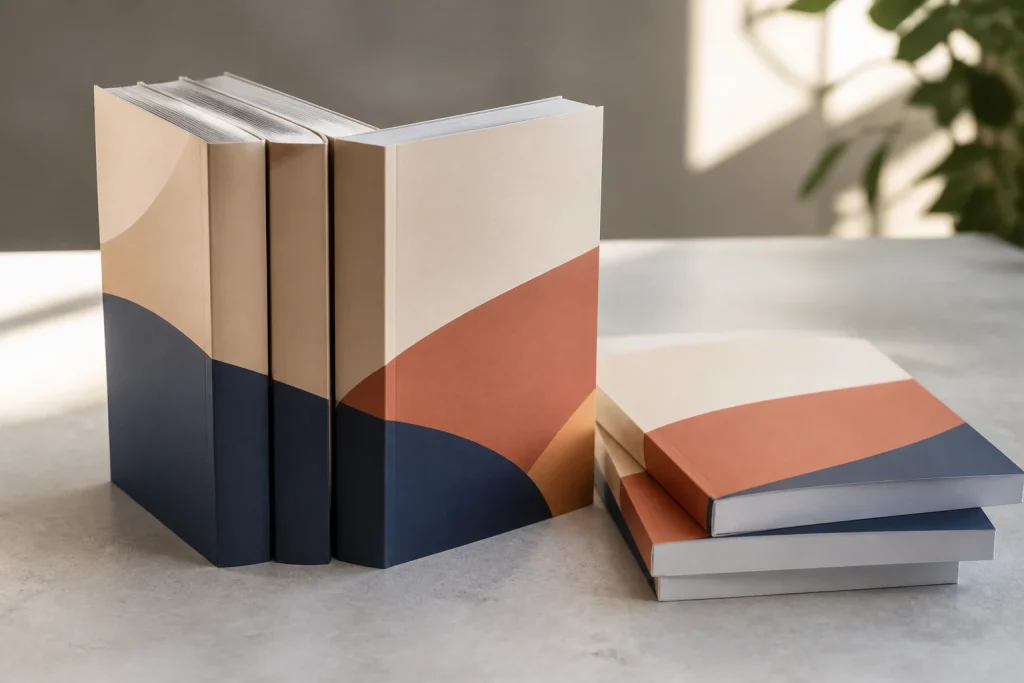
Perfect binding can be a sensible fit when a publication has enough pages to feel substantial and benefits from a book-like structure. A square spine may provide room for a title or issue information, although whether text will be practical depends on the confirmed spine width. It can also create a clear visual distinction between a substantial catalogue and a shorter promotional booklet.
Think about use as well as appearance. A report read at a desk may work comfortably as a perfect-bound document. A reference guide that must be held open beside equipment might be less convenient, because pages close to the glued edge may not lie as flat. In that situation, the reader’s handling needs may outweigh the appeal of a conventional paperback format.
Consider a hypothetical annual catalogue containing detailed product descriptions, images and ordering information. Perfect binding might give the content a clearer book format for repeated reference. The cover, interior paper and final thickness should be discussed together, however. Designing the cover before the binding and spine dimensions are confirmed can create avoidable artwork revisions.
Prepare artwork around the selected binding
Choosing by appearance alone is a common mistake. A square spine may look attractive in a digital mock-up, but it needs sufficient thickness to work as intended. Equally, treating staples as suitable only for informal material can rule out a tidy, practical option for a short publication.
Keep critical text, fine rules, page numbers and important visual details away from trim edges and the binding area. Perfect-bound pages need an inner margin that recognises the glued edge. Staple-bound work needs careful checking of centre spreads, especially where images or text cross the fold. As folded sections build up, page creep can affect the position of inside pages, so designers should account for it where relevant.
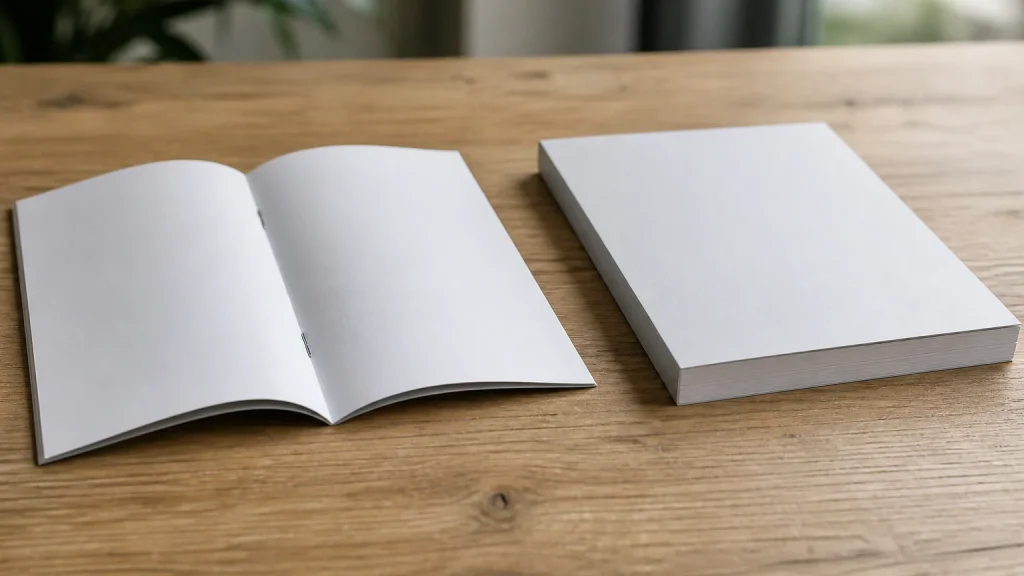
A simple dummy can make the decision clearer. Fold several blank sheets to mimic a staple-bound booklet, then stack loose sheets inside card to suggest a perfect-bound publication. This is not a production proof, but it may reveal whether the scale and handling suit the content. Newstyle Print offers free artwork checks and can provide tailored guidance on formats, paper stocks and finishes before printing.
Conclusion
Staple binding is usually the practical choice for slimmer booklets that need easy opening, simple handling and a folded format. Perfect binding is generally better for longer publications where a square spine and continuous cover add useful structure. Confirm the page count, trim size, paper choice and intended use before completing artwork, then ask a printer to check that the chosen binding fits the final specification. Making that decision early reduces late cover changes and helps the finished publication work for its readers.