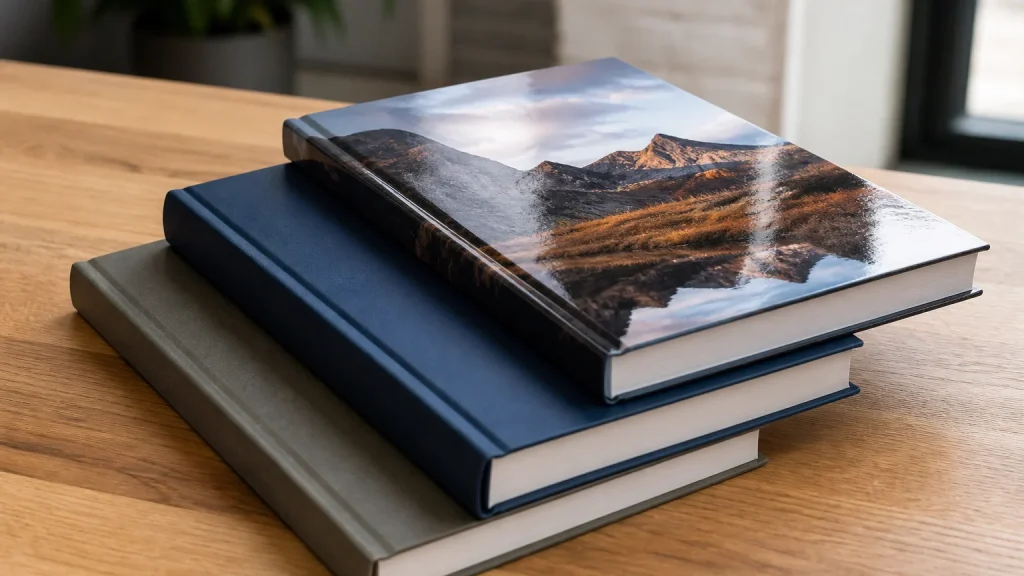
This article explains Custom Laminated Book Covers: Adding Protection and Style to Your Print in practical terms. Custom laminated book printing in the UK is worth considering when a publication needs its cover to look considered and stand up to regular handling. A laminate is a separate protective film applied to the printed cover; it can change the feel and appearance as well as offering a degree of resistance to scuffs and marks. It is not simply an optional extra. For a catalogue, training manual, prospectus or presentation book, the cover is often the first physical contact a reader has with your brand.
⏱️ Estimated reading time: 5 minutes
Table of Contents
- Why laminate a custom book cover?
- Practical guidance for Custom Laminated Book Covers: Adding Protection and Style to Your Print
- Make the cover work with the book’s purpose
- Planning Custom Laminated Book Covers: Adding Protection and Style to Your Print in practice
- When a laminated cover may not make sense
- Key considerations for Custom Laminated Book Covers: Adding Protection and Style to Your Print
- Conclusion
Why laminate a custom book cover?
A book cover has a different job from its inside pages. It needs to introduce the content, carry essential information and cope with being picked up, passed around or stored.
This can be particularly useful for publications that are intended to be kept rather than read once and discarded. Think of an illustrated guide used by a sales team, a school information booklet, a product catalogue or a branded handbook.
It is sensible, though, to see lamination as one part of the specification. The paper or board chosen for the cover, the binding method, artwork and intended use all affect the finished result.
Practical guidance for Custom Laminated Book Covers: Adding Protection and Style to Your Print
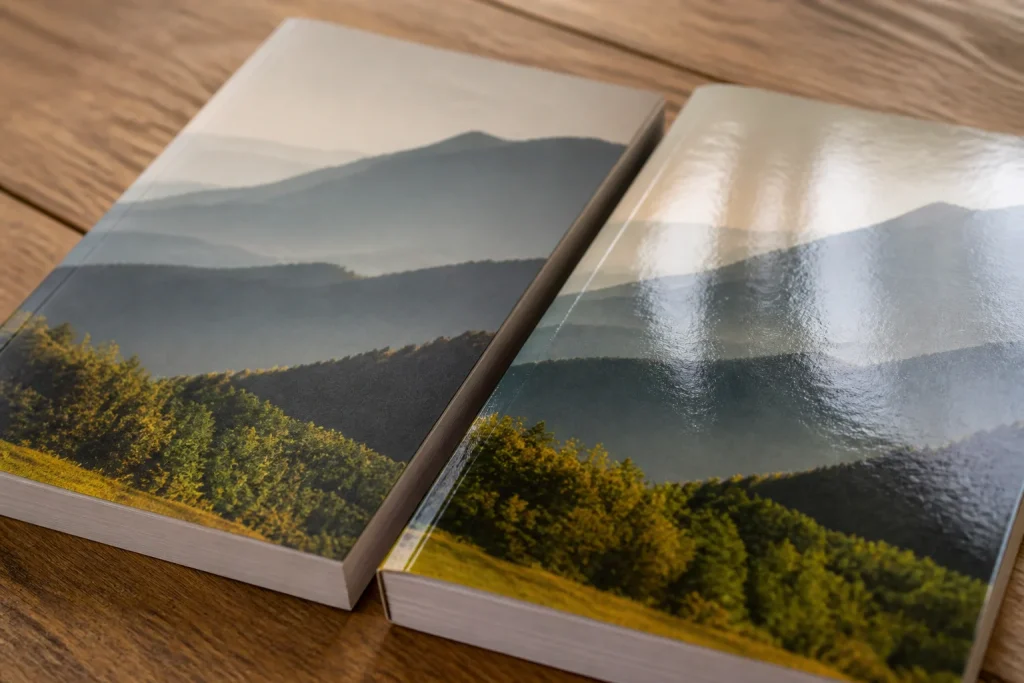
Matt and gloss are often the first choices discussed for laminated book covers. Neither is automatically the right option; the stronger choice depends on the design and the impression you want the book to make.
| Finish | Often suits | Consider before choosing |
|---|---|---|
| Matt lamination | Understated branding, text-led covers and refined colour palettes | Dark, solid-colour covers may show handling marks more readily in some settings. |
| Gloss lamination | Bold photography, vivid graphics and covers needing a brighter visual effect | Reflections may be more noticeable under strong lighting. |
A hypothetical example is a local business producing a product guide with detailed photographs. Gloss may suit imagery that needs a lively appearance. By contrast, a consultancy publishing a report with restrained typography may prefer matt because it supports a quieter, more tactile feel. Requesting a sample, where available, is a practical way to compare finishes rather than relying on a screen.
Make the cover work with the book’s purpose
The cover should be designed around what the book must do. A publication handed out at an event needs a clear title and recognisable branding at a glance. A reference guide may need a title that remains easy to identify when stored on a shelf.
Keep the most important elements away from trim edges. Images and coloured backgrounds should extend beyond the final cut line as bleed, while text, logos and other critical details need a safe margin inside the trim. Your printer’s artwork template or specification should guide those measurements, as they vary by format and production setup.
Use high-resolution images supplied at their intended print size, and check that small type remains readable against photographs, textures or dark colour fields. A free artwork check can identify obvious file issues before production, but it is still worth proofreading names, contact details and version dates carefully. Those are content decisions rather than print corrections.
Planning Custom Laminated Book Covers: Adding Protection and Style to Your Print in practice
Custom laminated book printing works best when the cover finish is chosen alongside the binding. Staple-bound booklets generally suit shorter publications, while perfect binding is often considered for thicker, more book-like documents.
Cover stock also affects the finished feel. A heavier cover may suggest a more substantial publication, but it can be unnecessary for a short, lightweight booklet. Conversely, choosing a cover purely because it feels substantial can make folding, binding or posting less straightforward. A tailored recommendation should balance appearance with practical handling.
When a laminated cover may not make sense
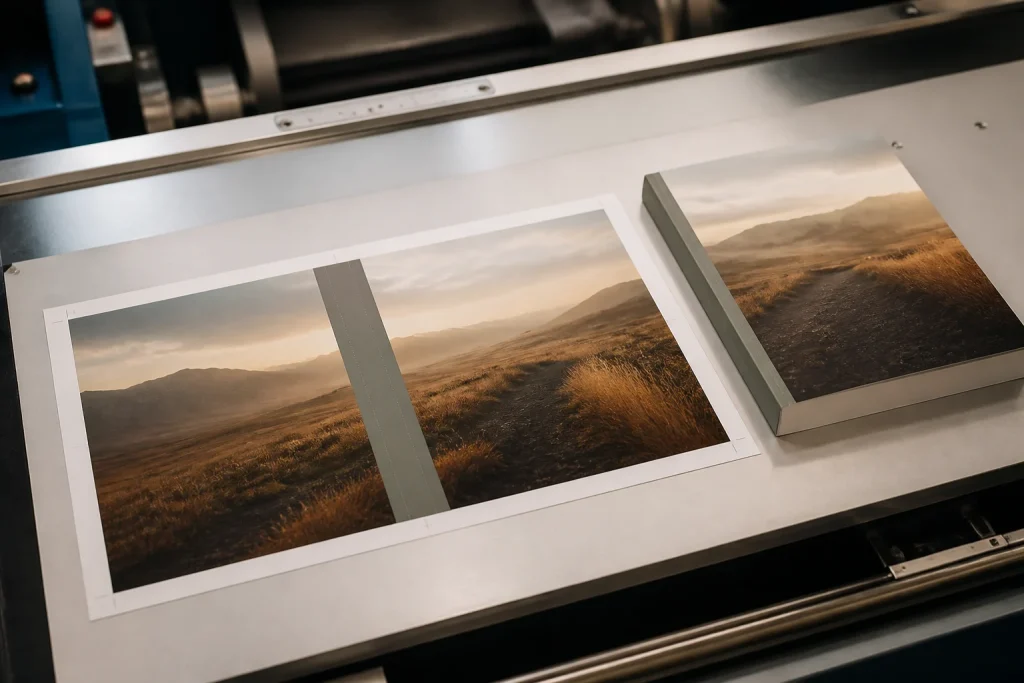
Lamination is not essential for every printed book. A short-lived event programme, a simple internal document or a publication with a very limited distribution may not need the additional finish.
A common mistake is treating lamination as a late upgrade after the cover has been designed. The finish can alter how colour, photographs and fine details appear, so decide early and assess the complete cover design with that finish in mind.
Key considerations for Custom Laminated Book Covers: Adding Protection and Style to Your Print
Give your printer a clear brief: finished size, page count, quantity, binding preference, cover artwork, inside-page requirements and intended use. Mention whether you are deciding between matt and gloss, or whether you need advice on the most suitable cover stock. This allows the specification to be considered as a whole rather than as a list of disconnected upgrades.
Newstyle Print provides customised print support for businesses and organisations across the UK, with free UK delivery on products.
Conclusion
A custom laminated cover can add useful surface protection and give a book a more finished, consistent appearance. Choose the finish for the design and purpose, not just because it sounds premium. By agreeing the cover stock, binding, artwork and use case together, you are far more likely to produce a publication that looks right in the reader’s hands.