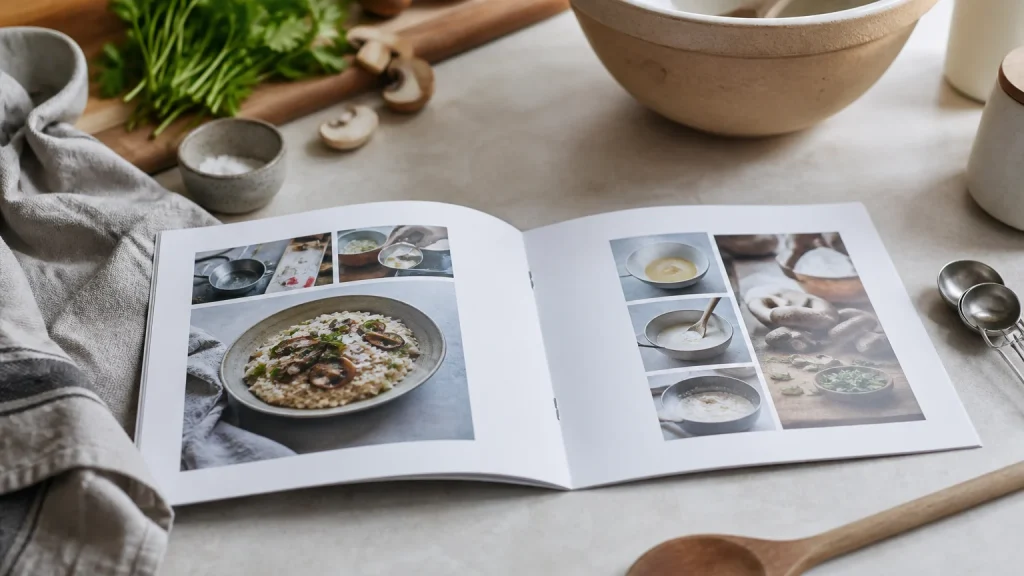
Booklet printing with stapled binding can be a sensible format for recipe-style content when readers need several recipes together, rather than a loose pile of cards. A compact booklet keeps the collection in order, gives you space for ingredients, methods and photographs, and can be designed around a clear theme.
⏱️ Estimated reading time: 6 minutes
Table of Contents
- Why booklet printing with stapled binding suits recipe collections
- Plan the recipe content before choosing the specification
- Choose a format that works beside a mixing bowl
- Artwork checks for booklet printing with stapled binding
- Avoiding loose-card assumptions in booklet printing with stapled binding
- When stapled binding does not make sense
- Conclusion
Why booklet printing with stapled binding suits recipe collections
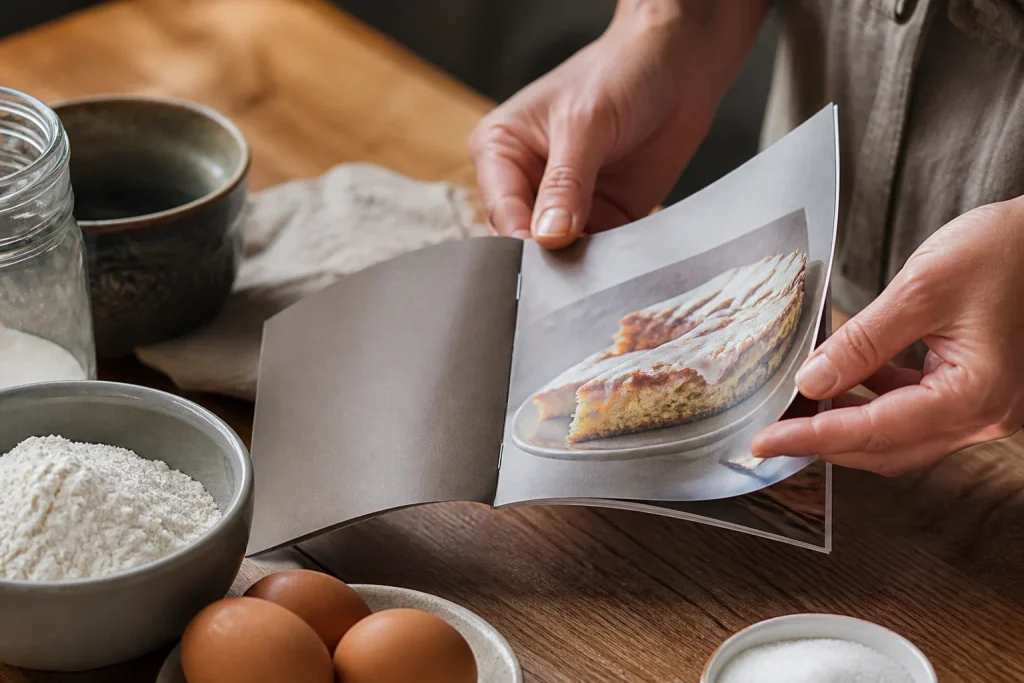
Stapled binding, often called saddle stitching, secures folded printed sheets along the spine. It works particularly well for slimmer publications that need to open comfortably and stay in a clear sequence. For a recipe collection, that matters. A reader may be moving between an ingredients list and a method, checking oven temperatures or returning to a favourite page later.
Unlike individual recipe cards, a booklet creates an obvious reading order. That can be useful for a seasonal collection, a fundraising cookbook, a branded food guide or a hospitality leave-behind. You can begin with a contents page, group recipes into sections and include notes such as serving suggestions or allergen information where appropriate.
A stapled booklet is generally easier to store than separate cards, especially if the collection is intended to be kept on a shelf, placed in a welcome pack or handed out at an event.
Plan the recipe content before choosing the specification
Start by deciding what the reader should be able to do with the booklet. A collection for a café may need short recipes, strong food photography and a clear brand presence. A community cookbook may need contributor names, recipe categories and consistent formatting. A product-led recipe guide might need to show ingredients or serving ideas without making the pages feel like adverts.
Consistency is more valuable than decoration here. Use the same order for each recipe: title, preparation information, ingredients, method and any optional note. Readers should not have to hunt for quantities on one spread and cooking instructions on another. If recipes are supplied by several contributors, edit them into one house style before artwork begins.
Think about the page plan early. Stapled booklets are made from folded sheets, so page planning needs discussion with the printer rather than an assumption that any total will suit the chosen format.
Choose a format that works beside a mixing bowl
Size affects usability more than many people expect. A smaller booklet is portable and can suit a concise collection, gift pack or promotional handout. A larger format gives ingredients, methods and images more room, which may be helpful where readers will consult the booklet in a kitchen. The best option depends on the amount of text, type size and whether a recipe needs to sit on one page or across a spread.
Portrait layouts often feel natural for text-led recipes, while landscape formats can give photography more visual space. Neither is automatically better. Ask for a supplied template or confirm the finished size before designing the pages.
A lighter text stock can keep a small booklet easy to handle, while a sturdier cover can help the publication feel more substantial. Gloss, silk and uncoated stocks vary; suitability depends on the artwork, budget and intended use. It is worth discussing the options for the specific job rather than choosing solely from a screen image.
Artwork checks for booklet printing with stapled binding
Recipe artwork needs to be clear before it needs to be clever. Use legible type, sufficient spacing and a distinct hierarchy between recipe titles, quantities and instructions. Avoid placing important copy too close to the trim edge or directly across the centre fold. A food photograph can run over a spread effectively, but faces, labels and small details should not be positioned where the fold interrupts them.
Images should be supplied at a suitable quality for print and used with permission. If an image reaches the edge of the page, the artwork will normally need bleed; your printer can confirm the required file setup for the chosen product. A print-ready PDF is commonly requested, but check the current artwork guidance before exporting. It is a small step that can prevent an avoidable rework.
Proofreading deserves proper time. Check recipe names, ingredient quantities, temperatures, timings, page numbers and the contents list against the final approved recipes. Ask someone who has not worked on the layout to read it too. Fresh eyes are more likely to spot a missing unit, an inconsistent measurement or a title that no longer matches the page.
Avoiding loose-card assumptions in booklet printing with stapled binding
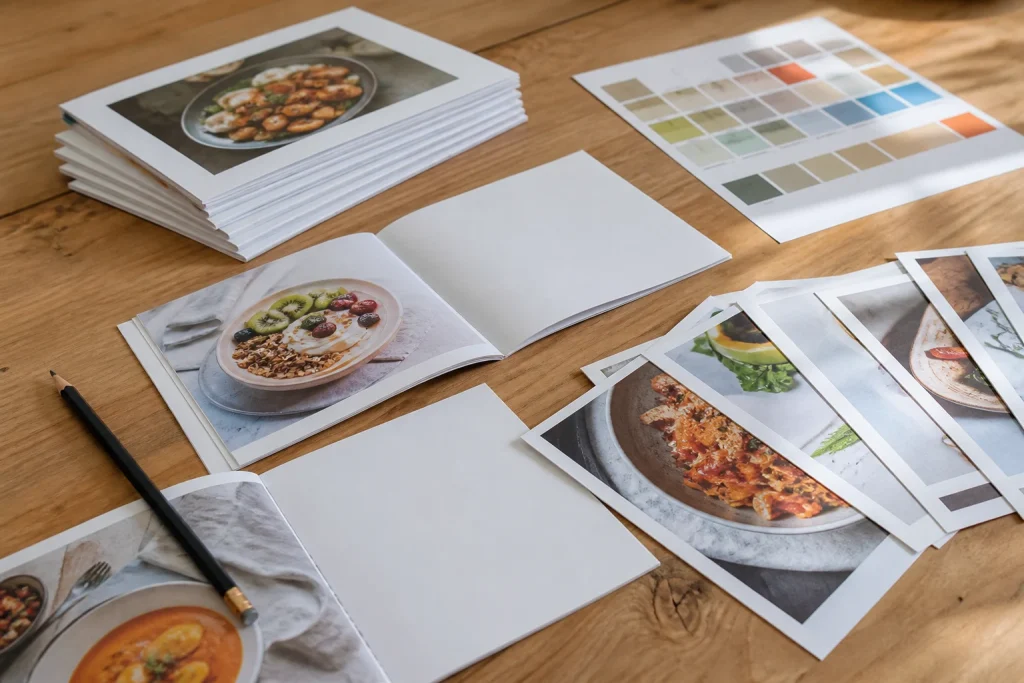
The most common planning mistake is designing each recipe as though it will be viewed alone. A booklet has a cover, facing pages, a spine and a page sequence. Repeated full-page title treatments or unrelated styles can make it feel disjointed. Instead, design the collection as one object, with section markers and a consistent visual rhythm.
Another issue is overfilling the cover. The cover should identify the collection and set its tone, not carry every logo, photograph and message available. Keep the key title easy to find. If the booklet is branded, a restrained logo placement and a clear contact detail can be enough, depending on its purpose.
When stapled binding does not make sense
Stapled binding may not suit a recipe collection with a large amount of content, very heavy paper throughout or a need for each page to lie completely flat. Individual recipe cards may be better where readers want to remove, share or rearrange recipes. A different binding approach may be worth discussing for a more substantial publication.
It is also worth questioning whether a printed recipe booklet is needed at all. If recipes change frequently, a small printed card or a digital collection may be more manageable. Print makes most sense when the content is stable enough to keep, give away or use repeatedly.
Conclusion
For a concise, well-organised recipe collection, booklet printing with stapled binding offers a balance of structure and practicality. Plan the content before the layout, choose a size that gives recipes room to breathe, and check every detail before approval. A printer can confirm the selected specification before the booklet printing begins.