Roller banners can frame a product demonstration well when they support the conversation rather than try to replace it. A good banner gives visitors a quick reason to stop, names the product or problem being addressed, and leaves the demonstrator room to show important details. For a launch, trade counter, showroom day or exhibition stand, the most effective approach is usually one clear message beside a real product and a person ready to explain it.
⏱️ Estimated reading time: 6 minutes
Table of Contents
Used this way, roller banners provide orientation for people who arrive at different points in a demonstration. They can show the product name, a simple benefit and a next step without requiring every visitor to hear the opening explanation. The display is a signpost, not a script: the live product, sample, screen or physical process should remain the centre of attention. If a banner tries to explain every feature, it may compete with the demonstration instead of strengthening it.
When roller banners suit a product demonstration
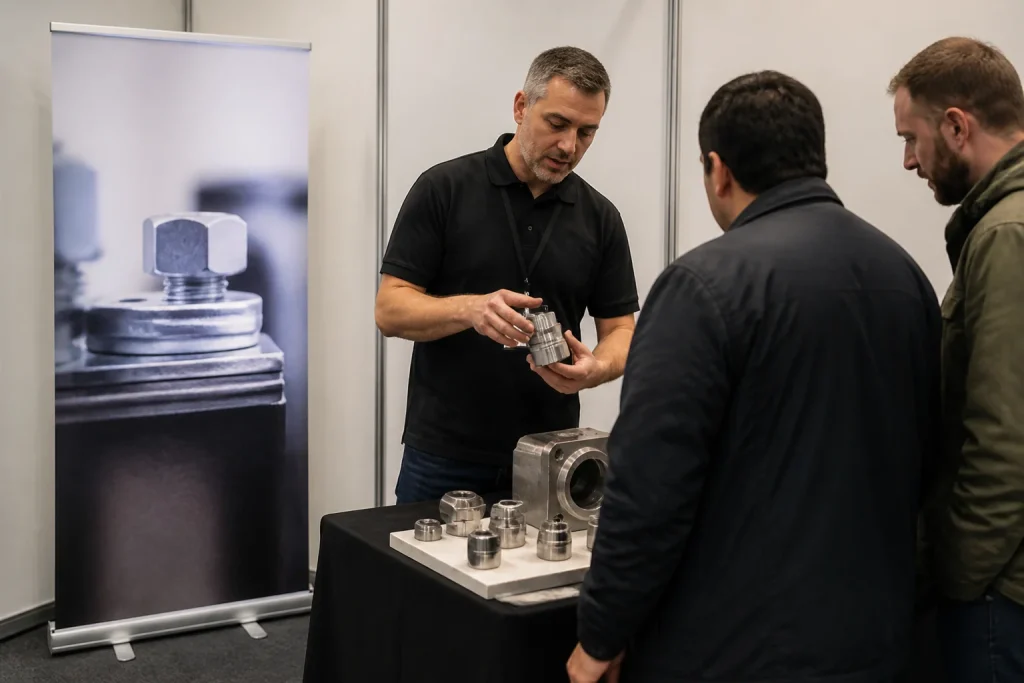
A roller banner is useful when a tall, vertical message adds context beside a demonstration area. It can help a passing visitor decide whether the subject is relevant before they interrupt the presenter. This matters at busy stands, pop-up demonstrations and customer events, where attendees may not all arrive for the same opening explanation.
Use it only if visitors can gain something useful from a quick glance. That gives visitors context while allowing detailed questions to be handled in person. Where people need lengthy instructions, detailed comparisons or a full product range, handouts, a brochure or a larger display system may be more suitable.
Build the message around one reason to watch
Before commissioning artwork, decide what the banner must do at the demonstration. It might introduce a product, explain one use, identify a problem it helps address, or direct visitors towards an enquiry, booking or sample request. Trying to make it do every job usually produces a crowded design. Choose one plain-English headline that makes sense to somebody who has not yet spoken to your team. Add a short supporting line that clarifies the product or the demonstration.
- Headline: name the product, use or outcome being demonstrated.
- Visual: use a relevant product image or clear view of it in use.
- Supporting points: choose only details a visitor needs before starting a conversation.
- Contact route: include a website, email address, phone number or QR code only when it has a clear purpose.
Keep the hierarchy deliberate. Your logo may need to be visible, but it need not be the largest element unless recognition is the display’s main purpose. The product or core message normally deserves that space. A QR code can help people reach follow-up material, yet it should not become the focal point of a banner supporting a face-to-face demonstration. A crisp product photograph is often more useful than a busy lifestyle montage, especially when visitors need to recognise what is on the table.
Place roller banners where they support the conversation
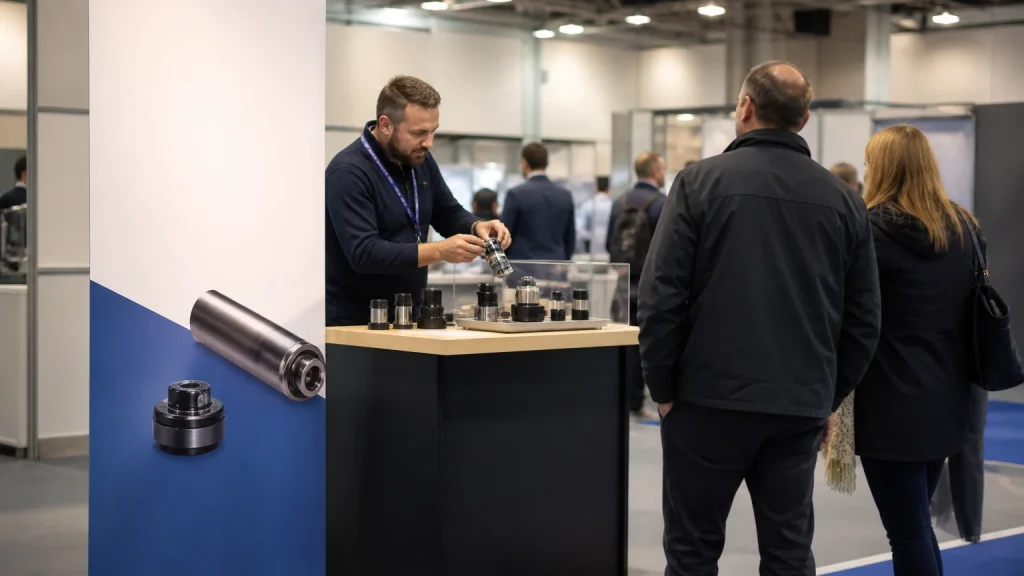
Positioning affects whether the display feels helpful or obstructive. Put the banner close enough to connect with the product demonstration, but not so close that it blocks access, sightlines or the presenter’s working space. A visitor should be able to look from the banner to the product without turning away from the activity. For a demonstration table, a banner to one side can provide a backdrop while leaving the surface free for samples and handling.
At a larger exhibition space, one banner may introduce the product while another, placed farther back, helps identify the stand from an approach route. Avoid a wall of duplicate messages. A person approaching needs a simple invitation; someone already watching needs a detail that supports the explanation. That difference can determine whether one banner is enough or a coordinated pair, with distinct jobs, is more useful.
Consider the viewing distance too. Text that appears comfortably sized at a desk may be hard to read from an aisle, so check the layout at roughly the distance from which visitors will first notice the demonstration.
Common mistakes when using roller banners
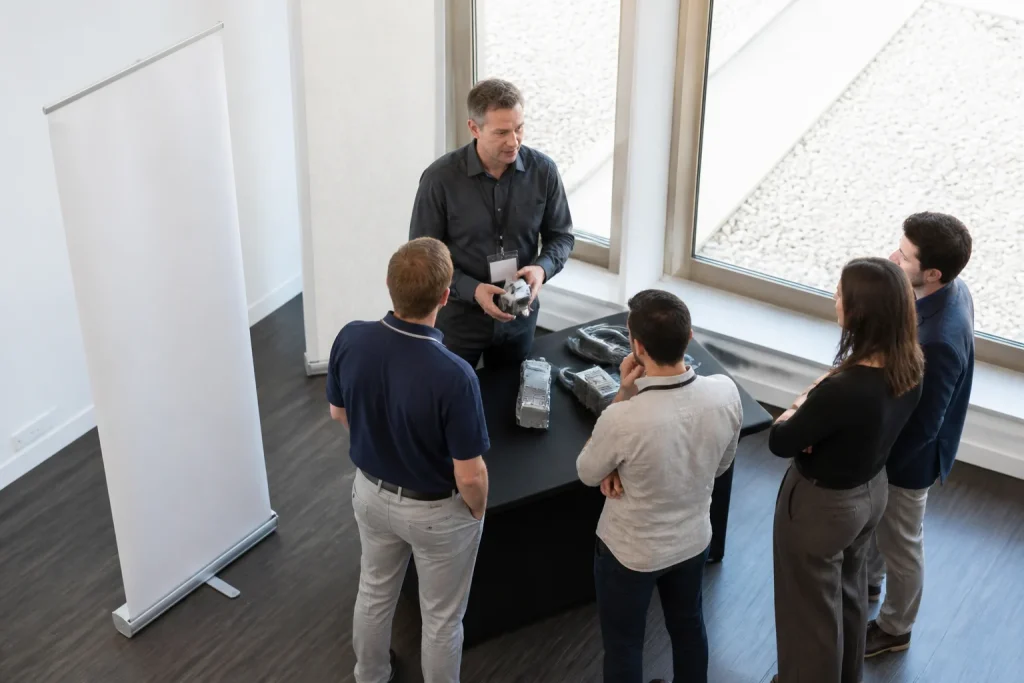
The common mistake is treating the banner as a reduced-size brochure. Small type, dense paragraphs, extensive specifications and several competing actions may look complete on a screen, but are difficult to absorb while a person walks past or watches a live demonstration. Another mistake is planning artwork in isolation. A banner may end up behind the presenter, hidden by the product or facing an awkward direction.
Sketch the table, product, presenter and likely visitor positions before finalising artwork. That basic check can reveal whether the message will actually be seen. Review spelling, contact details, product names, image quality and the final message before print. If brand guidelines exist, supply correct logo files, colours and typefaces to the designer. Newstyle Print provides graphic design support for businesses that need help turning an outline into artwork suitable for a wide-format display.
When a roller banner does not make sense
A roller banner is not the best answer for every product demonstration. When an audience needs to inspect many technical details at close range, a product sheet or booklet may be a more practical reference. When the aim is an immersive branded backdrop, a pop-up display, backlit graphic or bespoke wide-format solution could offer more usable visual space. For a short, tightly managed demonstration where every attendee is seated and receives the same presentation, a projected slide or small sign near the product may be enough.
Be honest about the display’s role. If it cannot improve understanding, attract the right people or support follow-up, another format may make better use of the budget.
Conclusion
Roller banners work best beside product demonstrations when they deliver one clear supporting message and leave the product, presenter and visitor interaction in the foreground. Plan the message before finalising layout, imagery and position in the real space. It also helps to decide who will carry, store and assemble the banner, particularly when the demonstration moves between venues. For a bespoke demonstration setup, prepare a brief covering the product, venue, audience, artwork and the action visitors should take. That gives the printer a sound basis for discussing a focused display.