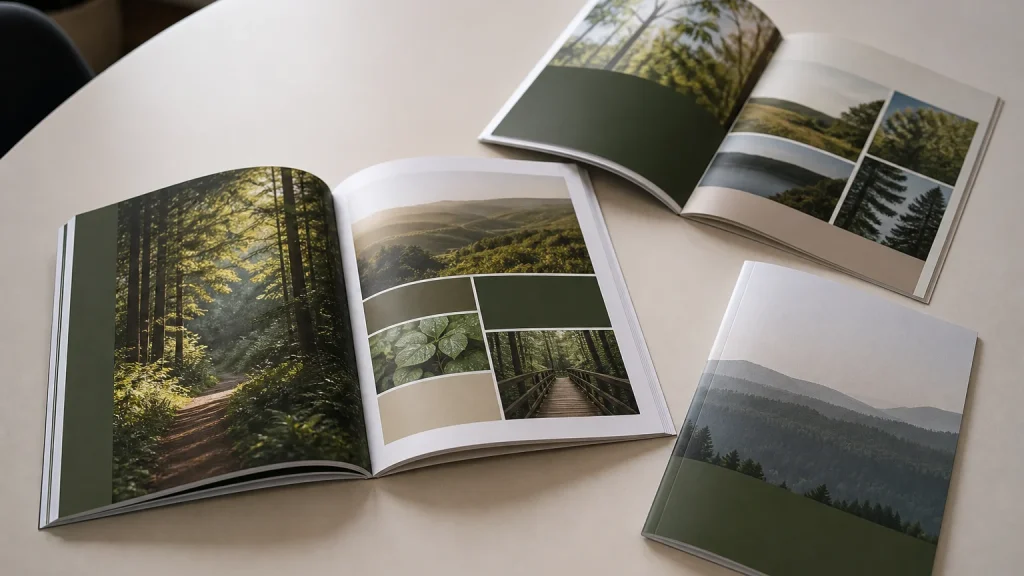
To design and print stapled booklets around one message, start with a defined reader and one action. A booklet gives detail, but should not try to say everything your business does. The clearest version leads from a cover promise to useful proof and a practical next step.
⏱️ Estimated reading time: 6 minutes
Table of Contents
- Design and print stapled booklets: begin with the message
- Design and print stapled booklets for a reader journey
- Design and print stapled booklets with clear hierarchy
- Match content to the physical booklet
- Common mistake: every page as a sales pitch
- When a stapled booklet is not the right answer
- Prepare artwork and proof the whole story
- Conclusion
Design and print stapled booklets: begin with the message
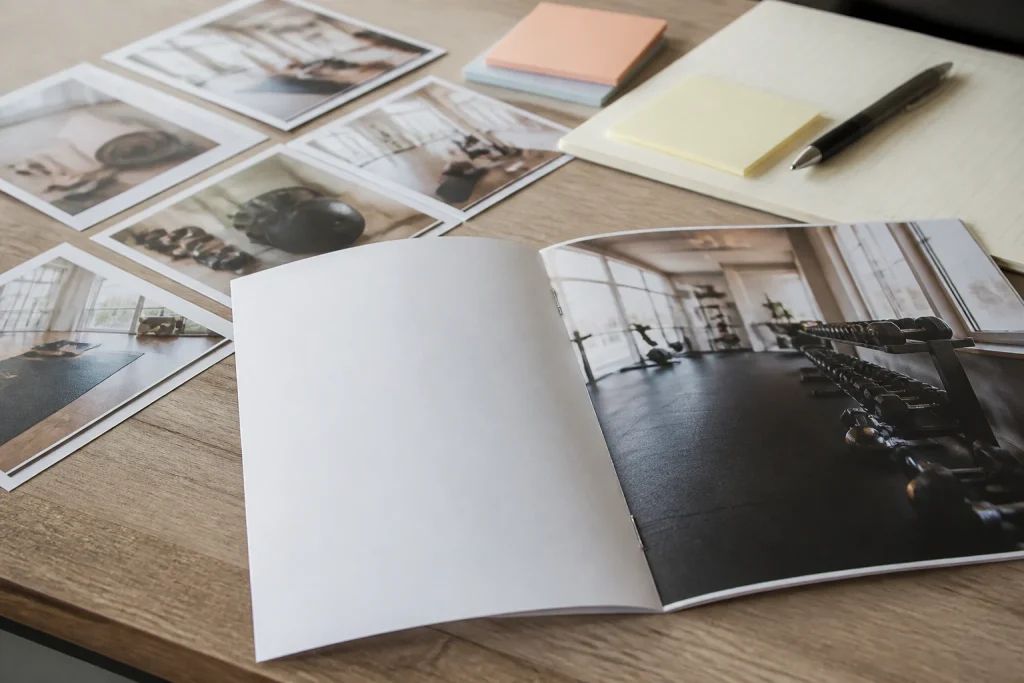
It is tempting to start with size, paper or page count. Those choices matter, but become easier once the booklet has a job. Write a short campaign statement before anyone opens a design file: what are you promoting, who needs to understand it and what should they do afterwards?
A hypothetical fitness studio launching a beginner membership might centre its booklet on making a first visit feel manageable. Timetables, coach profiles, membership options and a joining prompt can support that thought. Unrelated merchandise or a lengthy company history may distract from it.
Keep the message specific enough to guide decisions. “We offer quality service” is too broad to shape a booklet. “Plan your first six weeks of training with confidence” gives the cover, headings, images and action a clearer direction. It also shows what to leave out.
Design and print stapled booklets for a reader journey
A stapled booklet is read in sequence, even when people flick through it first. Give every spread a clear role rather than treating pages as separate adverts. A useful order is: make the promise, explain the reader’s problem or opportunity, show the offer, answer likely questions, then state the next action.
List proposed sections as plain working headings. Merge sections that repeat the same point. If a section does not help a reader decide, act or understand, consider removing it. This early editing saves time and often produces a more confident finished piece.
Opening pages should establish relevance quickly. Middle pages can carry detail: product ranges, process steps, options or examples. Make contact details or booking instructions easy to find near the end. Do not hide the action only on the back cover; a reader may stop before reaching it.
Design and print stapled booklets with clear hierarchy
Once the structure is agreed, use layout to make the message easy to scan. A cover needs one dominant idea, not competing headlines. Inside, give each spread a main heading and use subheadings, short paragraphs, captions and bullet points to break up longer information.
Consistency matters more than decorative variety. Repeat typefaces, colour palette, image treatment and spacing rules so pages feel part of one campaign. A pricing page may need a different layout from a story-led page, but both should still feel branded.
Take care with small text over photographs, busy backgrounds and pale colours. If a key point cannot be read at a glance, it is not doing its job. Leave breathing room around headings and use contrast that works in print, not just on a bright screen.
Images should earn their space. Choose photographs, illustrations or diagrams that explain the offer, show a relevant setting or clarify a complex point. Generic imagery may fill a gap, but it can weaken a focused campaign.
Match content to the physical booklet
Stapled binding suits compact, page-by-page publications. It can suit campaign guides, product information, training materials, event programmes and shorter reports, provided the content stays disciplined. Dense copy or tables may be a reason to reconsider the format before design begins.
Ask your printer about finished sizes, orientation, paper choices and practical page-count options before committing to a layout. These choices affect available space, photograph reproduction and how the booklet feels in the hand. A smaller format may encourage concise copy and portable use; a larger one gives diagrams, images or detailed information more room.
Cover and inside pages do not always need the same stock. A more substantial cover may frame the campaign, while text pages use another option. Consider content, budget, handling and desired feel together rather than selecting each element in isolation.
Common mistake: every page as a sales pitch
A campaign booklet should persuade, but relentless selling can make it tiring to read. Balance promotional copy with context that helps readers judge relevance: clear inclusions, simple explanations, practical comparisons or answers to likely questions.
Another mistake is approving copy and design separately. A headline may look strong in a document but become awkward when it wraps across several lines. Review composed pages together. Ask what the booklet is about, who it is for and what they would do next. Hesitation may suggest the message needs tightening.
When a stapled booklet is not the right answer

Stapled booklets are not automatically best for every campaign. If you need one offer, one image and one immediate response, a flyer, poster or display item may communicate it more efficiently. If the publication needs extensive reference material, regular updates or a more substantial feel, another binding or format may be worth discussing.
It also makes little sense to create a booklet simply because a campaign has accumulated copy. Editing may solve the real problem. Put detailed technical information in a downloadable document, follow-up pack or sales conversation if it interrupts the main reader journey.
Prepare artwork and proof the whole story
Before production, check that supplied artwork matches the agreed size, orientation, page order and print specification. Use the printer’s current artwork guidance for bleed, safe areas, file format and colour setup, because requirements can vary. Keep source images suitable for their intended printed size; do not enlarge a small web image to fill a page.
Proofreading covers more than spelling. Check page numbers, headings, prices or dates where applicable, contact details, captions, brand names and the final action. Read the booklet cover to cover, then inspect it page by page. This is where a missing line, accidental blank page or a message that changes meaning in sequence can be caught.
Conclusion
A focused booklet needs one message, a reader journey and a specification suited to its content. Treat the final proof as a check on the whole story, not merely a production task. Newstyle Print provides design support and can discuss bespoke booklet projects with UK delivery.