⏱️ Estimated reading time: 9 minutes
Table of Contents
Tracing the Printing History Timeline in the UK
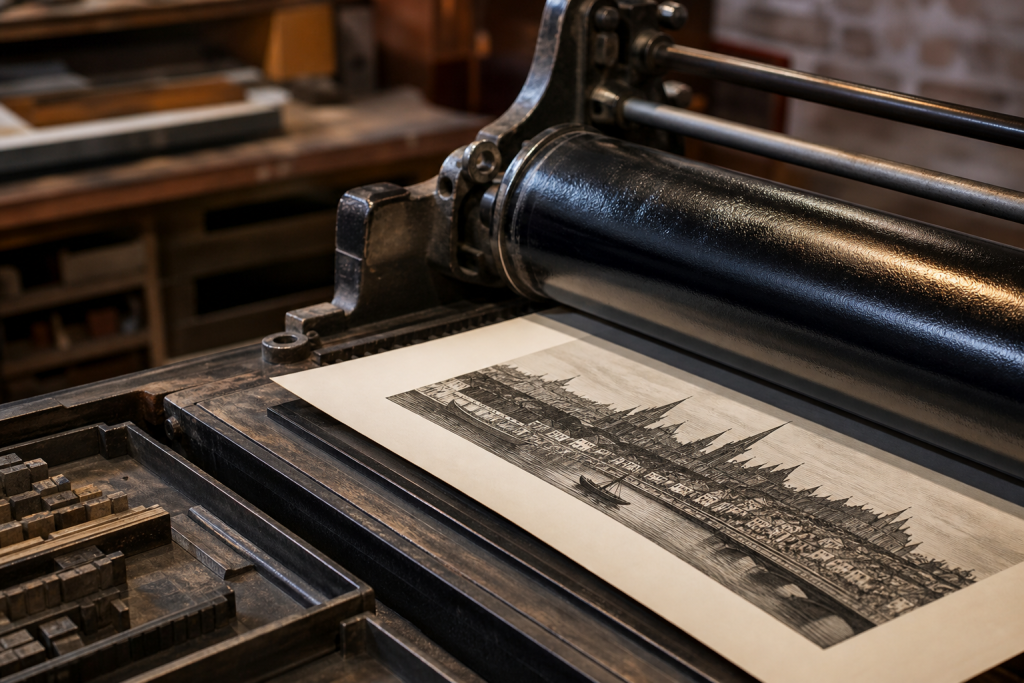
Printing has shaped the UK’s cultural, educational, and commercial landscape, evolving from artisanal craft to a sophisticated industry offering high-quality customised services. Over the centuries, printing has not only influenced how information is disseminated but has also played a pivotal role in social change, literacy development, and economic growth. From the earliest hand-pressed books to today’s seamless digital workflows, the UK’s printing history timeline reflects both technological progress and societal transformations.
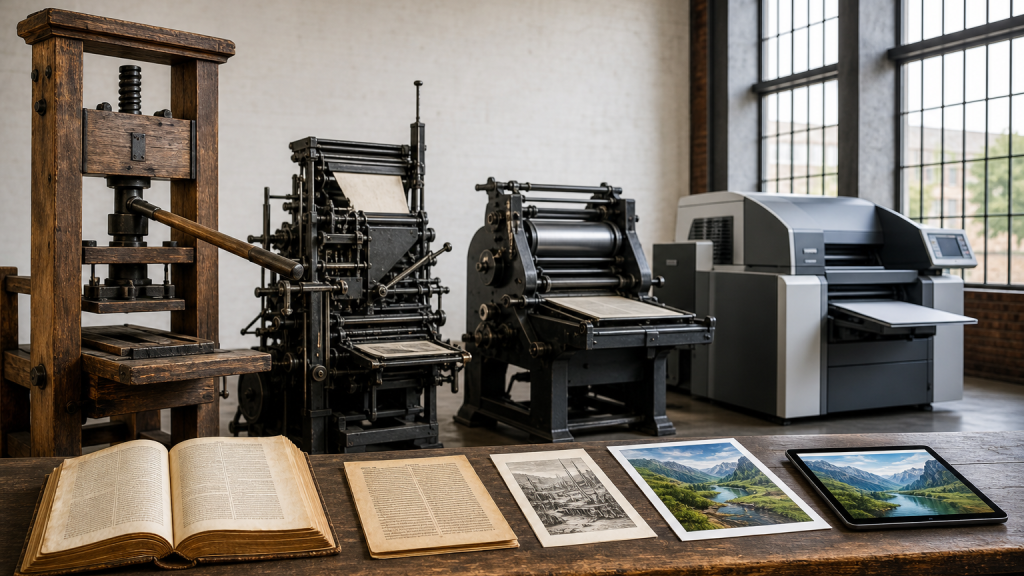
The evolution of printing technology in the UK mirrors broader shifts in communication, education, and commerce. Early printed materials made knowledge accessible to a wider audience, contributing to the Renaissance and Enlightenment periods. As printing techniques improved and became more affordable, newspapers, pamphlets, and books became powerful tools for public discourse, political movements, and cultural exchange. The printing industry’s growth also spurred employment opportunities and fostered ancillary trades such as papermaking, ink production, and bookbinding.
Key Points in the UK Printing History Timeline
The Introduction of the Printing Press
William Caxton introduced the printing press in England in 1476, revolutionising book and document production by making written material more accessible and affordable. His press in Westminster was England’s first, laying the foundation for printing as a trade. Caxton also standardised the English language through his printed works, unifying dialects and contributing to modern English. His first printed book, “The Recuyell of the Historyes of Troye,” was both a literary and technological milestone.
Caxton’s impact extended beyond mere printing; he introduced new genres of literature and helped popularise English as a literary language. By producing affordable books, he facilitated the spread of knowledge beyond the elite, contributing to rising literacy rates. The press became a catalyst for the Renaissance in England, inspiring scholars and writers alike.
Development of Printing Techniques
Printing advanced in the 18th and 19th centuries with letterpress, lithography, and rotary presses. Lithography, introduced in the early 1800s, allowed detailed, colourful prints beyond text, including images and illustrations. Letterpress, using raised surfaces for ink transfer, dominated for centuries due to reliability and crisp results. Lithography, invented by Alois Senefelder in 1796 and adopted by British printers, enabled mass production of posters, maps, and fine art with intricate detail.
The rotary press, invented mid-19th century by Richard March Hoe, increased printing speeds, enabling daily newspapers and large print runs. This mechanisation coincided with rising literacy and demand for news, helping democratise information access across the UK.
During this period, innovations in type design and typesetting contributed to more efficient and aesthetically pleasing printed materials. The introduction of stereotype printing allowed printers to create metal plates from composed type, enabling quick reprints without resetting type. This was particularly useful for newspapers and popular literature, ensuring wider distribution and lower costs.
Industrial Revolution and Mass Printing
Mechanisation during the Industrial Revolution introduced steam-powered presses and faster typesetting, dramatically increasing output and lowering costs. The Linotype machine automated typesetting, speeding up printing—especially vital for newspapers. The expanding railway network facilitated rapid distribution of printed materials, boosting reach and influence. These innovations firmly established printing as a cornerstone of the UK’s information economy.
The Industrial Revolution also saw the rise of mass-market magazines and periodicals, which played a crucial role in shaping public opinion and culture. Advances in paper production made materials cheaper and more accessible. Furthermore, the growth of literacy, partly driven by compulsory education laws, created a booming market for printed media. Printers became key players in political campaigns, advertising, and education, reflecting the medium’s increasing societal importance.
The Rise of Litho and Digital Printing
In the 20th century, litho printing dominated high-quality commercial print, offering sharp images and vibrant colours ideal for brochures and flyers. Lithography uses chemically treated plates that attract ink to specific areas, producing crisp, high-resolution images. The four-colour process (CMYK) enabled photorealistic image reproduction.
Digital printing emerged late 20th century with computers revolutionising industries. It enables on-demand printing where each copy can vary—variable data printing—ideal for personalised marketing, small runs, and rapid prototyping. Digital printing’s affordability and speed broadened access, fostering creativity and innovation. Integrating digital workflows with traditional methods optimized production efficiency and quality control.
Digital printing also transformed publishing by enabling print-on-demand books, reducing inventory costs and waste. This shift empowered self-publishing authors and niche markets, widening the scope of printed content. Additionally, advances in colour management and image processing have allowed digital prints to approach the quality of traditional litho prints, making it a versatile choice for many applications.
Sustainability and Modern Innovations
Today, sustainability is key in UK printing, with businesses adopting recycled paper, eco-conscious inks, soy-based inks reducing VOCs, and waterless printing minimizing chemical waste. Advances in wide format printing and finishing techniques like spot UV and Scodix lamination create durable, creative materials. Wide format printing produces large banners and signage with vibrant colours; spot UV adds tactile effects; Scodix lamination enhances texture and gloss for premium finishes.
Certifications like FSC and PEFC assure clients of sustainably sourced paper, aligning the industry with global sustainability goals and consumer expectations.
Moreover, many printers in the UK are embracing digital innovations such as automation, artificial intelligence for workflow optimisation, and augmented reality integration in printed materials. These technologies enable customisation at scale, improved turnaround times, and enhanced customer engagement. The focus on reducing carbon footprints also encourages eco-friendly packaging and print materials, reflecting a growing consumer demand for responsible business practices.
Practical Advice for Understanding UK Printing History
Understanding this timeline helps businesses make informed choices. Litho printing suits large runs needing high image quality and cost-efficiency, while digital printing fits smaller, customised jobs. Paper choice impacts professionalism and sustainability; heavier stocks convey quality, lighter stocks reduce costs and environmental impact. Finishes like matte, gloss, or textured coatings affect tactile and visual appeal.
When choosing printing methods, consider the project’s purpose, budget, and desired lifespan. For example, marketing materials requiring vivid imagery and longevity often benefit from litho printing combined with protective finishes. Conversely, event flyers or personalised invitations may be more cost-effective and timely with digital printing. Additionally, understanding the environmental impact of materials and processes can enhance brand reputation and align with consumer values.
Historical knowledge also offers insights into how printing innovations can solve contemporary challenges. For instance, the mechanisation breakthroughs that sped up production in the Industrial Revolution parallel today’s digital automation trends. Adopting a blend of traditional craftsmanship and modern technology ensures quality while meeting fast-changing market demands.
Insights from the Printing History Timeline
The UK printing history shows continual innovation from Caxton’s press to today’s digital and wide format technologies. Combining traditional expertise with modern advances meets contemporary business needs effectively. The industry is poised to integrate digital and sustainable innovations further, addressing evolving client demands and environmental responsibilities. Embracing history and technology empowers impactful printed communications in today’s market.
Looking ahead, the printing industry in the UK is likely to see greater convergence between print and digital media, with hybrid products that incorporate QR codes, NFC tags, and interactive elements. These developments will enhance user engagement and provide measurable marketing outcomes. Moreover, as sustainability becomes increasingly important, ongoing research into alternative materials, such as biodegradable inks and substrates, will shape future printing practices.
Ultimately, appreciating the rich heritage of UK printing offers valuable lessons in adaptability, innovation, and quality. By learning from past milestones and embracing modern techniques, businesses can create printed materials that not only communicate effectively but also resonate with audiences in meaningful, sustainable ways.