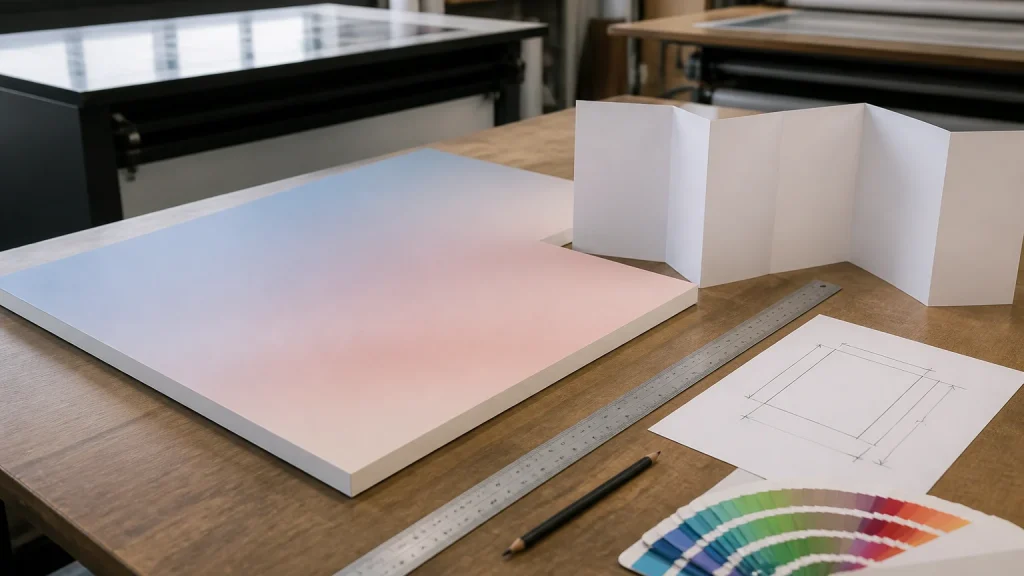
Bespoke printing services UK buyers may need are easier to assess when a brief explains the finished size, purpose, material preference, quantity, artwork status and any finishing required. An unusual dimension is not a problem on its own. The more important question is how the item will be used, displayed, handled or supplied. Begin with the result the printed piece needs to achieve rather than trying to force the job into the nearest standard format. That gives a printer enough context to suggest suitable options without making avoidable assumptions.
⏱️ Estimated reading time: 6 minutes
Table of Contents
When bespoke printing services UK are the right route
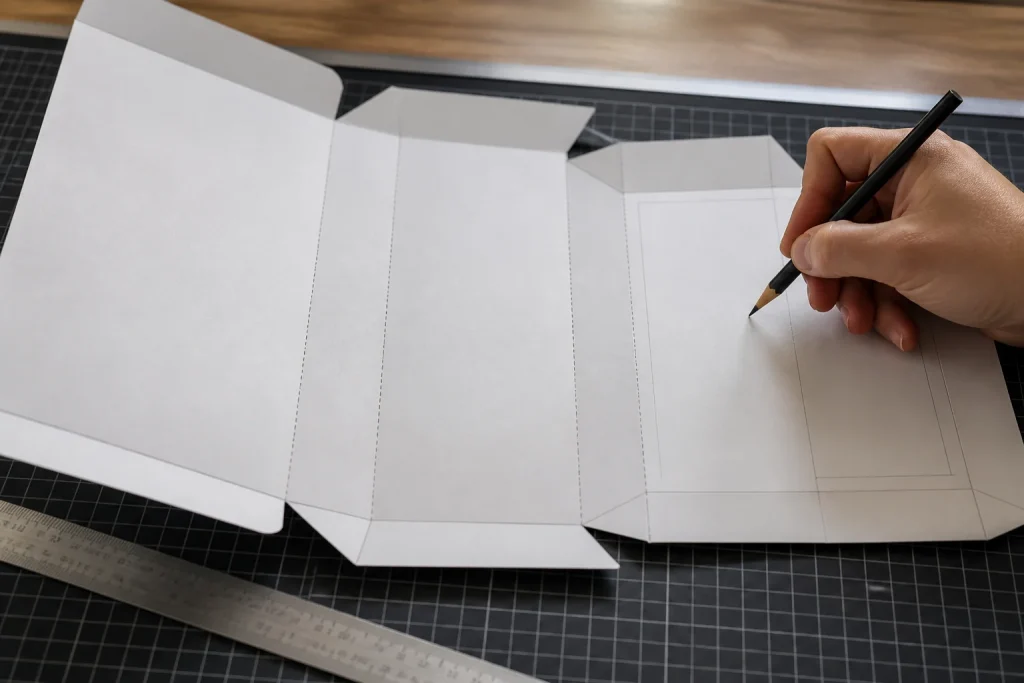
Bespoke print is worth considering when a standard format would compromise the job. A sign may need to fit a particular panel, a menu may need to sit in an existing holder, or a folded piece may need to contain a specific insert.
The key question is not simply, “What size can be printed?” Ask instead, “What does this item need to do?” A board intended for a fixed retail space has different requirements from a leaflet being handed out at an event. The application often matters more than the measurement alone.
Build the brief around dimensions and use
Give the finished width and height clearly, and state whether measurements are in millimetres or centimetres. For a flat item, identify the orientation: portrait, landscape or square. If the job folds, include both its closed and open sizes, then describe the fold style and panel order. A marked-up sketch can be more useful than a long email description, particularly where there are several folds, panels or cut lines.
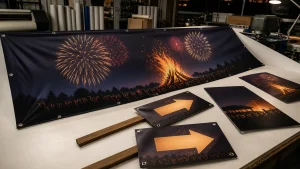
For shaped pieces, provide the maximum width and height and a visual showing the outline. Mark the position of any holes, eyelets, cut-outs or other edge details. Do not assume these features can be inferred from a logo, photograph or rough mock-up.
Include the item’s intended setting as well. For example, say whether it is for an indoor counter, a window, an event display or a mailing. Describe how it will be supported, held or stored if that affects the finished piece. A café menu that must fit a holder may have a fixed width but flexible height. That distinction can be useful when a printer is considering the specification.
Bespoke printing services UK: match format to use
An unusual size does not automatically require an unusual material. A custom-cut sign and a non-standard folded leaflet solve different problems, even when both have bespoke dimensions. Think about handling, viewing distance, surface, location and support before settling on a stock or board.
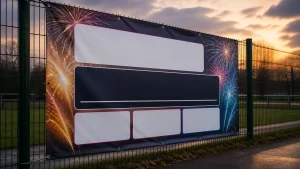
For a display board or sign, identify the surface or structure involved, the intended location, the required shape and the proposed fixing method. For a folded marketing piece, provide open and closed dimensions, panel order and content that should not sit on a fold. For a large graphic, explain the display area, likely viewing position and whether it must align with a frame or other structure. For labels, stickers or small cards, mention how they will be applied, packed or distributed.
Prepare artwork for bespoke printing services UK
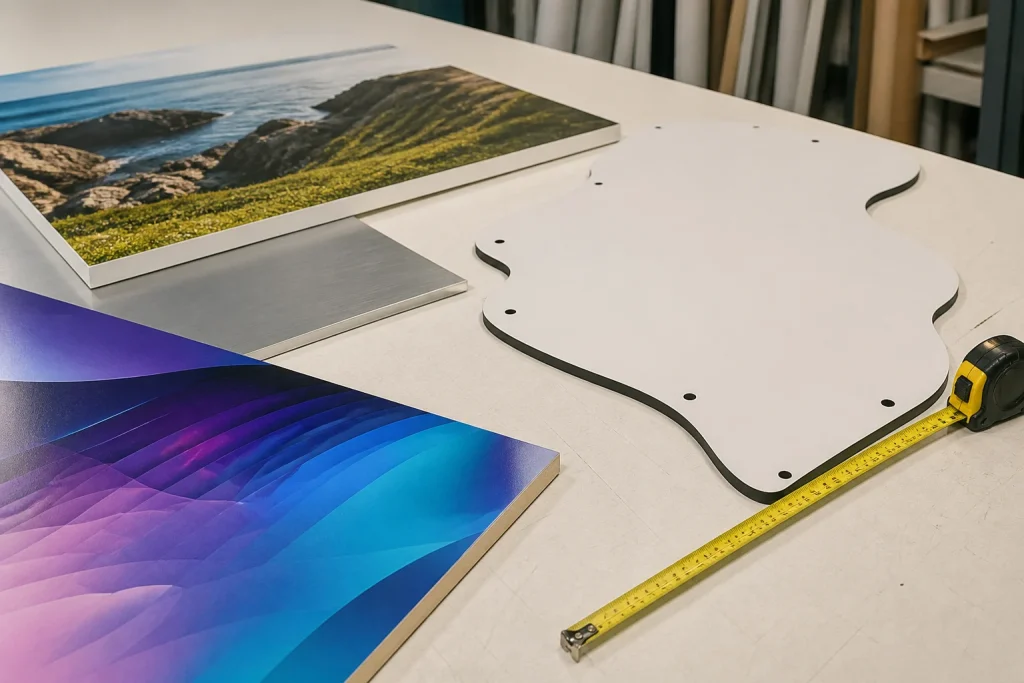
Size is only one part of a workable quote request. State the quantity, whether designs change between versions, and whether printing is required on one or both sides. Attach supplied artwork, a rough layout or relevant brand assets, and make clear whether design support is needed.
Ask for artwork requirements for the specific job before final files are built. Trimming, folds, drilling, eyelets, mounting and other finishing details can affect the layout. Keep wording, logos and contact details away from edges, folds, holes and cut lines until the final specification is agreed. A physical sample can communicate scale or construction, although it should support rather than replace clear written measurements. Photographs can be helpful too, but they may hide dimensions or omit useful detail.
Digital printing may suit shorter runs or work with changing versions, while litho printing may be considered for some larger-run jobs. Wide-format printing is relevant to products such as banners, boards and display graphics. These are practical starting points, not fixed rules. Format, chosen material, colour treatment, finishing and the available artwork can all influence the appropriate route. A printer should confirm the suitable method for the individual specification rather than applying a general rule.
Avoid common mistakes with unusual-size print
A frequent mistake is supplying only a rough description, such as “about A3 but longer”. That may be enough for an early discussion, but it is unlikely to be sufficient for a final quote or artwork setup. Put finished dimensions in writing and identify any tolerance that genuinely matters to the application. If dimensions are flexible, say so. A little flexibility may allow more options; where an item must fit a holder, panel or display structure, make that limitation explicit.
Another trap is designing to the visible edge of the finished item before production details have been confirmed. Artwork setup varies with the job, so it is safer to check requirements before committing to a final layout. Equally, avoid assuming that a material, finish or fixing approach used on a previous item will suit a new one. Similar-looking products can have different practical demands.
Finally, consider whether bespoke work is necessary. Standard formats can simplify artwork preparation and repeat ordering for flyers, posters, stationery and some display products. If a standard size fits the space, holder or distribution method, it may be the more straightforward choice. Bespoke print earns its place when the dimension, shape or construction has a clear job to do.
Conclusion
For bespoke printing services UK businesses can assess clearly, provide exact finished dimensions alongside the item’s purpose, quantity, artwork status, material preferences and finishing details. A sketch, photograph or existing sample can add useful context, but written measurements remain essential. Do not dismiss a required custom size merely because it is not listed as a standard option. When an item must fit a space or support a particular customer experience, a clear brief makes the next discussion more productive. Confirm the current specification, artwork setup and production options with the chosen print provider before placing the order.