
⏱️ Estimated reading time: 6 minutes
Table of Contents
For high quality book printing in the UK, digital printing is usually the sensible choice for small to medium quantities, short-notice projects or books that may change between editions. Litho printing often becomes more attractive when a larger, stable run can justify its longer set-up process. Neither method is automatically superior: the right decision depends on the book’s purpose, quantity, artwork, paper and likelihood of reprints.
Start with the purpose and quantity of the book
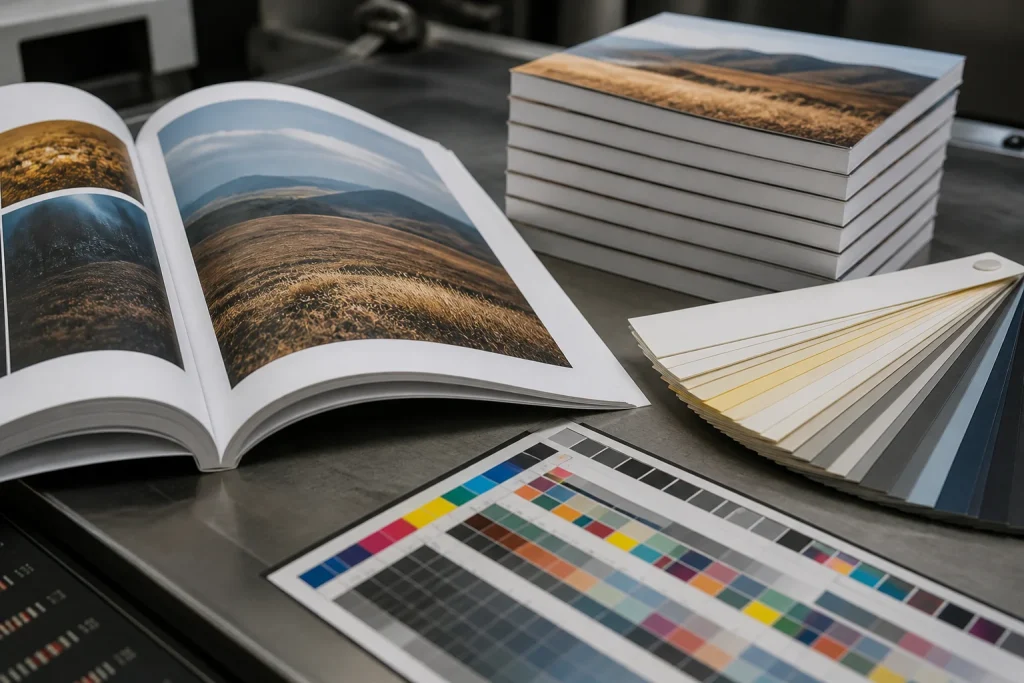
Digital printing is designed around producing from a supplied digital file, without the traditional printing plates used for litho. That makes it well suited to smaller quantities and projects where flexibility matters.
Litho printing involves more preparation before the run begins. Once that preparation is spread over a larger order, it may represent better value per copy. It can be a strong fit for a book with settled content, consistent demand and enough copies to make a longer run sensible. The exact point where litho becomes preferable is not fixed; it varies with the specification, number of pages, colours, finishing and the printer’s equipment.
A hypothetical example makes the trade-off clearer. A school updating its prospectus after admissions information changes may favour digital for an initial quantity and the option to amend later. An organisation ordering a long-established annual report for a large mailing may wish to ask for a litho comparison as well.
How digital and litho differ in practice
Both digital and litho can produce professional book printing when the artwork, paper and finishing are chosen with care. The practical differences are mainly in workflow, scale and the level of consistency a project requires across a long run.
| Consideration | Digital printing | Litho printing |
|---|---|---|
| Quantity | Often suitable for short and medium runs | Often worth considering for larger runs |
| Content changes | More practical where files may be revised | Better suited to settled artwork |
| Set-up | Less pre-press preparation | More preparation before printing begins |
| Personalisation | Can suit versions with changing details | Usually chosen for one consistent version |
| Budget focus | Helps avoid ordering more copies than needed | May improve the per-copy cost at higher quantities |
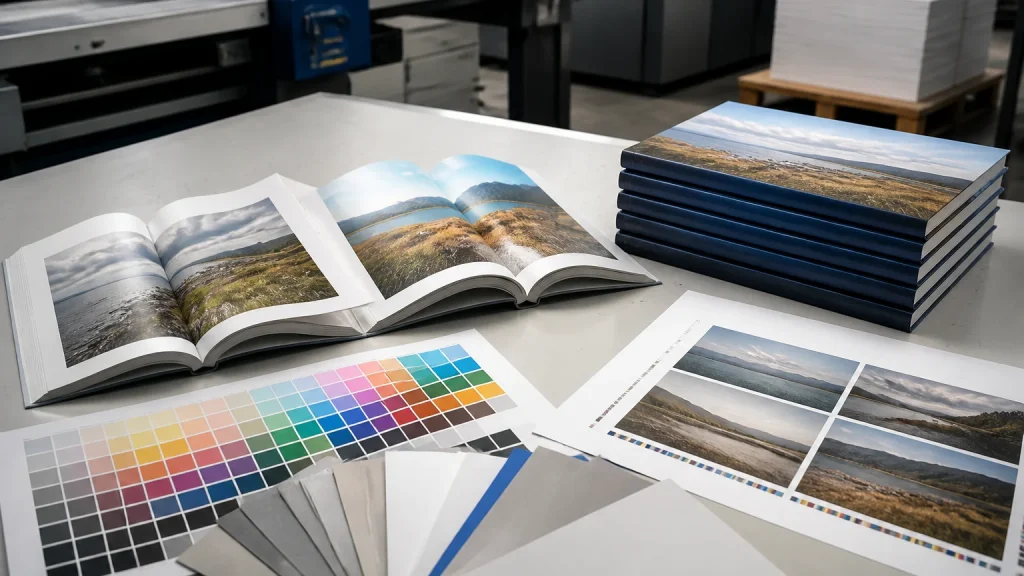
Colour deserves a more careful conversation than it sometimes gets. A book built around brand colours, large areas of solid ink or product photography should be assessed as a complete specification, not just by its cover image on screen. A printer can advise on the available processes and whether a printed proof or sample is appropriate for the project. Screen colour is emitted light; paper reflects light, so an unexamined screen image is not a reliable final reference.
Choose binding and paper before judging the method
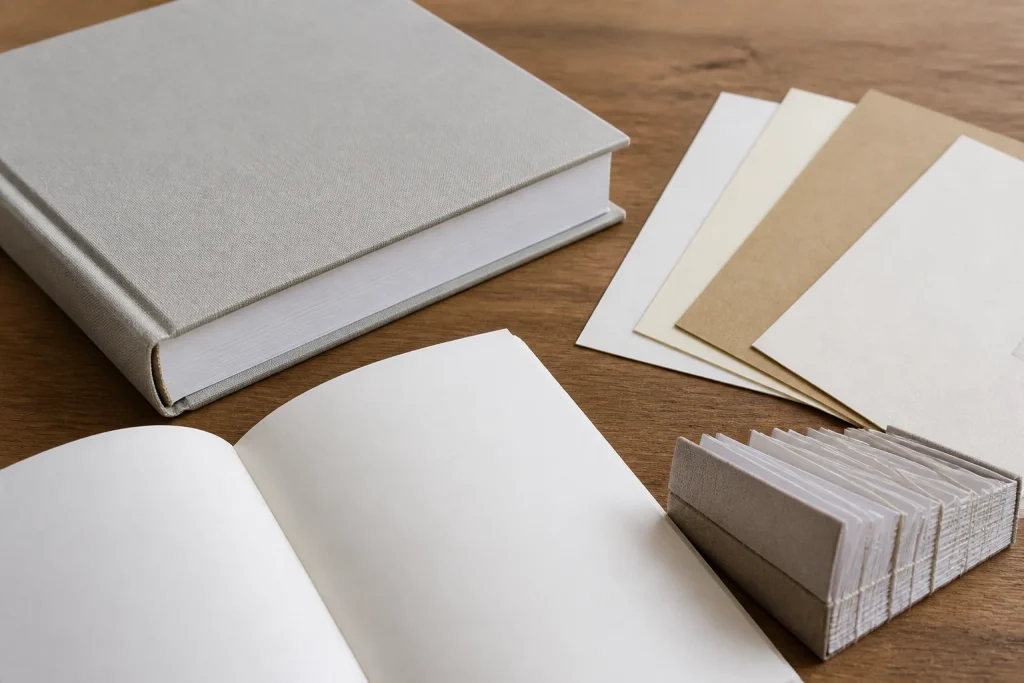
Print method is only one part of a finished book. The paper affects opacity, texture and how the pages turn; the binding affects how the publication opens, feels and survives handling. These decisions can influence the production route, so they should be discussed early rather than bolted on after a price has been agreed.
For example, a compact booklet with a modest page count may be appropriate for staple binding, while a thicker publication may call for perfect binding. Page count is especially important because folded sections and binding methods have their own practical constraints. A printer needs the final page count, finished size, cover plan and paper preference to advise properly. Avoid assuming that any page total will work with any binding.
Consider the reader’s use as well. A book designed to be carried, annotated or frequently opened needs a different balance of weight, finish and binding from a brochure handed out once at an exhibition. A laminated cover may be worth considering where the cover will receive regular handling, but it is not a universal upgrade. It changes the feel of the book and should support the intended use and visual style.
Common mistakes when comparing book printing quotes
The most common mistake is comparing two prices that do not describe the same product. One quote may include a different paper, cover treatment, binding method, quantity or delivery arrangement. A lower headline figure is not meaningful until the specification is aligned.
- Request quotes using the same finished size, page count, quantity and binding.
- State whether the cover and text pages use different papers or finishes.
- Confirm whether the artwork is final, or whether design support and amendments are still needed.
- Ask how the printer would handle future reprints or revised editions.
- Check a proof carefully for page order, margins, image quality, spelling and cover spine details before approval.
Another avoidable problem is designing too close to the edge. Images that must reach the trimmed edge need bleed in the artwork, while important text should sit safely inside the trim area. Exact file requirements vary by product and supplier, so it is better to obtain the relevant template or guidance before laying out every page.
When neither choice makes sense on its own
It is tempting to treat digital as the short-run answer and litho as the large-run answer, then stop there. In reality, an unusually complex finish, a specific stock, a tight storage limit or an uncertain distribution plan can change the decision. Ordering a very large run simply because the unit price appears lower may not make sense if much of it becomes outdated before it is used.
Equally, repeatedly ordering very small quantities of an unchanged book may not be the most efficient long-term route. Review the actual demand, the chance of amendments and the total cost of several reprints. A planned mix can work too: a short digital run to test content or demand, followed by a larger litho order once the publication is established.
High-quality book printing is not only about the press. Clear files, appropriate paper, a suitable binding and realistic quantities all play a part.
Conclusion
Choose digital when flexibility, smaller quantities or changing content are central to the project. Consider litho when the book is finalised, demand is established and a larger run may benefit from the set-up being spread across more copies. Prepare a clear specification, compare like for like and discuss the finished book rather than the print process alone. That is the more reliable route to a professional result that suits both the publication and its readers.